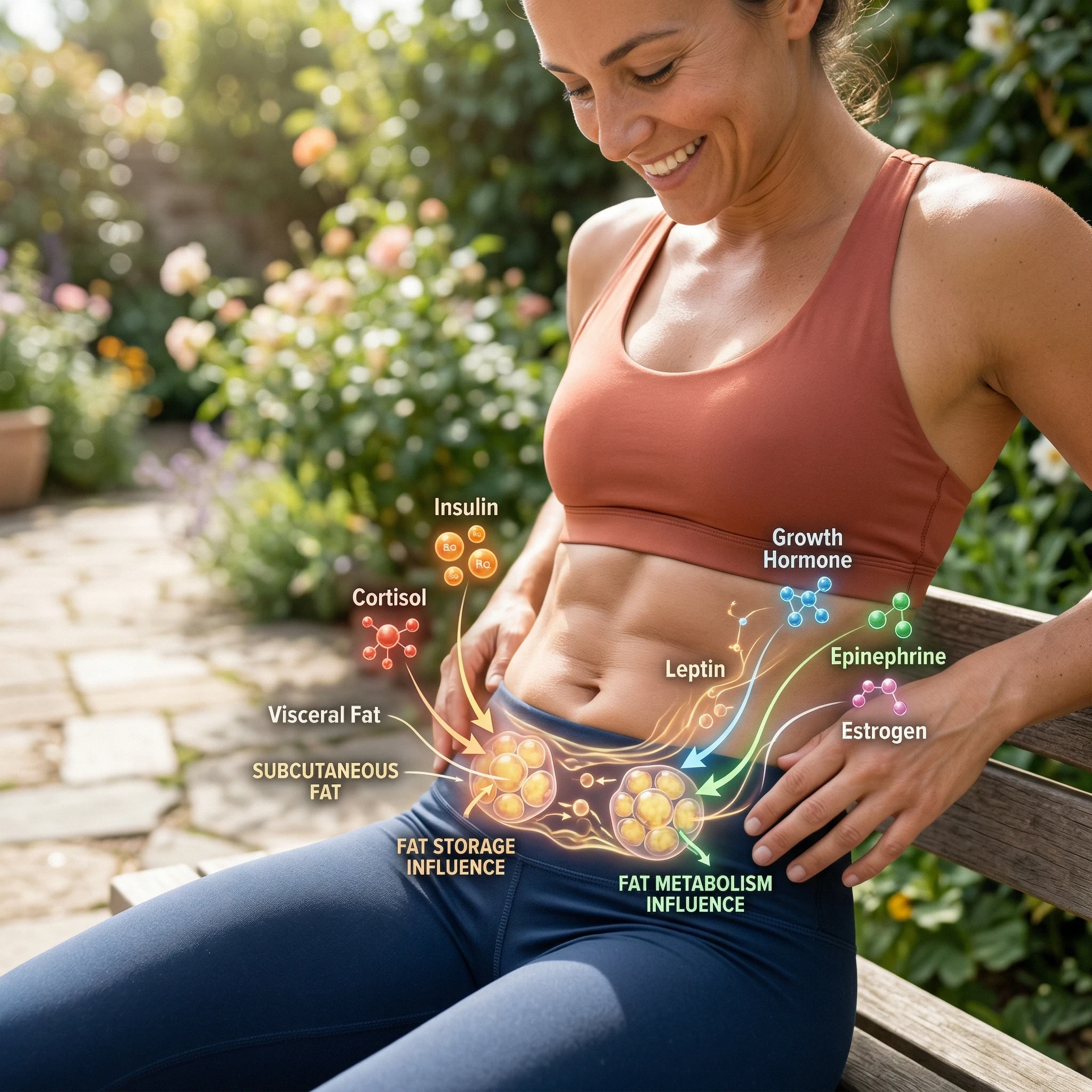
Hormones are critical players in regulating our body’s metabolism and deciding how fat gets stored. They’re like your body’s traffic cops, directing energy to either keep you going or store it for later. When hormones like cortisol, insulin, and estrogen start misbehaving, that can often show up as extra padding around the waistline.
Feeling overwhelmed with where to start?
Download my FREE “Reset & Refocus” Gut & Brain Starter Guide to support your digestion, reduce bloating, and feel more energised—one simple step at a time.
👉 [Download your free guide here]
Cortisol, often called the “stress hormone,” tends to rise when you’re feeling frazzled. This hormone doesn’t just make you feel stressed; it encourages your body to hang onto fat, especially around the belly. It’s like your body is prepping for hard times and thinks it needs to store energy where it can grab it quickly. Insulin, on the other hand, helps control your blood sugar levels. When insulin isn’t doing its job effectively, or when it’s present in consistently high amounts, it can lead to more fat storage, again targeting that belly area.
Then there’s estrogen, which plays a unique role, especially for women. Situations like menopause can change how much estrogen is in the body, leading to increased fat around the abdomen. Even men aren’t off the hook, as their estrogen levels affect fat distribution too, contributing to weight changes as they age.
All of this ties into the notion of visceral fat, the fat stored deep within the belly and wrapped around vital organs. Unlike surface-level, subcutaneous fat, visceral fat is where the serious health risks come in—think heart disease and type 2 diabetes. Understanding why visceral fat accumulates gives us insight into how hormone-related weight gain impacts overall health.
Genetics play a part in how our bodies regulate these hormone levels, but so do the choices we make every day. Things like diet, exercise, and sleep leave their mark on how efficiently these hormones work. Plus, changes through different life stages—like puberty, pregnancy, and beyond—alter our hormonal landscape and affect where we store fat. Experts point out that these changes are natural but can be managed with the right information and guidance.
Identifying and Managing Hormonal Imbalance for Belly Fat Reduction
Belly fat sometimes signals an imbalance with those key hormones we talked about earlier. Identifying these imbalances isn’t just a guessing game; certain symptoms can be red flags. Things like unexplained weight gain, fatigue or even mood changes might indicate that something hormonal is going on.
Figuring this out often requires some tests, but there are ways you can gauge what’s happening at home, too. Pay attention to your body’s signals and keep a journal of things like weight fluctuations and energy levels. Past that, a healthcare professional can guide you through targeted tests to pinpoint any imbalances.
Once you’ve got a handle on which hormones are playing up, tackling these issues head-on can lead to real changes. Lifestyle adjustments are a top approach. Simple shifts in what and when you eat can have a significant impact—the kinds of food you choose and their timing influence hormone release.
Then there’s the possibility of medical interventions. For some, hormone replacement therapies or medications to support hormone regulation might be an option. Always consider these in consultation with your doctor for the best path forward.
Meanwhile, don’t underestimate the power of natural remedies. Stress management techniques like mindfulness or yoga can help regulate cortisol levels. Plus, dietary supplements like omega-3s can support hormone balance indirectly.
Want a simple plan you can actually follow?
I created a FREE 7-step Reset & Refocus Guide to help you improve your gut health without confusion.
✔ Easy-to-follow steps
✔ Gut-friendly food ideas
✔ Designed for real life
Practical Lifestyle Adjustments to Combat Hormone-Induced Belly Fat
To take control over hormone-induced belly fat, it’s time to make some practical shifts in lifestyle. At the top of the list is regular exercise. It isn’t just about looking good—specific workouts, especially those targeting core strength and incorporating cardio, can significantly affect where your body stores fat.
Nutrition plays a pivotal role too, where making smart food choices becomes your best ally. Foods rich in fiber, like vegetables and whole grains, help in keeping hunger hormones like ghrelin in check, making it easier to maintain a healthy weight. Watching for sugar spikes by opting for low-glycemic foods can also keep insulin levels stable, reducing fat storage.
Then there’s managing stress, which often relates back to cortisol levels. Easy-to-implement stress-relief practices include meditation, deep breathing exercises, and regular physical activity, all crucial for keeping cortisol in check. Finding what calms you and incorporating it into your daily life could make a world of difference.
Don’t underestimate the power of a good night’s sleep. Studies back up the importance of sleep in regulating hormone levels like insulin and cortisol. Aim for a consistent sleep schedule to allow your body to reset and recalibrate each night.
It’s about finding a balance that works alongside medical guidance. Pairing lifestyle changes with any tailored medical approaches you might have under the advice of a healthcare professional ensures that you tackle the root of the problem, not just the symptoms. Combining knowledge and action empowers you to manage hormone-induced weight challenges effectively.
Ready to take the next step?
If you’re tired of guessing what to eat and want a clear, structured plan, start with my FREE Reset & Refocus Guide.
It’s designed to help you:
✔ Reduce bloating
✔ Support digestion
✔ Feel more energised
👉 Download your free guide here
Want a complete transformation?
Upgrade to the 7-Day Gut & Brain Reset Plan for a deeper, guided approach to healing your gut and improving mental clarity.
Explore the full plan coming soon.
We strongly recommend that you consult with a qualified healthcare professional before making any decisions related to your health, diet, or well-being practices.
Your health and safety always come first.
Our Website contains affiliate links. This means if you click and make a purchase, we may receive a small commission. “Don’t worry, there is no extra cost to you. It’s a simple way you can support our mission to provide you with quality content.