Meal timing can seem like this big, complex beast, but at the heart of it, it’s pretty intuitive. Your body has an internal clock, often called the circadian rhythm, that manages metabolism. Basically, this clock makes sure things run smoothly, syncing your energy levels with day and night cycles. Skipping meals or eating at odd hours can throw this system for a loop, potentially impacting how your body manages weight.
You might wonder, does it really matter when you eat? Turns out, yes, it does. Eating at regular intervals helps maintain stable blood sugar levels, curbing those wild hunger swings that lead to overeating later. Plus, there’s scientific chatter around the idea that eating earlier in the day aligns better with your metabolism, making it a lot easier for the body to burn calories efficiently during the day.
Remember when you were drilled in school about breakfast being the most important meal of the day? It’s a bit more nuanced than that. While breakfast can help kickstart your metabolism, especially if you wake up hungry, a bigger picture view is more important here. It’s about eating consistently throughout the day, balancing meals to sustain energy levels, rather than focusing too hard on one specific meal.
Regularity in meals is key. When you stick to consistent meal times, it’s like training your body to know exactly when the next fuel stop is. Your metabolism loves that predictability, responding by efficiently managing energy stores and minimizing fat gain during meal intervals.
So, does meal frequency play a big role in weight management? Well, some studies suggest that spreading meals throughout the day can boost energy expenditure as your body works to digest and utilize those nutrients more often, but that’s not a one-size-fits-all solution. It’s really about finding what feels sustainable and comfortable for you. Overloading with too many meals might not work for everyone, just like intermittent fasting isn’t for everyone either. It’s all about balance.
How to Implement Effective Meal Timing and Frequency for Weight Loss
Meal timing and frequency are pivotal in regulating metabolism, hunger hormones, and energy balance. Research increasingly supports aligning eating patterns with circadian rhythms—our internal biological clock—to optimize weight management and metabolic health.
Key Principles:
- Early Eating Boosts Metabolism: Consuming most calories earlier in the day improves insulin sensitivity and reduces fat storage.
- Consistent Meal Windows: Regular eating times help stabilize blood sugar and reduce overeating.
- Time-Restricted Eating (TRE): Popular methods like 16:8 (16 hours fasting, 8 hours eating) promote fat burning and cellular repair3.
- Avoid Late-Night Meals: Eating late disrupts sleep and increases fat storage due to hormonal shifts.
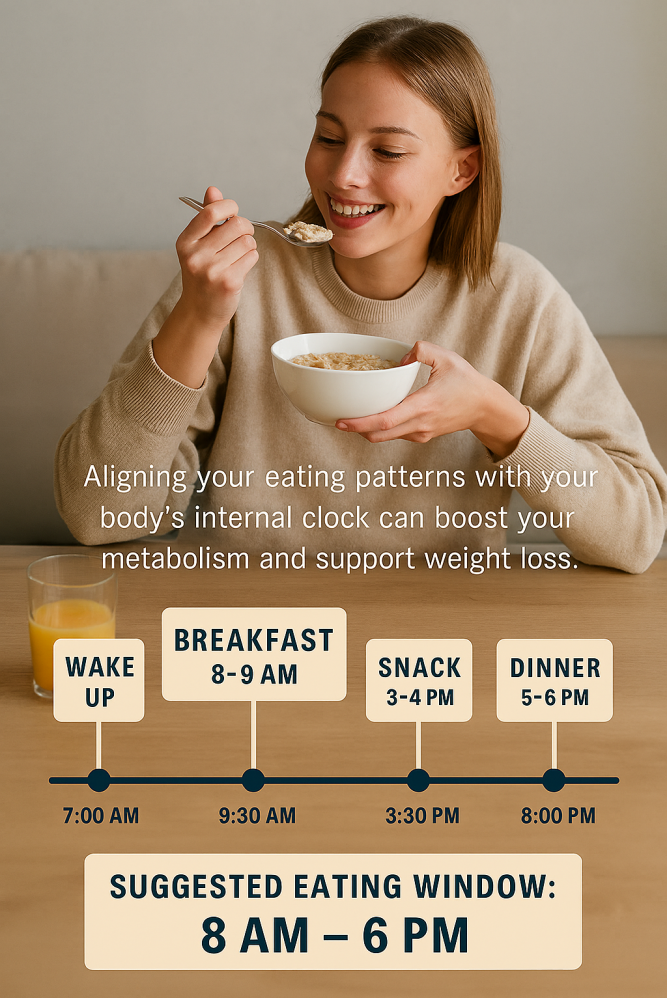
🕒 Visual Timeline: Optimal Meal Windows
You can visualize this in your day as a horizontal timeline. Here’s a concept you can adapt:
| 7:00 AM | 9:00 AM | 12:30 PM | 3:30 PM | 6:30 PM | 8:00 PM |
|---------|---------|----------|---------|---------|---------|
| Wake Up | Breakfast | Lunch | Snack | Dinner | Cut-off |🧭 Suggested Eating Window: 8 AM – 6 PM
- Breakfast (8–9 AM): Kickstarts metabolism
- Lunch (12–1 PM): Largest meal for energy
- Snack (3–4 PM): Prevents evening cravings
- Dinner (5–6 PM): Light and early to support digestion
Monitor Eating Patterns
The sweet spot for meal numbers varies from person to person. Some do great with three square meals a day, while others might thrive on five smaller snack-like meals. The key is to listen to your body. Notice how your energy levels fare throughout the day and how your hunger cues respond. This self-awareness helps tailor your meal frequency for the best outcomes.
Getting into a new rhythm involves some practical steps. Start by tracking your current eating habits. Note when you feel hungry, what times you’re eating, and how your body feels afterward. Use apps or a simple journal if that helps keep things in check. Once you’ve got a clear picture, gradually shift timings to more regular slots if needed. Little changes make it easier to stick without feeling overwhelmed.
Life’s unpredictable, so adaptiveness is crucial. If you’re active throughout the day, your body might need more regular fuel bursts. Office work might mean fewer, more spaced-out meals are better. It’s about syncing your eating pattern with how your day’s structured. And remember, what works during the workweek might need some tweaks on weekends or holidays.
Tracking progress is super important, not only with the scale, but also by noting how your body feels and performs. Use tools like food diaries or digital apps that help monitor what timing feels best. If something isn’t bringing results or feels off, don’t hesitate to tweak it. This dynamic approach helps maintain that balance and keeps the journey toward the right weight sustainable.
Ready to take control of your eating habits? Use this guide to start your journey today. Your body thrives on rhythm—let’s help it dance to the right beat.
Our Website contains affiliate links this means if you click and make a purchase we may receive a small commission. “Don’t worry there is no extra cost to you. It’s a simple way you can support our mission to bring you quality content.