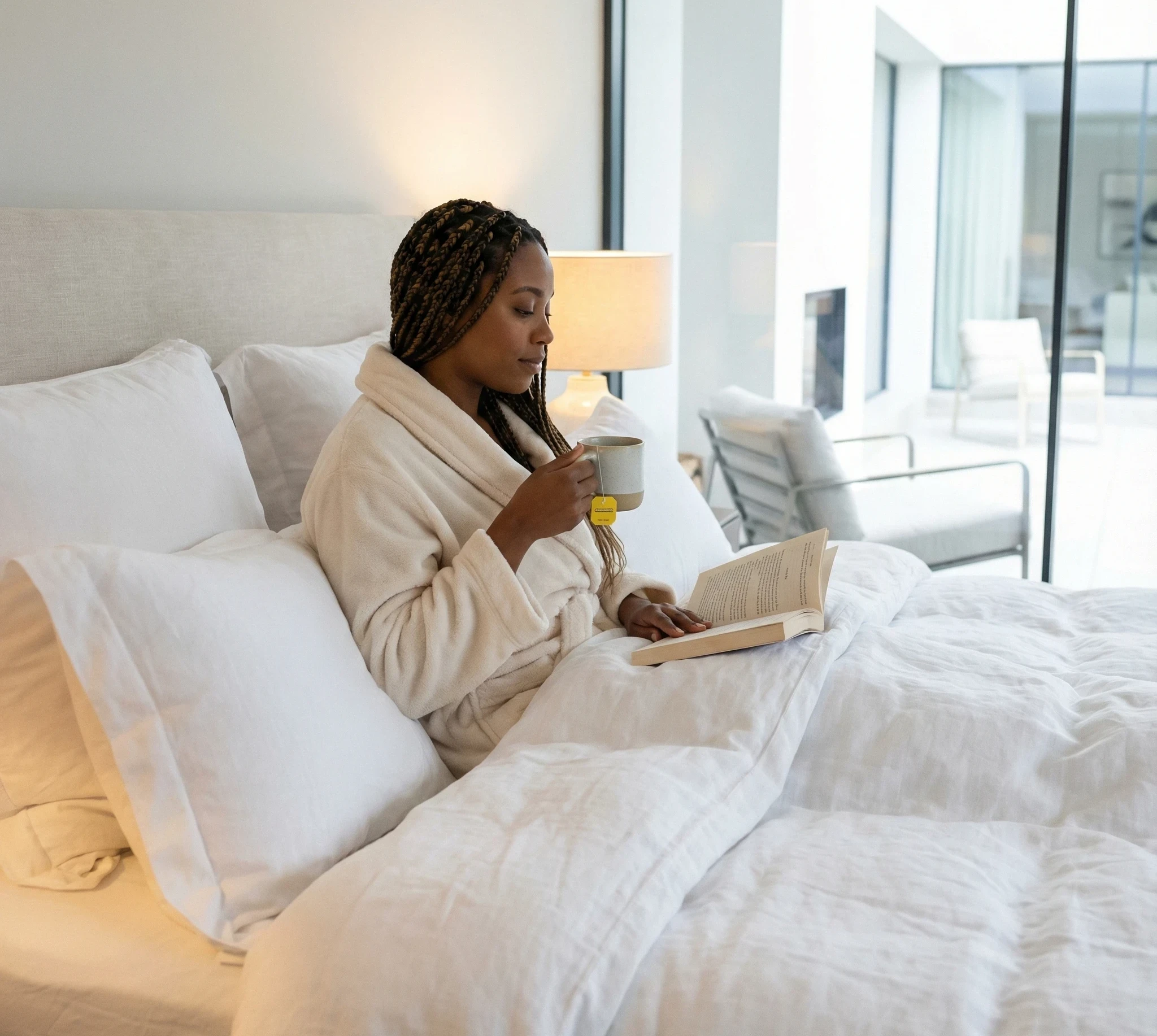
Chamomile tea has been a favourite for centuries when it comes to winding down your day. Its roots stretch back to ancient times, where it was cherished not just for its pleasant taste but for its calming effects. Now, it’s become a popular natural remedy for sleep troubles around the globe.
Ever wonder why we sleep the way we do? Our brain signals certain chemicals to either wake us up or make us sleepy. These tiny messengers, particularly neurotransmitters like GABA, set the stage for relaxation. When they do their job right, drifting off to dreamland becomes much easier.
The Science Behind Chamomile Tea and Better Sleep
1. What Science Says About Chamomile and Sleep
Research shows chamomile contains apigenin, a flavonoid that binds to GABA receptors in the brain—similar to how mild anti‑anxiety medications work—helping the body relax and prepare for sleep.
Evidence‑based benefits:
- May help you fall asleep faster. Apigenin has mild sedative effects that can reduce anxiety and promote drowsiness.
- Supports relaxation and reduces nighttime restlessness. Chamomile has been used for centuries as a calming herb, and modern studies support its soothing effect on the nervous system.
- May improve overall sleep quality. Some studies have shown improved sleep satisfaction, although results vary and are not universally conclusive.
- Gentle and safe for most people. It’s caffeine‑free and non‑habit‑forming, making it a popular bedtime ritual.
What the research doesn’t claim:
- Chamomile is not a sedative drug.
- It won’t “knock you out,” but it can help create the conditions for better sleep.
2. Is There a “Stronger Dose” of Chamomile?
Yes—there are higher‑potency chamomile products, and they tend to cost more.
Stronger forms include:
- Whole‑flower loose chamomile (more potent oils than tea bags)
- German chamomile (Matricaria chamomilla)—the most studied and typically stronger variety
- Chamomile extract or tincture (very concentrated)
- Double‑strength tea bags sold by premium herbal brands
These products cost more because they contain:
- Higher essential‑oil content
- Larger, intact flowers
- Organic or biodynamic growing methods
- Small‑batch or speciality harvesting
But for most people, a high‑quality loose‑leaf chamomile is more than enough.
3. How Much Should You Spend on Good Chamomile Tea?
Here’s a practical pricing guide so you don’t overpay:
Typical price ranges:
Most chamomile teas fall into four price categories. Standard tea bags usually cost $3 to $8,
while premium tea bags range from $8 to $15.
Loose‑leaf chamomile, which offers stronger potency and better essential‑oil content, typically costs $10 to $22 per 100g.
High‑end artisan chamomile can reach $22 to $38 or more per 100g, but anything above that is usually a luxury purchase rather than a necessity for better sleep.
- More than £30 for 100g is rarely justified unless it’s a speciality farm or a luxury brand.
- Anything above that is usually marketing—not better sleep.
What to look for:
- Whole, intact flowers (not dust/fannings)
- Organic certification
- German chamomile (the most researched variety)
- Fresh, strong aroma
- Minimal stems
Chamomile tea isn’t a magic sleep potion, but science shows it contains natural compounds that help calm the nervous system and support better sleep. Whether you choose a simple tea bag or a premium loose‑leaf blend, the key is consistency—making chamomile part of a nightly wind‑down ritual. And you don’t need to overspend; a moderately priced, high‑quality chamomile is more than enough to enjoy its soothing benefits.
Want to try chamomile for yourself? It’s pretty simple. Steep a few teaspoons of dried chamomile flowers in hot water and let them brew for about 5 minutes. Drink it about half an hour before bedtime, and you’re all set. Just be mindful of allergies or if you’re pregnant, as it can have some side effects.
Explore more wellness guides, healthy recipes, and evidence‑based nutrition tips at Dietremidies.com.
Share this post with someone who loves tea or wants to improve their health naturally.
Our Website contains affiliate links. This means if you click and make a purchase, we may receive a small commission. “Don’t worry, there is no extra cost to you. It’s a simple way you can support our mission to bring you quality content.
We strongly recommend that you consult with a qualified healthcare professional before making any decisions related to your health, diet, or well-being practices.
Your health and safety always come first.