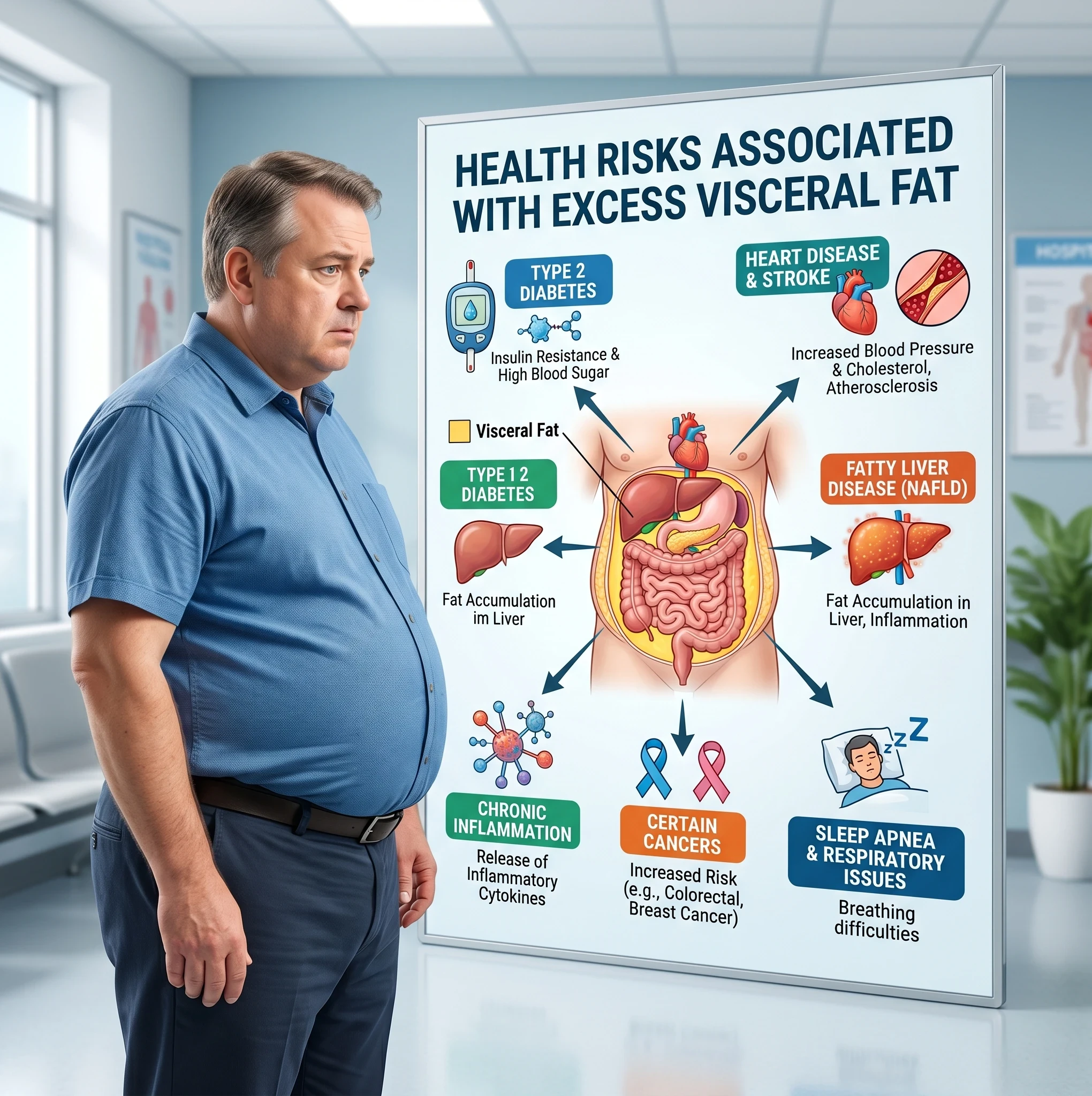
Visceral fat is the type of fat that collects around your internal organs, particularly in the abdominal cavity. Unlike subcutaneous fat, which sits under your skin, visceral fat isn’t visible and can be more challenging to gauge, making it a significant health concern.
Feeling overwhelmed with where to start?
Download my FREE “Reset & Refocus” Gut & Brain Starter Guide to support your digestion, reduce bloating, and feel more energised—one simple step at a time.
 [Download your free guide here
Subcutaneous fat is the kind you can pinch, while visceral fat is internal. This fat is closely linked to abdominal obesity, and people often don’t realise they have it until it starts affecting their health.
Various factors can lead to an accumulation of visceral fat. Poor diet, lack of exercise, and genetics play a role. High intake of sugary and processed foods, coupled with a sedentary lifestyle, increases the risk of developing excess visceral fat.
Certain individuals are more likely to develop visceral fat. These risk groups include people with a family history of obesity, individuals over 40, and those leading a sedentary lifestyle. Understanding these risk factors can help in taking preventive measures to manage visceral fat levels effectively.
Health Complications of Excess Visceral Fat
Visceral fat isn’t just a cosmetic concern. It poses real health risks, particularly to the heart. The fat releases proteins and hormones that can cause inflammation and affect the arteries, leading to cardiovascular issues like heart disease and elevated blood pressure. Keeping track of these factors through regular health check-ups is vital.
There’s a strong connection between visceral fat and metabolic disorders, most notably type 2 diabetes. The fat interferes with insulin function, which can trigger an increase in blood sugar levels. This makes managing your visceral fat crucial in preventing diabetes.
Chronic inflammation is another risk associated with excess visceral fat. The fat cells release inflammatory substances that can lead to a host of conditions, including fatty liver disease and even certain types of cancer. Control over diet and lifestyle can significantly reduce these risks.
Want a simple plan you can actually follow?
I created a FREE 7-step Reset & Refocus Guide to help you improve your gut health without confusion.
 Easy-to-follow steps
Gut-friendly food ideas
Designed for real life
Beyond physical health, there’s a growing body of evidence linking visceral fat with mental health issues. Higher levels of this fat have been associated with anxiety and depression, partly due to the stress hormones it can trigger. Approaching mental health with the same seriousness as physical health when dealing with visceral fat is essential.
Effective Strategies to Manage and Reduce Visceral Fat
Taking charge of visceral fat involves thoughtful lifestyle changes, starting with what you eat. Focus on a balanced diet rich in whole foods. Fruits, vegetables, whole grains, and lean proteins are your allies. Avoiding processed foods and sugars can drastically cut down the accumulation of visceral fat.
Exercise is another key player in reducing visceral fat. Activities like aerobic exercises, such as walking, running, and cycling, burn calories and target belly fat specifically. Strength training complements this by building muscle mass, which can boost metabolism and fat-burning rates.
For some, medical interventions might be necessary. Options such as medications or bariatric surgery exist, but these should be considered carefully and discussed with a healthcare provider to understand the potential benefits and risks.
Stress management and good sleep hygiene are often overlooked in managing visceral fat. Chronic stress can increase cortisol levels, driving visceral fat storage. Conversely, adequate sleep helps regulate hormones that influence your appetite and fat storage.
A holistic approach—combining diet, exercise, medical advice, stress reduction, and sleep—serves as the most effective strategy in reducing visceral fat and the health risks associated with it. Being proactive and consistent in these areas can lead to significant health benefits.
Ready to take the next step?
If you’re tired of guessing what to eat and want a clear, structured plan, start with my FREE Reset & Refocus Guide.
It’s designed to help you:
Reduce bloating
Support digestion
Feel more energised
Want a complete transformation?
Upgrade to the 7-Day Gut & Brain Reset Plan for a deeper, guided approach to healing your gut and improving mental clarity.
We strongly recommend that you consult with a qualified healthcare professional before making any decisions related to your health, diet, or well-being practices.
Your health and safety always come first.
Our Website contains affiliate links. This means if you click and make a purchase, we may receive a small commission. “Don’t worry, there is no extra cost to you. It’s a simple way you can support our mission to provide you with quality content.