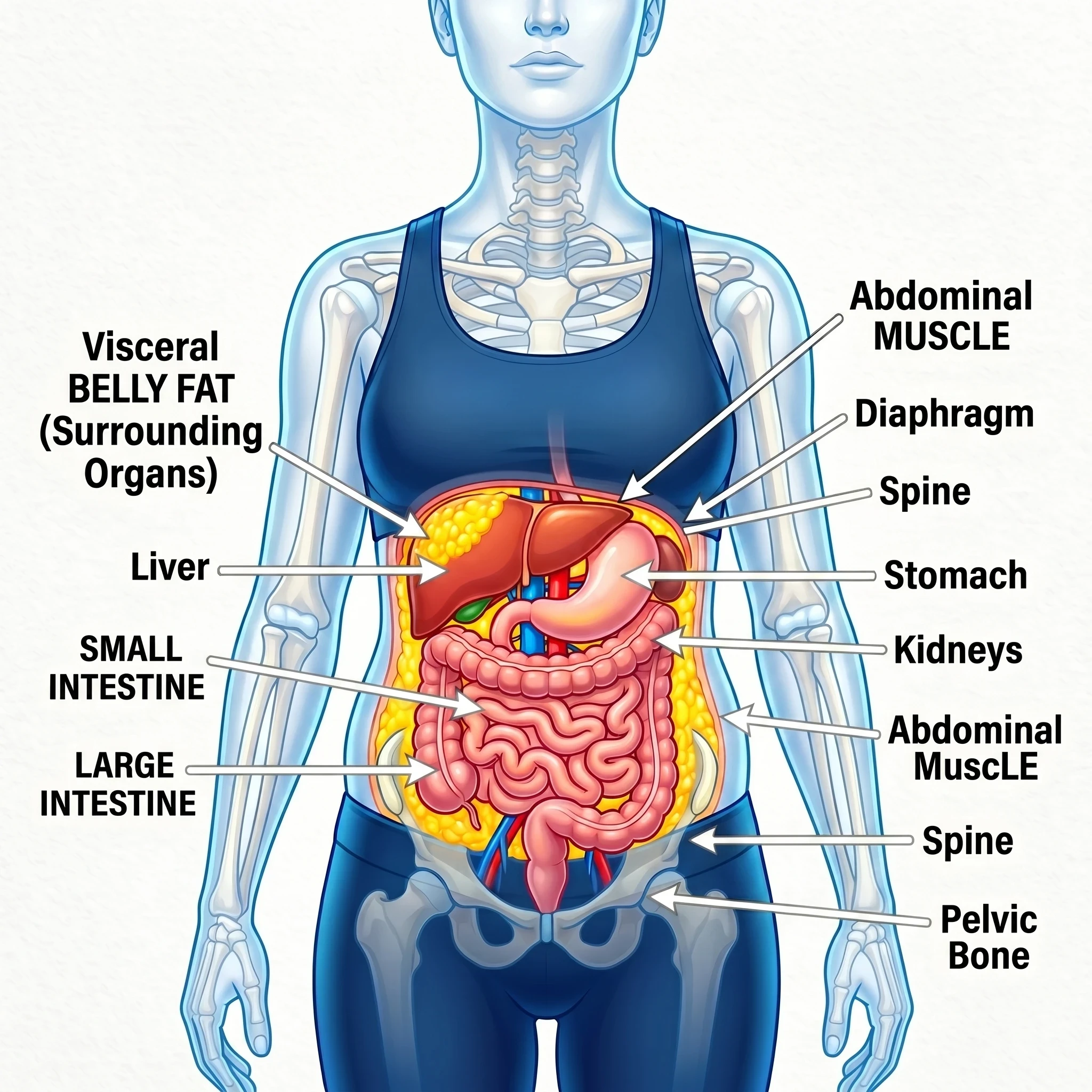
Visceral belly fat often flies under the radar compared to its more visible counterpart, subcutaneous fat. It’s the type of fat nestled deep inside your abdominal cavity, wrapped around your internal organs like the liver, pancreas, and intestines. This fat isn’t something you can easily pinch or notice from the outside, which makes it sneaky in terms of health risks.
Feeling overwhelmed with where to start?
Download my FREE “Reset & Refocus” Gut & Brain Starter Guide to support your digestion, reduce bloating, and feel more energised—one simple step at a time.
 [Download your free guide here]
Visceral fat differs fundamentally from subcutaneous fat, which sits just under the skin. Think of subcutaneous fat as the softer layer you can touch, often around your hips and thighs, whereas visceral fat wraps tightly around your organs. This difference in location and purpose leads to different roles these fats play in the body—visceral fat being the trickier one due to its potential health impacts.
The formation of visceral fat links back to evolutionary biology. Back in the day, storing fat wasn’t just about insulation but rather survival. Visceral fat acted as an energy reserve to protect vital organs during food scarcity. Today, our sedentary lifestyles and high-calorie diets contribute to the accumulation of fat faster than our bodies can naturally burn it off, leading to potential health issues.
To identify visceral fat accumulation, you might not see the typical telltale signs, such as a larger waistline. Instead, you could notice other subtle health hints like high blood pressure, sleep apnea, or a general lack of energy. Numerous ways exist to measure this fat—through imaging techniques like MRI or CT scans—or by calculating the waist-to-hip ratio as a practical at-home method. This information empowers you to take control of your health and address any concerns early.
Health Implications of Visceral Fat: Why It Matters
Visceral belly fat isn’t just an unwanted addition to your physique; it plays a significant role in your overall health risk profile. This type of fat is metabolically active, secreting various hormones and chemicals that impact your body’s functions. Unfortunately, this can lead to several health issues.
Want a simple plan you can actually follow?
I created a FREE 7-step Reset & Refocus Guide to help you improve your gut health without confusion.
 Easy-to-follow steps
Gut-friendly food ideas
Designed for real life
One of the primary concerns with excessive visceral fat is its connection to cardiovascular diseases. The hormones released by visceral fat can lead to increased blood pressure and cholesterol levels, putting strain on your heart and arteries. Essentially, the more visceral fat you carry, the higher your chances of heart disease and related complications.
Another serious risk tied to high levels of visceral fat is type 2 diabetes. This fat can cause your body to become less sensitive to insulin, the hormone responsible for regulating blood sugar levels. When your body doesn’t respond to insulin effectively, it can lead to elevated blood sugar, eventually insulin resistance and diabetes.
The presence of substantial visceral fat also contributes to metabolic syndrome—a cluster of conditions that increase the risk of heart disease, stroke, and diabetes. It includes high blood pressure, high blood sugar, excess body fat around the waist, and abnormal cholesterol levels. Visceral fat is often at the heart of this syndrome, driving many of these metabolic disturbances.
Moreover, it can influence mental health as well. Excess visceral fat is often accompanied by stress-related hormones like cortisol, contributing to mood swings and anxiety. This complex interplay between physical and mental health makes managing visceral fat remarkably important for overall well-being.
Scientific studies have repeatedly highlighted these risks, making it clear that visceral belly fat is more than just an aesthetic concern. Understanding its impact involves acknowledging the underlying health threats it poses, bringing us to the reality that addressing this fat is not just about looking good but feeling good too.
Tackling Visceral Fat: Strategies and Solutions
Taking on visceral fat requires a combination of healthy lifestyle changes and effective strategies that address both diet and exercise. Reducing simple carbohydrates and sugars while increasing fibre intake can significantly impact how your body stores and burns fat. Whole grains, vegetables, lean proteins, and healthy fats should become staples in your diet for better fat management.
Physical activity is essential, not just for weight loss, but for reducing visceral belly fat specifically. Regular aerobic activities such as walking, cycling, and swimming effectively reduce visceral fat stores. Incorporating strength training exercises further boosts your metabolism, helping your body burn more calories, even at rest.
Beyond diet and exercise, managing stress is crucial for reducing visceral fat. Chronic stress triggers the release of cortisol, a hormone linked to fat buildup around internal organs. Simple practices like meditation, yoga, or even regular relaxation can help keep stress levels—and visceral fat—in check.
Getting enough sleep is another often overlooked aspect of managing visceral fat. Poor sleep patterns disrupt hormones that regulate hunger and fat storage, making it harder to maintain a healthy weight. Ensuring you get quality sleep will aid all other efforts you take to shed visceral fat.
For individuals seeking more targeted approaches, medical treatments and wellness technologies might offer additional support. Techniques such as targeted ultrasound or radiofrequency can help reduce visceral fat, though they are typically used in conjunction with lifestyle changes.
Monitoring progress is important in any health journey. Tools like body fat scales and tape measures for waist-to-hip ratios help track changes over time, offering motivation and clearer insight into what’s effective for you. By staying informed about your body’s response, you can make necessary adjustments to your plan, making your approach to reducing visceral fat both sustainable and successful.
Ready to take the next step?
If you’re tired of guessing what to eat and want a clear, structured plan, start with my FREE Reset & Refocus Guide.
It’s designed to help you:
Reduce bloating
Support digestion
Feel more energised
Want a complete transformation?
Upgrade to the 7-Day Gut & Brain Reset Plan for a deeper, guided approach to healing your gut and improving mental clarity.
We strongly recommend that you consult with a qualified healthcare professional before making any decisions related to your health, diet, or well-being practices.
Your health and safety always come first.
Our Website contains affiliate links. This means if you click and make a purchase, we may receive a small commission. “Don’t worry, there is no extra cost to you. It’s a simple way you can support our mission to provide you with quality content.