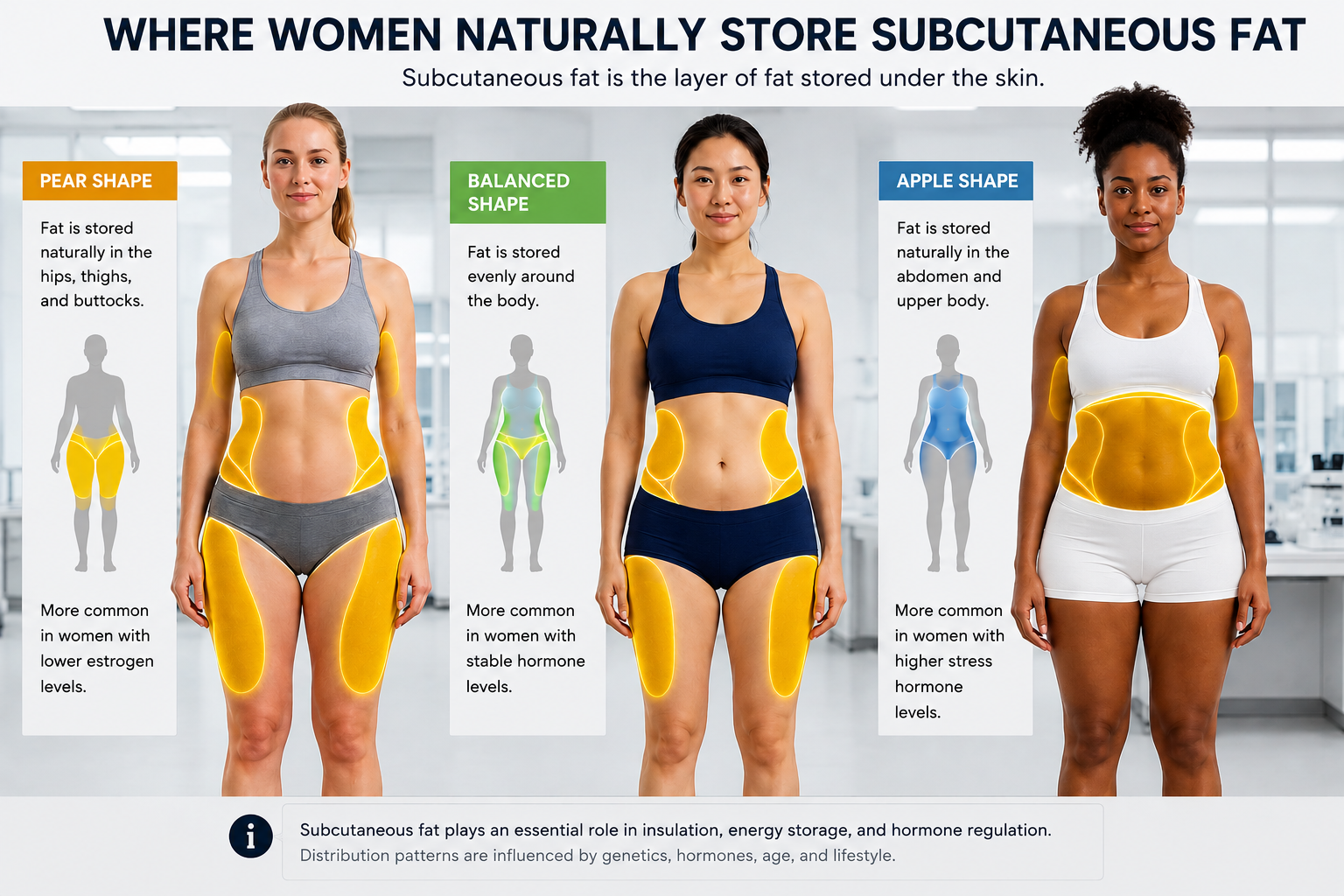
Most people focus on how much body fat they have — but science tells a more interesting story. Your fat distribution pattern (where your body naturally stores fat) has a bigger impact on your metabolic health than the number on the scale.
Feeling overwhelmed with where to start?
Download my FREE “Reset & Refocus” Gut & Brain Starter Guide to support your digestion, reduce bloating, and feel more energised—one simple step at a time.
 [Download your free guide here
Some people store fat around their abdomen. Others store it in their hips, thighs, or glutes. And while lifestyle plays a role, research shows that genetics heavily influence your subcutaneous fat distribution — the fat stored just beneath the skin.
Understanding this can be empowering. It helps you stop fighting your biology and start working with it to support better health, confidence, and metabolic balance.
How Genetics Shape Your Subcutaneous Fat Distribution
1. Fat Distribution Is Highly Heritable
Large genetic studies show that where you store fat is strongly inherited, even when BMI stays the same. This means two people with the same weight can have completely different fat patterns because of their genes.
Want a simple plan you can actually follow?
I created a FREE 7-step Reset & Refocus Guide to help you improve your gut health without confusion.
 Easy-to-follow steps
Gut-friendly food ideas
Designed for real life
“Your fat distribution is not a flaw — it’s a genetic blueprint.”
2. Different Body Regions Have Different Genetic Drivers
MRI‑based studies reveal that abdominal, hip, thigh, and glute fat each have their own genetic signatures. The genes that encourage fat storage in the thighs are not the same ones that influence belly fat.
This explains why some people naturally develop a curvier lower body, while others accumulate more around the midsection.
3. Sex‑Specific Genetic Effects
Women and men don’t just differ hormonally — they differ genetically in how fat is stored.
- Women tend to store more gluteofemoral subcutaneous fat (hips, thighs, buttocks).
- Men tend to store more abdominal subcutaneous fat.
These patterns become more pronounced during puberty and can shift dramatically during menopause as estrogen declines.
“Hormones turn your genetic fat‑distribution pattern ‘on’ or ‘off’ at different life stages.”
4. “Good Fat” vs “Risky Fat”: Why Location Matters
Not all subcutaneous fat behaves the same.
Thigh & Glute Subcutaneous Fat
- Metabolically protective
- Linked to lower risk of type 2 diabetes
- Acts as a “safe storage depot” for excess energy
Abdominal Subcutaneous Fat
- More closely linked to insulin resistance
- Associated with higher cardiometabolic risk
- Often influenced by inflammation‑related genes
This is why two people with the same weight can have very different health outcomes.
Beyond Genetics: What Influences Your Subcutaneous Fat Distribution?
Even though genetics set the blueprint, several factors can influence how your fat pattern shows up.
1. Hormones & Life Stages
- Puberty activates sex‑specific fat storage patterns.
- Pregnancy encourages fat storage in the hips and thighs for energy reserves.
- Menopause often shifts fat toward the abdomen due to declining estrogen.
2. Ethnicity & Ancestry
Different populations have different genetic variants that influence fat storage. This is why the same BMI can look — and behave — differently across ethnic groups.
3. Lifestyle & Movement
You can’t change your genetic pattern, but you can influence how much fat fills each depot.
- Strength training (especially lower‑body) can reshape proportions.
- High‑quality nutrition supports healthier fat storage.
- Stress, sleep, and inflammation can shift fat toward the abdomen.
4. Early‑Life Environment & Epigenetics
Factors like childhood nutrition, stress, and even in‑utero environment can “switch on” or “dial down” certain fat‑distribution genes. This doesn’t change your DNA — it changes how your genes behave.
5. Medications & Endocrine Conditions
Certain medications (like corticosteroids) and hormonal disorders (like PCOS or hypothyroidism) can override your natural fat‑distribution pattern.
Practical Tips: How to Support Healthier Fat Distribution
Even if your genetics lean toward abdominal fat, you can still support healthier metabolic outcomes.
1. Prioritize Strength Training
Especially glute, thigh, and core‑focused workouts. Muscle mass improves insulin sensitivity and changes body proportions.
2. Reduce Chronic Stress
High cortisol encourages abdominal fat storage.
Try: breathwork, walking, journaling, or gentle yoga.
3. Improve Sleep Quality
Poor sleep disrupts hormones that regulate fat storage.
4. Eat for Metabolic Balance
- High‑fibre meals
- Lean proteins
- Healthy fats
- Low‑glycaemic carbs
- Anti‑inflammatory foods
5. Track Waist‑to‑Hip Ratio (WHR)
A more meaningful marker than weight alone.
Your Fat Pattern Is a Story of Biology, Not Failure
Your subcutaneous fat distribution is shaped by a powerful mix of genetics, hormones, ancestry, and life stage. It’s not something you caused — and it’s not something you can fully control.
But you can influence how your body uses and stores energy through movement, nutrition, stress management, and sleep.
When you understand your genetic blueprint, you stop fighting your body and start supporting it. And that’s where real, sustainable wellness begins.
Ready to take the next step?
If you’re tired of guessing what to eat and want a clear, structured plan, start with my FREE Reset & Refocus Guide.
It’s designed to help you:
Reduce bloating
Support digestion
Feel more energised
Want a complete transformation?
Upgrade to the 7-Day Gut & Brain Reset Plan for a deeper, guided approach to healing your gut and improving mental clarity.
We strongly recommend that you consult with a qualified healthcare professional before making any decisions related to your health, diet, or well-being practices.
Your health and safety always come first.
Our Website contains affiliate links. This means if you click and make a purchase, we may receive a small commission. “Don’t worry, there is no extra cost to you. It’s a simple way you can support our mission to provide you with quality content.