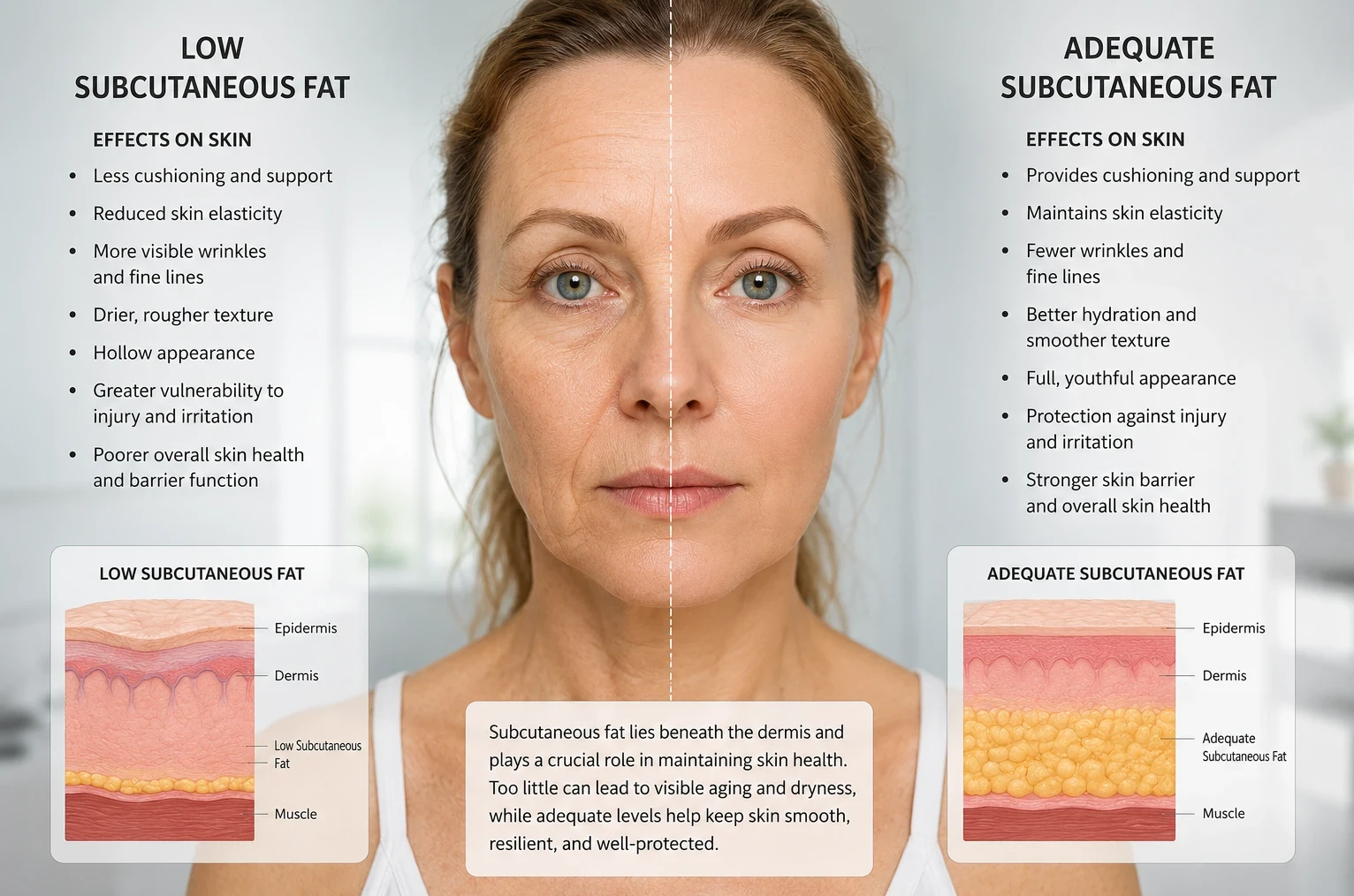
Subcutaneous fat—the soft, pinchable fat beneath the skin—often gets talked about in terms of body shape. But what most people don’t realise is that this fat layer plays a major role in skin health, influencing everything from elasticity to inflammation to ageing.
Understanding this relationship can assist you in making informed choices about your skin, body, and overall wellness.
Feeling overwhelmed with where to start?
Download my FREE “Reset & Refocus” Gut & Brain Starter Guide to support your digestion, reduce bloating, and feel more energised—one simple step at a time.
 [Download your free guide here
Excess subcutaneous fat doesn’t directly “damage” the skin, but it changes the skin’s structure, elasticity, and inflammatory environment. Research highlights several contributing factors:
1. Genetics and Hormones
Genetics influence how much subcutaneous fat you naturally store and where it accumulates. Hormonal shifts—especially insulin, estrogen, and cortisol—can increase fat storage under the skin.
2. High-Calorie, Low-Nutrient Diets
Eating more calories than you burn, especially from processed foods, sugars, and unhealthy fats, increases subcutaneous fat. This can stretch the skin, weaken collagen, and contribute to inflammation.
3. Sedentary Lifestyle & Low Muscle Mass
Low physical activity and reduced muscle mass promote fat accumulation under the skin. Less muscle also means less structural support for the skin, contributing to sagging and reduced firmness.
4. Insulin Resistance & Metabolic Dysfunction
Conditions like insulin resistance and diabetes are linked to higher levels of subcutaneous fat. These conditions also increase inflammation, which can worsen skin issues such as dullness, slow healing, and premature ageing.
5. Chronic Stress & Poor Sleep
Stress elevates cortisol, a hormone that encourages fat storage and breaks down collagen. Poor sleep disrupts appetite hormones and increases cravings, contributing to fat gain and impaired skin repair.
Want a simple plan you can actually follow?
I created a FREE 7-step Reset & Refocus Guide to help you improve your gut health without confusion.
 Easy-to-follow steps
Gut-friendly food ideas
Designed for real life
How to Prevent Excess Subcutaneous Fat (and Protect Skin Health)
1. Balanced, Anti-Inflammatory Nutrition
A diet rich in whole foods helps regulate fat storage and supports skin repair.
- Prioritise fruits, vegetables, whole grains, nuts, lean proteins.
- Reduce added sugars, refined carbs, processed foods, and saturated fats.
- These habits help reduce excess fat and improve skin elasticity and glow.
2. Regular Physical Activity
Movement helps burn stored fat and increases muscle tone, which supports the skin from beneath.
- Aerobic exercise (walking, cycling, swimming) burns calories.
- Strength training boosts metabolism and improves skin firmness.
- HIIT increases fat-burning potential for hours after exercise.
3. Stress Management
Lowering cortisol helps prevent unnecessary fat storage and protects collagen.
- Meditation
- Deep breathing
- Gentle movement (yoga, stretching)
- Nature walks
4. Quality Sleep
Poor sleep increases hunger hormones and slows skin regeneration. Aim for 7–9 hours nightly.
5. Hydration
Water supports skin elasticity, nutrient transport, and metabolic function. Staying hydrated also helps regulate appetite and fat metabolism.
Health Benefits That Support Skin Health Through Subcutaneous Fat Balance
1. Improved Skin Elasticity & Firmness
Balanced subcutaneous fat provides healthy cushioning and structural support, preventing sagging and maintaining smoothness.
2. Reduced Inflammation
Excess fat increases inflammatory markers, which can worsen acne, eczema, and premature ageing. Reducing fat through lifestyle changes lowers inflammation and improves skin clarity.
3. Better Circulation & Nutrient Delivery
Healthy fat levels allow blood vessels to function optimally, improving oxygen and nutrient flow to the skin.
4. Enhanced Hormonal Balance
Subcutaneous fat produces hormones like leptin and estrogen. Balanced levels support stable hormones, which are essential for healthy, glowing skin.
5. Stronger Skin Barrier
A well-regulated fat layer helps maintain temperature, protects against trauma, and supports the dermis—leading to more resilient skin.
Balanced subcutaneous fat is essential for healthy, youthful skin. Excess levels can increase inflammation, weaken collagen, and disrupt hormones—leading to sagging, breakouts, and premature ageing. Through nutrition, movement, sleep, hydration, and stress management, you can support both skin and overall wellness.
Ready to take the next step?
If you’re tired of guessing what to eat and want a clear, structured plan, start with my FREE Reset & Refocus Guide.
It’s designed to help you:
Reduce bloating
Support digestion
Feel more energised
Want a complete transformation?
Upgrade to the 7-Day Gut & Brain Reset Plan for a deeper, guided approach to healing your gut and improving mental clarity.
We strongly recommend that you consult with a qualified healthcare professional before making any decisions related to your health, diet, or well-being practices.
Your health and safety always come first.
Our Website contains affiliate links. This means if you click and make a purchase, we may receive a small commission. “Don’t worry, there is no extra cost to you. It’s a simple way you can support our mission to provide you with quality content.