It’s the middle of the afternoon. You’ve worked through a busy morning, lunch feels like a distant memory, and you’re beginning to think about something to eat.
Perhaps you’re genuinely hungry. Maybe you’re struggling to concentrate, or you’ve simply reached a natural pause in your day.

It’s easy to assume that the answer is a snack promising an instant energy boost.
But choosing an afternoon snack doesn’t need to involve expensive products, complicated nutrition rules or the search for a perfect combination of ingredients.
Simple foods such as fruit, yoghurt, wholegrain crackers, hummus and nuts can provide useful nutrients while fitting comfortably into everyday routines.
The key is understanding what you need, choosing foods you enjoy and remembering that tiredness is not always caused by hunger.
This article explores practical afternoon snack ideas, how different foods contribute to balanced nutrition and ways to make snack planning easier without chasing quick fixes.
What You’ll Discover
Throughout this article, you’ll discover:
- Why afternoon hunger and tiredness are not necessarily the same thing.
- How to choose satisfying snacks using familiar everyday foods.
- Eight practical afternoon snack combinations.
- Ways to include fibre, protein and unsaturated fats.
- How to prepare convenient snacks for busy days.
- When persistent fatigue needs medical advice rather than another dietary change.
How This Article Can Help
Healthy eating advice can sometimes make snacking seem more complicated than it needs to be.
You might feel pressured to avoid certain foods, count every calorie or purchase products marketed specifically for energy.
This guide takes a different approach.
It offers flexible food ideas that can help you organise your afternoon eating, include a variety of nutrients and respond to hunger in a practical way.
It does not suggest that everyone needs an afternoon snack or that particular foods can prevent or treat fatigue.
Your needs can vary depending on your appetite, activity, health, working hours and what you’ve already eaten.
Understanding Afternoon Hunger And Energy
Feeling hungry during the afternoon is not unusual, particularly when several hours have passed since your last meal.
The timing and composition of breakfast and lunch, daily activities and individual appetite can all influence when you next feel ready to eat.
But hunger and fatigue are different experiences.
Hunger is a signal that you might need food. Fatigue can involve physical exhaustion, reduced concentration or difficulty carrying out everyday activities.
Sometimes the two occur together. At other times, someone can feel tired despite having eaten adequately.
A snack can provide food energy, which is measured in calories, and contribute important nutrients to your diet. That does not mean it will necessarily change how alert or tired you feel.
The aim is to recognise when a snack would be useful without assuming that every afternoon dip has a nutritional explanation.
If tiredness is persistent, unexplained or affecting daily life, seek medical advice rather than repeatedly changing your diet.
What Makes A Satisfying Afternoon Snack?
There is no single formula for the ideal snack.
However, choosing from different food groups can help you include a wider range of nutrients.
The NHS Eatwell Guide encourages a varied diet that includes fruit and vegetables, higher-fibre starchy foods, protein sources, dairy or suitable alternatives, and some unsaturated fats.
You do not need to achieve a perfect balance with every snack.
Fibre-Rich Foods
Fruit, vegetables, wholegrain bread, oatcakes and some other wholegrain foods can contribute dietary fibre.
Fibre supports normal digestive function and forms part of a balanced eating pattern.
A pear, a small bowl of berries or wholegrain crackers can provide a convenient starting point.
Protein Sources
Foods such as yoghurt, eggs, beans, hummus, nuts and suitable soya products can contribute protein.
Protein is important for the body’s normal growth, maintenance and repair.
Including a protein-containing food can make a snack more substantial, but there is no need to add protein powder or purchase specialist high-protein products for ordinary snacking.
Unsaturated Fats
Foods such as nuts, seeds and avocado provide unsaturated fats alongside other nutrients.
These can be useful additions to a varied diet.
Because nuts, seeds and spreads are concentrated sources of dietary energy, choose amounts that suit your appetite and overall needs.
Carbohydrate Foods
Carbohydrates are an important source of energy for the body.
Wholegrain bread, oatcakes, fruit and other carbohydrate-containing foods can fit into a balanced snack.
You do not need to avoid carbohydrates to support everyday wellbeing.
For a broader explanation of healthy food groups, explore the NHS Eatwell Guide.
Eight Smart Afternoon Snack Ideas
These combinations use familiar ingredients and require little preparation.
They are suggestions rather than strict meal plans. You can adjust ingredients, quantities and combinations to suit your appetite, preferences and dietary requirements.
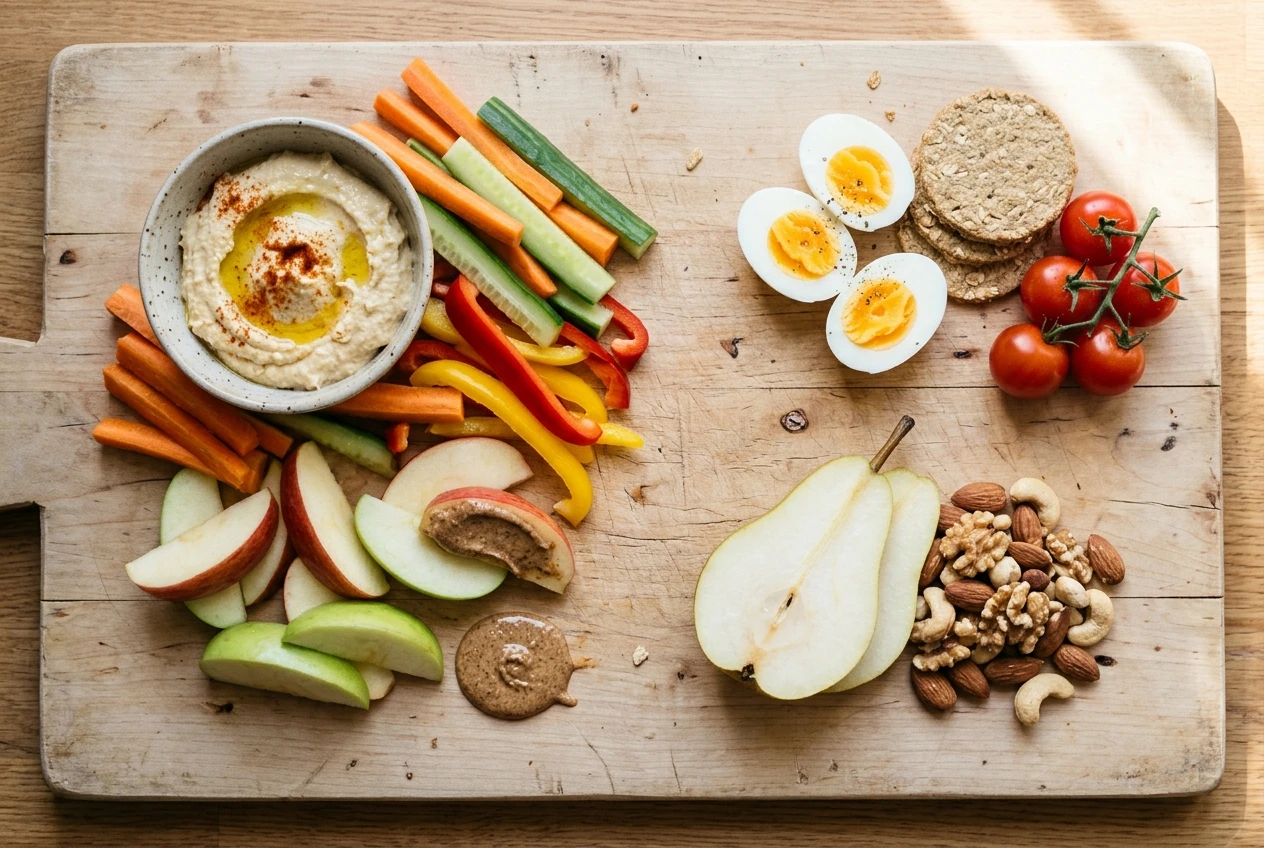
1. Plain Yoghurt With Berries And Oats
Combine plain yoghurt with fresh or frozen berries and a small spoonful of oats.
Yoghurt can provide protein and calcium, berries contribute fruit and fibre, and oats add a wholegrain ingredient.
Choose an unsweetened fortified soya alternative if you prefer a suitable plant-based option.
This is a practical choice when you want something you can assemble in a few minutes.
2. Apple Slices With Nut Or Seed Butter
Slice an apple and serve it with a little peanut, almond or suitable seed butter.
The apple provides fruit and fibre, while the spread contributes fats and some protein.
Choose a spread without unnecessary added sugar or salt where practical.
For a nut-free option, use a suitable seed butter, checking the label carefully if you have allergies.
3. Hummus With Vegetable Sticks And Wholegrain Crackers
Serve hummus with cucumber, carrots or peppers and a few wholegrain crackers.
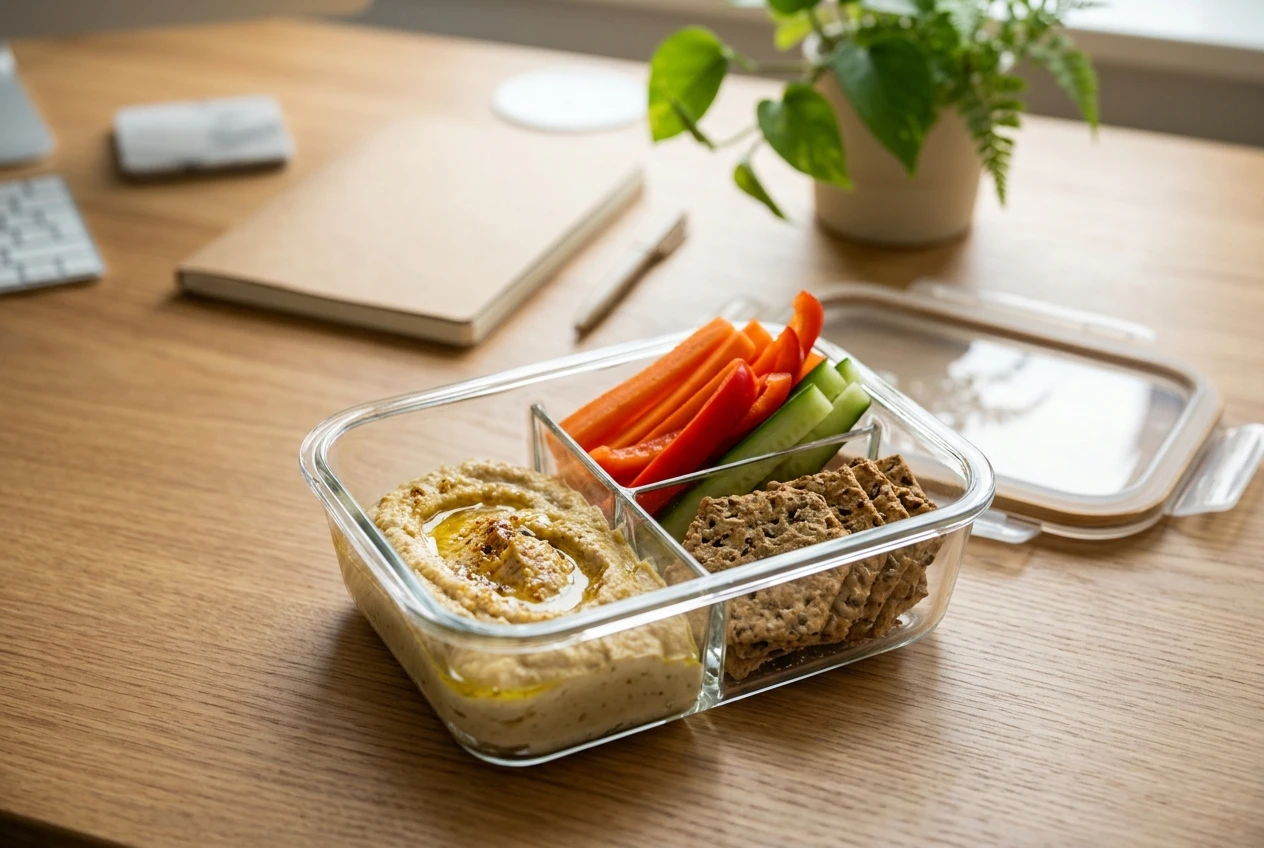
Hummus, usually made with chickpeas, contributes some protein and fibre. Vegetables add variety, while crackers make the snack more substantial.
This combination works well when prepared in a reusable container.
4. Wholegrain Toast With Avocado And Tomato
Top a slice of wholegrain toast with mashed avocado and fresh tomato.
This provides a combination of higher-fibre carbohydrate, vegetables and unsaturated fats.
Add a squeeze of lemon or a little black pepper for flavour.
It can be a useful option when you have time to prepare something fresh.
5. An Egg With Oatcakes And Cherry Tomatoes
Pair a fully cooked boiled egg with oatcakes and cherry tomatoes.
Eggs provide protein, while oatcakes contribute carbohydrate and fibre.
Prepare and store the egg safely, keeping it refrigerated until needed.
For a plant-based alternative, try oatcakes with hummus or mashed beans.
6. A Pear With Unsalted Nuts
A pear and a small handful of unsalted nuts make a convenient combination.
The fruit provides fibre, while nuts contribute unsaturated fats, protein and minerals.
Choose a portion appropriate for your needs.
If you cannot eat nuts, consider pairing the pear with yoghurt or another suitable protein-containing food.
7. Cottage Cheese With Cucumber And Wholegrain Crackers
Combine cottage cheese with cucumber slices and wholegrain crackers.
This provides protein, vegetables and a higher-fibre carbohydrate option.
Choose a suitable lower-salt product if you’re watching your salt intake.
A fortified unsweetened soya yoghurt or hummus can provide an alternative for people who avoid dairy.
8. Roasted Chickpeas With Fresh Fruit
Try a small portion of roasted chickpeas alongside an orange, apple or other fresh fruit.
Chickpeas provide fibre and plant protein, while fruit adds variety and useful nutrients.
You can prepare chickpeas at home using a little oil and your preferred herbs or spices.
Check the salt content of packaged varieties.
Choosing Snacks That Fit Your Afternoon
A nutritious snack is only useful if it fits comfortably into your life.
The most practical option can depend on whether you’re working from home, travelling, caring for family members or spending the day away from a kitchen.
When You’re Working At A Desk
Choose foods that are easy to prepare and eat during a break.
Yoghurt with fruit, wholegrain crackers with hummus or a piece of fruit with nuts can be convenient options.
If you have access to a refrigerator, you can prepare ingredients earlier in the day.
When You’re Travelling
Consider portable foods that do not require complicated preparation.
Whole fruit, unopened shelf-stable products and suitable packaged snacks can be useful.
For yoghurt, eggs, hummus and other perishable foods, use appropriate chilled storage and follow the product’s food safety instructions.
When You Have Limited Time
You do not need to prepare elaborate snack boxes.
Keeping a few familiar ingredients available can make decisions easier.
A banana, a slice of toast or a bowl of yoghurt can be perfectly reasonable choices.
When You’re Not Hungry
You do not have to eat an afternoon snack simply because it appears on a wellness checklist.
Some people prefer three regular meals, while others find an additional snack useful.
There is room for individual preferences and circumstances.
If a healthcare professional has recommended a particular eating schedule because of a medical condition, follow that personalised advice.
Are Packaged Snacks Always A Poor Choice?
Not necessarily.
Packaged foods can be convenient, affordable and useful when fresh preparation isn’t possible.
What matters is the overall dietary pattern and the particular product, rather than whether a food comes in a packet.
You can use nutrition labels to compare products for sugar, salt, saturated fat and fibre.
For example, plain oatcakes, unsalted nuts and some lower-sugar yoghurts can be practical choices.
Foods such as biscuits, chocolate or crisps can also be enjoyed occasionally without needing to label them as forbidden.
A balanced approach leaves room for enjoyment as well as nutrition.
Avoid assuming that products labelled “natural”, “energy”, “protein” or “wellness” are automatically healthier.
The ingredient list and nutrition information are more useful than marketing language alone.
Making Afternoon Snack Planning Easier
Snack planning works best when it reduces effort rather than adding another responsibility.
You could begin by choosing two or three combinations you already enjoy.
For example:
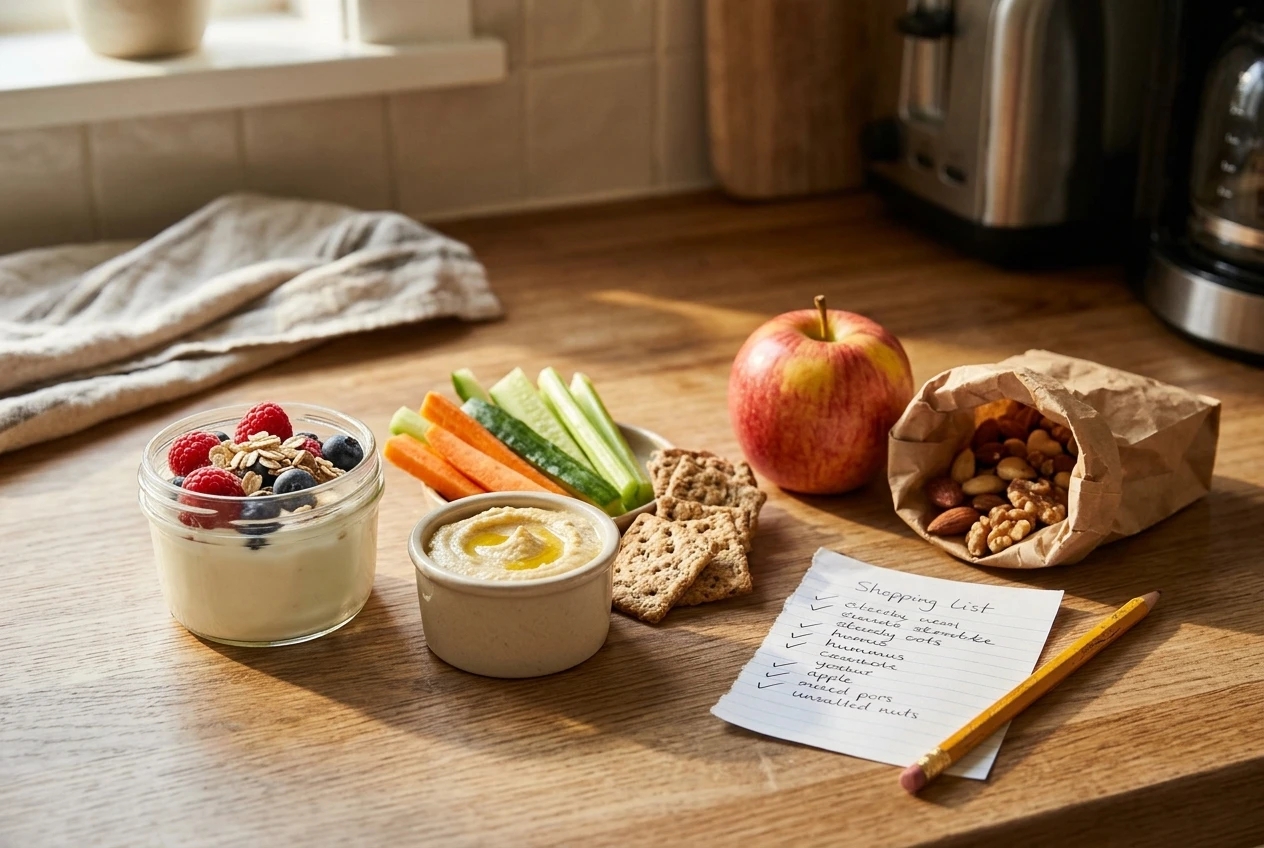
- At home: Plain yoghurt, berries and oats.
- At work: Hummus, vegetable sticks and wholegrain crackers.
- On the go: An apple and a suitable small portion of unsalted nuts.
These examples can be changed from week to week.
You might also keep a few useful ingredients on your shopping list so that afternoon choices don’t depend entirely on what happens to be available.
Planning does not mean eating the same foods every day.
Variety helps provide different nutrients and keeps everyday meals and snacks enjoyable.
If you’re using a meal-planning tool, you can include snack ingredients alongside your regular meals to simplify shopping and preparation.
The goal is convenience, not perfect dietary control.
Why Snacks Are Not A Quick Fix For Fatigue
A nourishing snack can be a helpful response to hunger.
It cannot reliably identify or treat the cause of ongoing tiredness.
Fatigue can be influenced by sleep, stress, medicines, illness and other medical circumstances.
If you repeatedly feel exhausted despite eating regularly, it is important not to assume that you simply need more protein, sugar, vitamins or calories.
Avoid taking supplements for suspected deficiencies without appropriate advice.
The NHS guidance on tiredness and fatigue recommends contacting a GP if unexplained tiredness has continued for a few weeks, affects everyday life or occurs with other symptoms.
Seek advice sooner if symptoms are worsening or concerning. Sudden severe symptoms can require urgent medical attention.
Food is an important part of everyday wellbeing, but it is not a substitute for medical assessment.
Common Questions About Afternoon Snacks
1. What should I eat when I feel hungry in the afternoon?
Choose something you enjoy that fits your appetite and circumstances.
Fruit with yoghurt, wholegrain crackers with hummus or toast with avocado are examples of practical combinations.
There is no single snack that everyone needs.
2. Do afternoon snacks need to contain protein?
No.
Protein-containing foods can be useful, but every snack does not need to include a specific amount of protein.
A varied diet across the day is more important than making every snack nutritionally perfect.
3. Is fruit alone enough for an afternoon snack?
It can be.
A piece of fruit is a nutritious and convenient option. If you’re still hungry, you might choose to add yoghurt, nuts or another food.
Let your appetite and individual needs guide the amount you eat.
4. Can snacks prevent an afternoon energy slump?
Not reliably.
Eating when you’re hungry can provide dietary energy, but afternoon tiredness has many possible explanations.
Snacks should not be presented as a guaranteed way to prevent fatigue or improve concentration.
5. What if I still feel tired after eating a balanced snack?
A snack might not address the reason you’re tired.
If fatigue continues, becomes worse, affects daily life or occurs with other symptoms, speak to your GP.
Do not keep changing foods or taking supplements in place of appropriate medical advice.
Looking Ahead
Balanced snacking is one practical part of everyday nutrition.
Our next proposed Wellness Library article, How Balanced Breakfasts Support Everyday Energy, will explore simple breakfast combinations, convenient morning options and realistic food choices for busy routines.
Rather than promising an energy boost, it will focus on how breakfast can contribute to a varied, balanced diet.
This article will be linked once it has been completed and published.
Continue Your Wellness Journey
The Dietremidies Wellness Library offers related resources to help you explore everyday nourishment and wellbeing.
Understanding Your Daily Energy Patterns Without Chasing Quick Fixes
Explore how sleep, nourishment, daily demands and individual circumstances can provide context for everyday energy patterns.
How Everyday Habits May Influence Your Energy Levels
Discover the relationship between everyday routines and general wellbeing.
The Connection Between Gut Health And Energy
Learn about digestion, balanced nourishment and everyday energy without assuming that gut health explains persistent fatigue.
These articles are educational resources rather than medical treatment guides.
A Gentle Reminder
Choosing an afternoon snack does not need to be another complicated wellness task.
Some days you might enjoy yoghurt and berries. On other days, a sandwich, fruit or something already in your kitchen might be more practical.
There is no perfect snack and no need to chase a constant feeling of energy throughout the day.
What matters is developing an approach to food that supports your nutritional needs, respects your preferences and fits your everyday life.
Small, manageable choices can make healthy eating feel more accessible.
And when tiredness is persistent or unexplained, seeking professional guidance matters more than finding another snack.
Further Reading
For reliable information about balanced nutrition and tiredness, explore:
- NHS — The Eatwell Guide
- NHS — Eating a balanced diet
- NHS — Self-help tips to fight tiredness
- NHS — Tiredness and fatigue
Health Disclaimer
This article is provided for general educational purposes only. It is not intended to diagnose, treat, prevent or manage any medical condition and does not replace personalised advice from a qualified healthcare professional.
The snack combinations are general food ideas, not individualised dietary prescriptions. Nutritional requirements vary according to age, health, medication, allergies and other circumstances.
If you have diabetes, a food allergy, a digestive condition, a medically prescribed diet or other specific nutritional needs, seek advice from your GP or a registered dietitian before making significant dietary changes.
Do not assume that persistent tiredness is caused by hunger, a particular food or a nutritional deficiency.
Contact your GP if unexplained fatigue continues for several weeks, affects daily life or occurs with other concerning symptoms. Seek urgent medical attention for sudden or severe symptoms.
Do not begin supplements for a suspected deficiency or change prescribed treatment without appropriate professional advice.
Your health and safety always come first.
Affiliate Disclosure
Some Dietremidies articles contain affiliate links. Where affiliate links are included, Dietremidies can earn a small commission from qualifying purchases at no additional cost to the reader.