Some mornings begin slowly, with enough time to enjoy breakfast at the kitchen table. Others involve answering messages, getting ready for work, preparing the family for the day or rushing out of the door.
When mornings are busy, breakfast can become an afterthought.

You might reach for something convenient, eat later than planned or wonder whether your usual breakfast is providing the nourishment you need.
There is no single breakfast that works perfectly for everyone. And despite the promises sometimes made about so-called energy-boosting foods, no breakfast can guarantee that you will feel alert and productive throughout the day.
However, a balanced breakfast can contribute useful nutrients, provide dietary energy and offer an opportunity to include foods such as wholegrains, fruit, vegetables and protein.
The good news is that balanced breakfasts do not have to be expensive, complicated or time-consuming.
This guide explores what makes a breakfast balanced, how different ingredients contribute to everyday nutrition and simple ways to create satisfying morning meals that fit real life.
What You’ll Discover
In this article, you’ll learn:
- What a balanced breakfast can look like.
- How carbohydrates, protein, fibre and fats contribute to everyday nutrition.
- Eight practical breakfast combinations.
- How to prepare breakfasts when mornings are busy.
- Ways to make breakfast more affordable and flexible.
- Why breakfast isn’t a guaranteed solution for tiredness.
- How to develop a morning eating routine without rigid food rules.
How This Article Can Help
Breakfast advice can sometimes feel unnecessarily complicated.
One source might suggest avoiding carbohydrates, while another recommends a high-protein meal. Social media can make it seem as though you need expensive ingredients or a carefully measured bowl of food to start your day properly.
In reality, healthy eating is about your overall dietary pattern.
According to the NHS Eatwell Guide, you do not need to achieve the recommended balance of food groups at every meal. What matters is working towards variety and balance across the day or week.
This means breakfast can be simple.
Porridge with fruit, wholegrain toast with eggs or a bowl of yoghurt with oats can all contribute to a varied diet.
The aim is not to create the perfect breakfast. It is to find realistic morning meals that suit your appetite, preferences, budget and routine.
Why Breakfast Can Be Part Of A Balanced Eating Pattern
Breakfast is usually the first meal you eat after your overnight fast.
Like other meals, it provides food energy, measured in calories, and can contribute vitamins, minerals and other nutrients.
A breakfast containing a variety of food groups may help you meet your nutritional needs over the course of the day.
The British Dietetic Association identifies wholegrains, fruit, vegetables, protein foods and unsaturated fats as useful components of a balanced breakfast.
However, this does not mean that eating breakfast guarantees better concentration, prevents fatigue or produces the same effects for everyone.
The way you feel during the morning can also be influenced by sleep, stress, activity, health conditions, medication and many other circumstances.
It is helpful to think of breakfast as one part of everyday nourishment rather than a quick fix for low energy.
For a broader discussion of daily routines and tiredness, explore Understanding Your Daily Energy Patterns Without Chasing Quick Fixes.
What Makes A Breakfast Balanced?
There is no compulsory breakfast formula.

However, combining foods from different groups can help you include a useful range of nutrients.
1. Higher-Fibre Carbohydrates
Carbohydrates are an important source of dietary energy.
Wholegrain bread, oats, wholegrain cereals and other higher-fibre starchy foods can contribute carbohydrate alongside fibre and other nutrients.
Examples include:
- Porridge oats.
- Wholemeal toast.
- Wholegrain breakfast cereals.
- Oatcakes.
- Wholegrain breakfast wraps.
Choosing higher-fibre options more often is consistent with NHS healthy eating guidance.
You do not need to eliminate bread, oats or other carbohydrate foods to eat a balanced breakfast.
2. Protein-Containing Foods
Protein supports normal growth, maintenance and repair of body tissues.
Breakfast options that contain protein include:
- Eggs.
- Plain yoghurt.
- Milk.
- Fortified soya alternatives.
- Beans and lentils.
- Nuts and nut butters.
- Tofu.
Protein-containing foods can make a breakfast more substantial, but there is no need to meet an arbitrary protein target at every meal.
Your overall nutritional needs matter more than following a social-media breakfast rule.
3. Fruit And Vegetables
Fruit and vegetables provide a range of vitamins, minerals and fibre.
Breakfast is a convenient opportunity to include them.
Try berries with porridge, a sliced banana on toast, spinach with eggs or tomatoes alongside a savoury breakfast.
Fresh, frozen and suitable tinned options can all be useful.
You do not need exotic fruit or expensive produce to add variety.
4. Unsaturated Fats
Nuts, seeds, avocado and some plant oils provide unsaturated fats.
These foods can contribute flavour, texture and nutrients.
Examples include adding chopped walnuts to porridge, seeds to yoghurt or avocado to wholegrain toast.
Because fats are concentrated sources of dietary energy, use amounts that suit your appetite and overall needs.
5. Fluids
Breakfast can also be an opportunity to drink something.
Water, milk, unsweetened fortified plant-based drinks, tea and coffee can contribute to daily fluid intake.
You do not need special detox drinks, cleansing teas or expensive wellness beverages.
Choose drinks that suit your preferences and any individual health requirements.
Eight Balanced Breakfast Ideas For Everyday Life
The following ideas use familiar foods and flexible combinations.
They are examples, not strict recipes or prescribed portion sizes.
Adjust ingredients and amounts to your appetite, dietary requirements and circumstances.
1. Porridge With Berries And Nuts
Prepare oats with milk or a suitable fortified plant-based alternative.
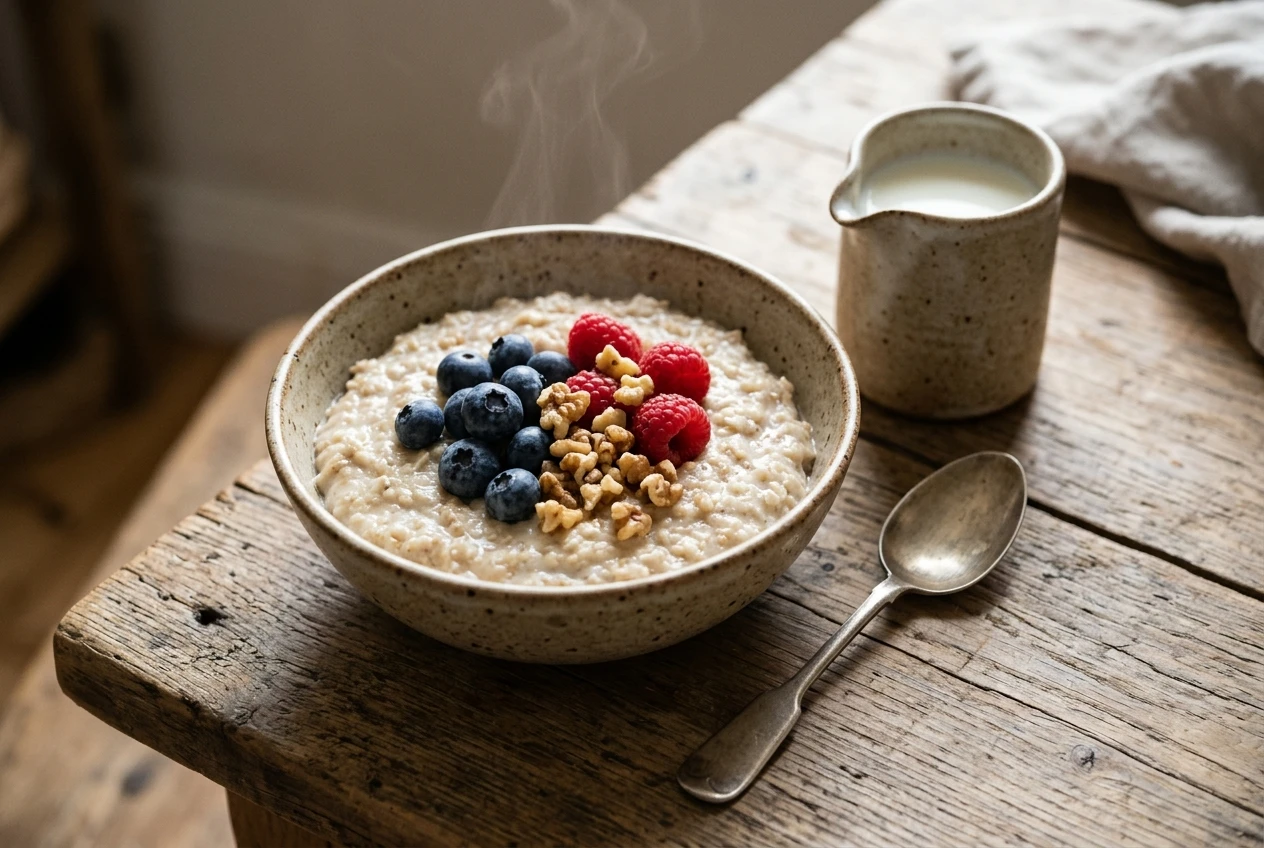
Top with fresh or frozen berries and a small amount of chopped unsalted nuts.
What it contributes: Oats provide carbohydrate and fibre, berries add fruit, and nuts contribute unsaturated fats and some protein.
Practical tip: Frozen berries can be an affordable alternative to fresh fruit. Heat them according to food safety instructions when appropriate.
2. Wholegrain Toast With Eggs And Tomatoes
Serve wholegrain toast with scrambled, boiled or poached eggs and sliced tomatoes.
What it contributes: Wholegrain bread provides carbohydrate and fibre, eggs contribute protein, and tomatoes add vegetables.
Practical tip: If you prefer a plant-based option, replace eggs with scrambled tofu or mashed beans.
3. Plain Yoghurt With Fruit And Oats
Combine plain yoghurt with sliced fruit and a spoonful of oats or lower-sugar muesli.
What it contributes: Yoghurt provides protein and calcium, while fruit and oats contribute carbohydrate and fibre.
Practical tip: Choose an unsweetened, calcium-fortified soya yoghurt if you prefer a suitable dairy-free alternative. Check labels, as nutritional content varies between products.
4. Avocado And Hummus On Wholemeal Toast
Spread hummus over wholemeal toast and add sliced avocado.
Serve with cucumber or tomato.
What it contributes: The bread provides carbohydrate and fibre, hummus contributes some protein and fibre, and avocado provides unsaturated fats.
Practical tip: Use prepared hummus when time is limited, checking the label if salt intake is a concern.
5. Overnight Oats With Apple And Cinnamon
Combine oats with milk or a suitable fortified alternative and refrigerate overnight.
In the morning, add chopped apple, cinnamon and a little yoghurt or nut butter if desired.
What it contributes: Oats and apple provide fibre, while milk, yoghurt or suitable alternatives can add protein and other nutrients.
Practical tip: Prepare the oats in a covered container and keep them refrigerated. Follow safe storage guidance.
Cinnamon can add flavour, but it should not be presented as a treatment for blood sugar problems or fatigue.
6. Beans On Wholegrain Toast
Serve reduced-salt, reduced-sugar baked beans on wholegrain toast.
Add grilled mushrooms or tomatoes if you enjoy them.
What it contributes: Beans provide plant protein and fibre, while toast contributes carbohydrate.
Practical tip: This can be an affordable breakfast using ingredients that are easy to store.
7. A Simple Breakfast Wrap
Fill a wholegrain wrap with scrambled egg or tofu, spinach and tomato.
Fold and serve warm.
What it contributes: The wrap provides carbohydrate, the filling contributes protein, and vegetables add variety.
Practical tip: Prepare the vegetables the night before to reduce morning preparation time.
8. Wholegrain Cereal With Milk And Fruit
Choose a higher-fibre, lower-sugar breakfast cereal.
Serve with milk or a suitable fortified alternative and add sliced banana or berries.
What it contributes: Cereal provides carbohydrate and may contribute fibre and fortified nutrients, while milk and fruit add further nutritional variety.
Practical tip: Compare cereal labels rather than relying on packaging claims such as “natural” or “energy”.
Balanced Breakfasts When You’re Short On Time
A busy morning doesn’t need to prevent you from eating a nourishing breakfast if you want one.
The most useful approach is often to reduce the number of decisions you need to make.
Prepare Ingredients The Evening Before
You might wash fruit, portion oats or prepare overnight oats before going to bed.
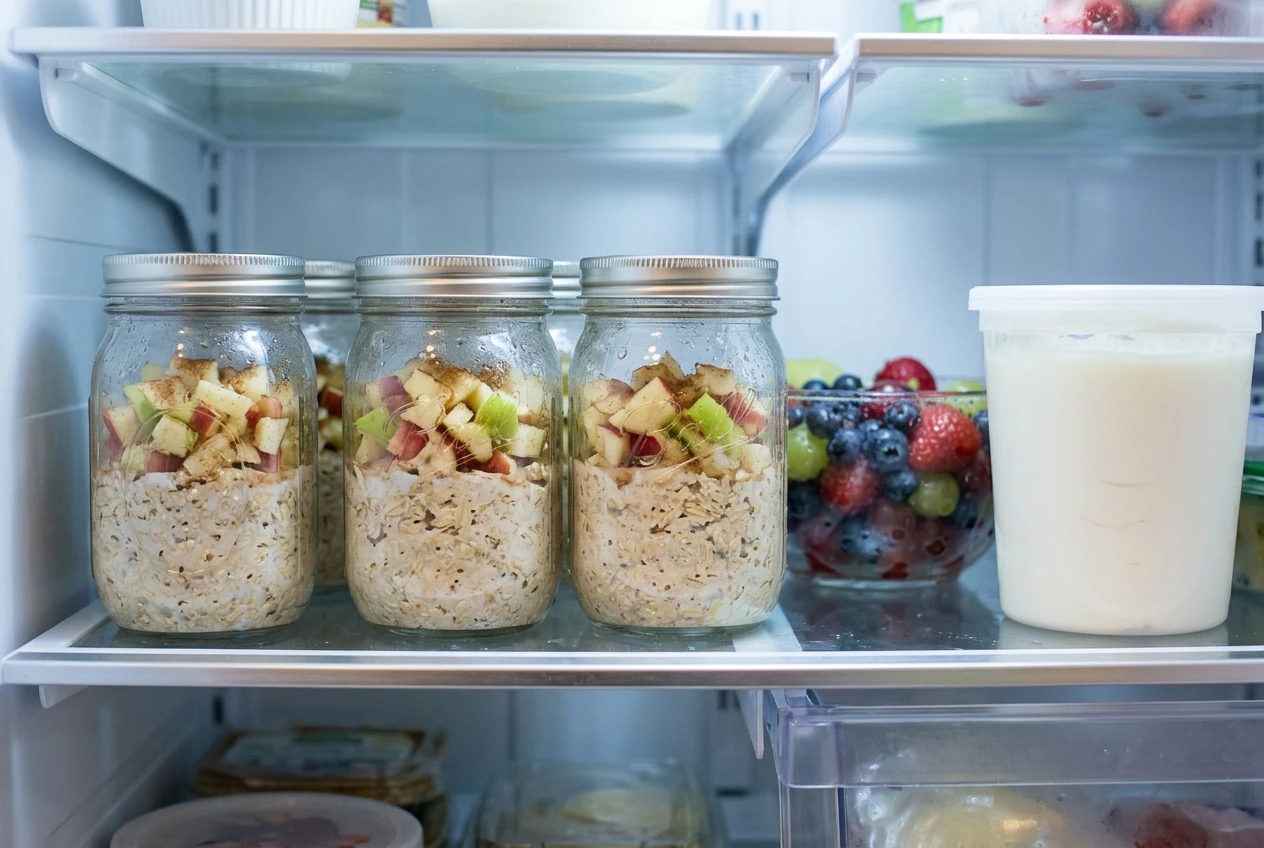
This can make the following morning feel less rushed.
Refrigerate perishable ingredients promptly and follow appropriate storage guidance.
Keep A Few Everyday Staples Available
Useful breakfast ingredients might include:
- Porridge oats.
- Wholegrain bread.
- Eggs or tofu.
- Plain yoghurt or suitable alternatives.
- Fresh or frozen fruit.
- Tinned beans.
- Unsalted nuts or seeds.
You do not need all of these foods every week.
Choose a small selection that fits your household and budget.
Repeat Breakfasts You Enjoy
Eating a similar breakfast several mornings a week is not automatically a problem.
For example, you might enjoy porridge on workdays and eggs on toast at weekends.
You can introduce variety through different fruit, vegetables or toppings.
The aim is to make balanced eating manageable rather than turn breakfast into another daily task.
Make Use Of Convenient Foods
Convenience foods can fit into a balanced diet.
Wholegrain cereal, tinned beans, frozen berries and prepared hummus can save time.
Compare labels where useful, especially for added sugar, salt and fibre.
Convenience does not have to mean poor nutrition.
What If You Don’t Feel Hungry In The Morning?
Not everyone wakes up feeling hungry.
Appetite can vary according to individual routines, sleep patterns, previous meals and other circumstances.
Although breakfast can be a useful opportunity to obtain nutrients, there is no need to force yourself to eat a large meal immediately after waking simply to follow a wellness rule.
You might prefer a smaller breakfast or eat your first meal later.
What matters is that your overall eating pattern meets your nutritional needs.
If you regularly miss meals, struggle to eat enough or experience symptoms that concern you, seek personalised advice.
People managing diabetes, taking certain medicines or following a medically prescribed eating schedule may need specific guidance about meal timing.
Avoid changing prescribed routines without consulting your healthcare professional.
Can Breakfast Support Gut Health?
Breakfast can be an opportunity to include fibre-rich foods that contribute to normal digestive function.
Oats, wholegrain bread, fruit, beans, nuts and seeds are examples.
A varied diet containing fibre from different plant foods can support digestive health.
Some yoghurts and fermented foods contain live microorganisms, but their effects depend on the specific product and microorganisms involved.
Not all fermented foods are proven probiotics, and no single breakfast food can be relied upon to improve the gut microbiome or treat digestive symptoms.
If you are increasing fibre, doing so gradually may be more comfortable, particularly if you are prone to bloating.
Drink appropriate amounts of fluid and consider your individual tolerance.
People with diagnosed digestive conditions may need personalised advice about suitable fibre sources.
The goal is to support everyday nutrition, not to prescribe a universal gut-health breakfast.
Natural Food-First Approaches That Fit Into Breakfast
Supporting everyday wellbeing does not require a collection of herbal powders, energy supplements or expensive wellness products.
Ordinary foods can provide a wide range of nutrients.
A few practical approaches include:
Choose Whole Foods More Often
Oats, fruit, eggs, beans, vegetables and nuts can form the basis of simple breakfasts.
These foods are familiar, versatile and often available at different price points.
Use Herbs And Spices For Flavour
Cinnamon, ginger, herbs and other culinary ingredients can add flavour to breakfast dishes.
They should be treated as foods and seasonings, not as cures for fatigue, digestive conditions or blood sugar disorders.
Include Plant Foods In Different Forms
Fresh fruit is useful, but frozen fruit, tinned beans and wholegrain foods can also contribute to a balanced diet.
A food-first approach does not require expensive organic products or specialist ingredients.
Avoid Unnecessary Supplement Claims
A balanced breakfast cannot prevent every nutrient deficiency, and supplements can be necessary for some people.
However, taking herbal stimulants, vitamins or minerals without an identified need is not a reliable solution to persistent tiredness.
Some supplements can cause side effects or interact with medicines.
Follow appropriate public health recommendations and seek professional advice when you have specific concerns.
Common Breakfast Habits Worth Rethinking
Believing Every Breakfast Must Be Perfectly Balanced
A meal doesn’t need to contain every food group.
The NHS Eatwell Guide focuses on overall dietary balance across the day or week.
Assuming Carbohydrates Are Bad
Carbohydrate-containing foods such as oats, bread and fruit can contribute useful dietary energy and nutrients.
Choosing higher-fibre options regularly is generally more helpful than avoiding carbohydrates altogether.
Relying On Foods Marketed As Energy Boosters
Products marketed for energy may contain added sugar, caffeine or other ingredients.
Marketing claims are not a substitute for checking nutrition information or considering your overall health.
Using Breakfast To Compensate For Poor Sleep
Food cannot replace adequate sleep or medical care.
If you are consistently exhausted, breakfast changes alone may not address the underlying problem.
Following Someone Else’s Portion Sizes
Appetite and nutritional requirements differ.
You do not need to copy an influencer’s breakfast quantities to eat well.
Breakfast, Tiredness And When To Seek Advice
Breakfast can contribute nutrients and food energy, but it does not explain every experience of tiredness.
Persistent fatigue may have several possible causes, including sleep difficulties, stress, medication effects or medical conditions.
If you feel unusually tired despite eating regularly, avoid assuming you need a larger breakfast, more protein or a supplement.
Speak to your GP if unexplained tiredness has lasted several weeks, is affecting daily life or occurs with other concerning symptoms.
Seek urgent medical help for sudden or severe symptoms.
For further information, read the NHS guidance on tiredness and fatigue.
Common Questions About Balanced Breakfasts
1. What is the best breakfast for everyday energy?
There is no single best breakfast for everyone.
A combination such as oats with yoghurt and fruit, or wholegrain toast with eggs and tomatoes, can provide a range of nutrients.
Choose foods that suit your appetite, preferences and overall nutritional needs.
2. Do I need to eat breakfast immediately after waking?
Not necessarily.
Meal timing can vary between individuals.
If you have a medical condition or take medicines that require food at particular times, follow personalised professional advice.
3. Is porridge a balanced breakfast?
Porridge can be a useful breakfast because oats provide carbohydrate and fibre.
Adding milk or a suitable fortified alternative, fruit, yoghurt, nuts or seeds can increase its nutritional variety.
You do not need to include every topping for it to be worthwhile.
4. Can a balanced breakfast stop me feeling tired later?
Not reliably.
Breakfast can contribute food energy and nutrients, but tiredness can be influenced by many factors.
A balanced breakfast is not a guaranteed way to prevent fatigue or improve concentration.
5. Are quick breakfasts less healthy than cooked breakfasts?
Not necessarily.
A bowl of higher-fibre cereal with milk and fruit can be a practical balanced option.
The ingredients and overall dietary pattern matter more than how long a meal takes to prepare.
Looking Ahead
Balanced breakfasts are one part of a wider approach to everyday nutrition.
Our next proposed article, Understanding The Role Of Protein In Everyday Energy And Wellbeing, will explore protein’s nutritional functions, common food sources and practical ways to include it in meals without relying on exaggerated claims.
It will also explain why eating more protein does not automatically mean having more energy.
This article will be linked once it is published.
Continue Your Wellness Journey
Explore these related Dietremidies articles for more practical guidance.
Smart Afternoon Snacks For Steadier Everyday Energy
Discover simple afternoon snack combinations and realistic food choices for busy days.
Understanding Your Daily Energy Patterns Without Chasing Quick Fixes
Explore how daily routines, nourishment, rest and individual circumstances can influence your experience of energy.
These articles are educational resources and do not replace personalised medical advice.
A Gentle Reminder
A balanced breakfast doesn’t need to look like a carefully styled photograph or require a long list of specialist ingredients.
Some mornings, porridge with fruit may be the easiest option. On others, eggs on toast, beans or a bowl of cereal might fit your routine better.
The aim is not to chase perfect nutrition or promise yourself constant energy.
It is to develop an approach to eating that feels practical, flexible and supportive of your overall wellbeing.
Small, realistic food choices can help make balanced nutrition part of everyday life.
Further Reading
For trustworthy guidance on breakfast, food groups and everyday nutrition:
- British Dietetic Association — Healthy Breakfast
- NHS — The Eatwell Guide
- NHS — Eating A Balanced Diet
- NHS — 8 Tips For Healthy Eating
- NHS — Tiredness And Fatigue
Health Disclaimer
This article is intended for general educational and informational purposes only. It does not provide medical diagnosis, treatment or individualised nutritional advice.
Breakfast preferences and nutritional requirements vary according to age, health status, medication, allergies, activity and other personal circumstances.
If you have diabetes, food allergies, a digestive disorder, a medically prescribed diet or another condition affecting your nutritional needs, consult your GP or a registered dietitian for personalised guidance.
Persistent or unexplained tiredness should not be assumed to result from breakfast choices or a nutritional deficiency. Contact your GP if symptoms continue, affect daily life or occur alongside other concerning symptoms.
Do not start supplements, discontinue prescribed treatment or make significant dietary changes for a medical condition without appropriate professional advice.
Your health and safety always come first.
Affiliate Disclosure
Some Dietremidies articles may contain affiliate links. Where affiliate links are included, Dietremidies may earn a small commission from qualifying purchases at no additional cost to the reader.