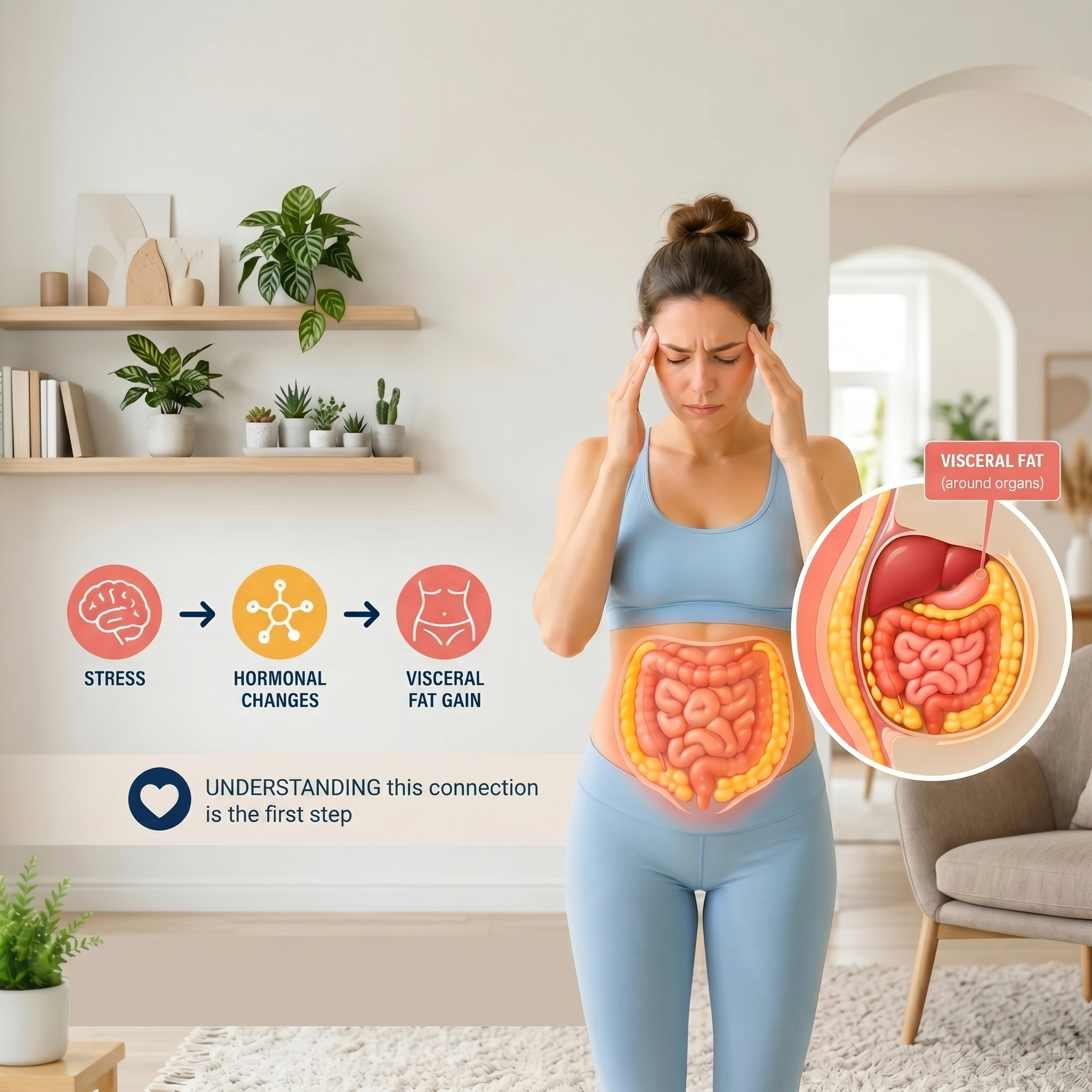
Stress has this remarkable ability to mess with our bodies in unexpected ways. When you’re stressed, your body pumps out this hormone called cortisol. Now, cortisol’s good in short bursts – like, it helps when you’re running for the bus or dodging an awkward conversation. But when stress sticks around, cortisol levels stay high, nudging your body to store fat, particularly in the belly area.
Feeling overwhelmed with where to start?
Download my FREE “Reset & Refocus” Gut & Brain Starter Guide to support your digestion, reduce bloating, and feel more energised—one simple step at a time.
 [Download your free guide here
Cortisol is like the overzealous personal assistant that’s a bit too keen on preparing for a crisis. It tells your body to hold on to energy – aka fat – to be ready for any potential threat. This is why those under constant stress often struggle with weight around their middle, which isn’t just about appearance but ties into deeper health risks.
Distinguishing between types of stress is crucial, too. Not all stress is created equal. Psychological stress comes from worry and anxiety, while physical stress stems from things like over-exercising or lack of sleep. Both pathways lead to the same result: more cortisol and more visceral fat. Recognising the type of stress you’re dealing with can be the first step towards managing its impact on your body.
Visceral Fat: More Than Just a Waistline Issue
When it comes to body fat, not all of it is created equal. Visceral fat is the real troublemaker lurking around your organs, different from subcutaneous fat, which is just under your skin and what you can pinch. Visceral fat’s location makes it a bit stealthier and more concerning because it wraps around your vital organs, upping the risk factor for things like heart disease and diabetes.
Now, not everyone is at equal risk of piling on visceral fat. Several factors play into this, like your genes, age, hormone levels, and lifestyle choices. People with sedentary lifestyles or diets high in processed foods and sugars tend to be more prone. Even stress, as we’ve seen, can contribute significantly.
Worried about whether you’re carrying too much visceral fat? Look beyond the mirror. Key indicators include a large waistline, but symptoms can also include fatigue or even mood changes. Paying attention to these signs matters because visceral fat isn’t just a cosmetic issue – it’s about your overall health. Knowing these odds gives you a head start in tackling them and claiming control over your well-being.
Want a simple plan you can actually follow?
I created a FREE 7-step Reset & Refocus Guide to help you improve your gut health without confusion.
 Easy-to-follow steps
Gut-friendly food ideas
Designed for real life
Strategies to Mitigate Stress and Reduce Visceral Fat
Facing visceral fat and stress might seem daunting, but there’s good news: they can be tackled together. One of the best approaches is to adopt mind-body practices like yoga and meditation. These techniques not only calm your mind but also help reduce cortisol levels, creating a more relaxed internal environment that’s less likely to store excess energy as fat.
Eating the right foods is another effective strategy. Opt for balanced meals rich in fibre, lean proteins, and healthy fats. Foods like leafy greens, nuts, and oily fish can help your body manage stress better and do wonders in reducing that tricky belly fat. Making healthier swaps like choosing whole grains over refined ones can have a positive impact.
Exercise has the power to be both a stress-buster and a fat fighter. Regular physical activity, especially aerobic exercises like walking or cycling, helps burn calories and reduce stress hormone levels. Even short bursts of activity throughout the day can be effective in keeping stress in check and preventing fat build-up.
Creating a lifestyle that’s stress-resilient is more practical than it sounds. Small changes in your daily routine, such as setting realistic goals, prioritising sleep, and even practising gratitude, can significantly lower your stress. These shifts not only improve your mood but also help you maintain a healthy weight balance. By blending these strategies into your life, managing stress and visceral fat becomes a sustainable journey.
Ready to take the next step?
If you’re tired of guessing what to eat and want a clear, structured plan, start with my FREE Reset & Refocus Guide.
It’s designed to help you:
Reduce bloating
Support digestion
Feel more energised
Want a complete transformation?
Upgrade to the 7-Day Gut & Brain Reset Plan for a deeper, guided approach to healing your gut and improving mental clarity.
We strongly recommend that you consult with a qualified healthcare professional before making any decisions related to your health, diet, or well-being practices.
Your health and safety always come first.
Our Website contains affiliate links. This means if you click and make a purchase, we may receive a small commission. “Don’t worry, there is no extra cost to you. It’s a simple way you can support our mission to provide you with quality content.