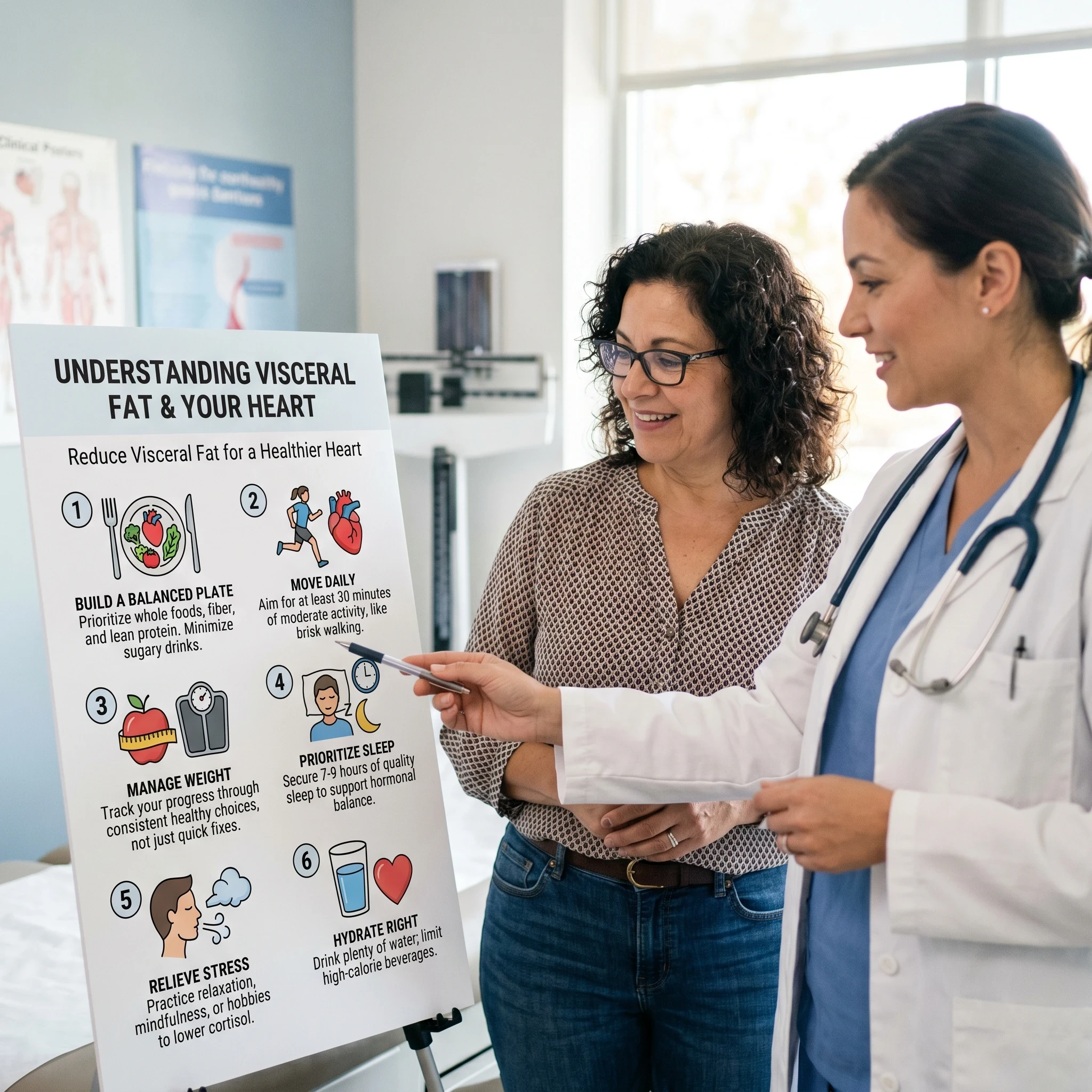
When talking about visceral fat, it’s crucial to understand its place and function in our bodies. Visceral fat is the deep layer of fat that wraps itself around our abdominal organs, like the liver, pancreas, and kidneys. Unlike subcutaneous fat, which sits just below the skin, visceral fat is located in the abdominal cavity, making it less visible but potentially more harmful.
Feeling overwhelmed with where to start?
Download my FREE “Reset & Refocus” Gut & Brain Starter Guide to support your digestion, reduce bloating, and feel more energised—one simple step at a time.
 [Download your free guide here
Subcutaneous fat might cause those love handles, but it’s the visceral fat that can sneak up on you. Recent research has shown some pretty significant connections between visceral fat and health issues, especially heart disease. Scientists have linked excess visceral fat with a higher risk of heart attacks and other serious cardiovascular conditions.
It’s important to grasp how visceral fat affects our hearts. This fat isn’t just sitting idly by—it’s metabolically active, meaning it can release fatty acids, inflammatory agents, and hormones that eventually enter the bloodstream. This can trigger a chain reaction that affects how our hearts function and how our bodies as a whole regulate themselves.
The Silent Threat: How Visceral Fat Influences Heart Health
Visceral fat’s effects on heart health can be more far-reaching than one might first think. One significant way it impacts the cardiovascular system is through cholesterol levels. It tends to increase low-density lipoprotein (LDL) cholesterol, which is the “bad” cholesterol, while reducing high-density lipoprotein (HDL) cholesterol, or the “good” kind. This unfavourable balance can lead to plaque build-up in arteries, paving the way for atherosclerosis—a major risk factor for heart attacks.
Blood pressure also isn’t immune to the effects of too much visceral fat. As this sort of fat grows, it can contribute to harder and narrower blood vessels, resulting in hypertension. Consistently elevated blood pressure puts extra strain on the heart, eventually leading to serious conditions like heart failure.
Another critical point to understand is the inflammatory response caused by visceral fat. This type of fat is adept at producing pro-inflammatory cytokines, which play a role in chronic inflammation. Such inflammatory processes are major players in the development of heart diseases over time.
When it comes to the real-life implications, the symptoms might not show until a heart attack or stroke hits, which is why visceral fat is often dubbed a silent threat. Staying informed about these connections is a big step toward better heart health and overall wellness.
Want a simple plan you can actually follow?
I created a FREE 7-step Reset & Refocus Guide to help you improve your gut health without confusion.
 Easy-to-follow steps
Gut-friendly food ideas
Designed for real life
Combatting Visceral Fat: Strategies for Heart Health
Reducing visceral fat is not only about slimming down your waistline but also about bolstering heart health. A good start involves reassessing dietary habits. Opting for a diet rich in whole foods—fruits, vegetables, whole grains, lean proteins—while limiting processed foods and sugars can significantly impact fat reduction and improve heart health.
Physical activity can’t be overlooked. Regular exercise, particularly aerobic activities like walking, jogging, and cycling, targets abdominal fat. Strength training also helps by increasing muscle mass, which boosts metabolism and aids in fat loss.
Stress and sleep play pivotal roles in visceral fat management. High stress levels are linked to increased fat accumulation due to hormonal imbalances, such as elevated cortisol. Effective stress management techniques, such as mindfulness and yoga, along with ensuring a good night’s sleep, contribute to keeping visceral fat in check.
For some, tackling visceral fat with lifestyle changes alone may not be enough. Medical interventions, including prescription medications or bariatric surgery, could be options for those with severe obesity. Recent advancements in treatments, like certain GLP-1 receptor agonists, are showing promise in reducing visceral fat.
Taking steps to manage visceral fat has more than cosmetic benefits—it’s a commitment to improving heart health and overall well-being. Every small change adds up, paving the way toward a healthier, more active life.
Ready to take the next step?
If you’re tired of guessing what to eat and want a clear, structured plan, start with my FREE Reset & Refocus Guide.
It’s designed to help you:
Reduce bloating
Support digestion
Feel more energised
Want a complete transformation?
Upgrade to the 7-Day Gut & Brain Reset Plan for a deeper, guided approach to healing your gut and improving mental clarity.
We strongly recommend that you consult with a qualified healthcare professional before making any decisions related to your health, diet, or well-being practices.
Your health and safety always come first.
Our Website contains affiliate links. This means if you click and make a purchase, we may receive a small commission. “Don’t worry, there is no extra cost to you. It’s a simple way you can support our mission to provide you with quality content.