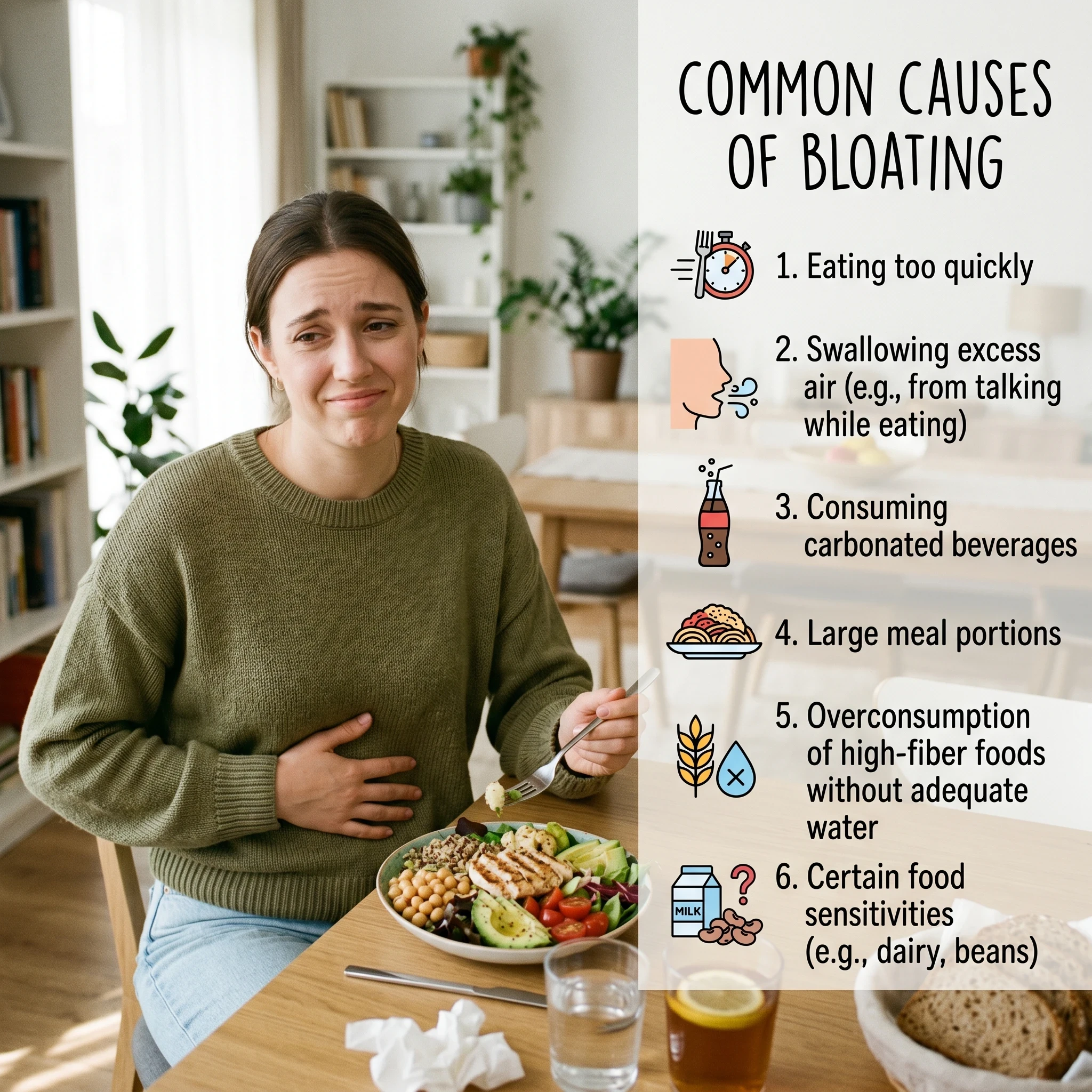
Making healthier food choices is often seen as a positive step towards better well-being. Many people expect that once they start eating more fruits, vegetables, whole grains, and nutritious meals, digestive discomfort will quickly disappear.
Yet for some individuals, the opposite seems to happen.
You may be eating healthier than ever before and still experience bloating, abdominal discomfort, or a feeling of heaviness after meals. This can feel frustrating and confusing, especially when you’re making an effort to support your health.
The good news is that bloating doesn’t always mean you’re doing something wrong. In many cases, several factors may contribute to digestive discomfort, even when your diet appears healthy.
Healthy Eating Doesn’t Always Mean Instant Digestive Comfort
When people change their eating habits, the digestive system often needs time to adjust.
Adding more fibre-rich foods, drinking more smoothies, increasing vegetables, or changing meal patterns can affect digestion in ways that may temporarily increase bloating.
While these foods can be part of a balanced diet, your body may need time to adapt to these changes.
You May Have Increased Fibre Too Quickly
Fibre plays an important role in digestive health and is found in foods such as:
- Oats
- Beans
- Lentils
- Fruits
- Vegetables
- Whole grains
However, a sudden increase in fibre intake can sometimes lead to gas and bloating.
If you’ve recently started eating more fibre-rich foods, your digestive system may simply be adjusting to the change. Gradually increasing fibre while drinking enough water may help support a smoother transition.
Some Healthy Foods May Still Trigger Bloating
Not all healthy foods affect everyone in the same way.
Certain nutritious foods contain natural compounds that can be difficult for some people to digest.
Examples may include:
- Broccoli
- Cauliflower
- Cabbage
- Onions
- Apples
- Beans
- Lentils
This doesn’t mean these foods are unhealthy. It simply highlights the importance of paying attention to how your own body responds to different foods.
Stress May Be Affecting Your Digestion More Than You Realise
Many people associate bloating only with food, but stress can also influence digestion.
Periods of ongoing stress may affect eating habits, digestion, sleep quality, and overall well-being.
You may notice that digestive discomfort feels worse during particularly busy or stressful periods, even if your diet hasn’t changed.
Supporting your well-being through relaxation, movement, sleep, and stress-management habits may be just as important as the foods on your plate.
Eating Too Quickly Can Increase Bloating
Modern life often encourages rushed meals.
When we eat quickly, we may swallow more air and pay less attention to feelings of fullness.
Simple habits such as:
- Eating more slowly
- Chewing thoroughly
- Sitting down during meals
- Minimising distractions
may help support a more comfortable eating experience.
Hydration Matters More Than Many People Think
Water plays an important role in many digestive processes.
Inadequate hydration may contribute to feelings of sluggishness and digestive discomfort for some individuals.
While hydration alone won’t solve every digestive issue, drinking water consistently throughout the day can support overall wellness.
Your Gut May Simply Need Time To Adjust
Positive dietary changes often take time.
Just because you’re eating healthier doesn’t mean your digestive system will respond overnight.
Your body may need time to adapt to:
- Increased fibre
- Different foods
- New meal routines
- Lifestyle changes
Consistency is often more helpful than seeking immediate perfection.
Simple Steps That May Help You Feel More Comfortable
If bloating continues to be a concern, you may find it helpful to:
- Keep a food and symptom journal
- Increase fibre gradually
- Stay hydrated
- Eat meals more slowly
- Prioritise sleep
- Manage stress where possible
- Pay attention to individual food triggers
Small observations over time can provide valuable insight into your own digestive patterns.
A Gentle Reminder About Bloating And Digestive Health
Feeling bloated despite eating healthy can be discouraging, but it doesn’t necessarily mean your efforts are failing.
Our bodies are complex, and digestive comfort can be influenced by many factors beyond the foods we eat.
By paying attention to your body’s signals, making gradual changes, and focusing on overall well-being, you may begin to understand better what works best for you.
Remember that healthy eating is not about perfection. It’s about creating habits that support your body in a way that feels sustainable and realistic for everyday life.
Feeling overwhelmed by bloating, low energy, or digestive discomfort?
Download the Reset & Refocus Starter Guide and discover simple habits that may help support your gut health, energy, and overall wellbeing—one small step at a time.
We strongly recommend that you consult with a qualified healthcare professional before making any decisions related to your health, diet, or well-being practices.
Your health and safety always come first.
Our Website contains affiliate links. This means if you click and make a purchase, we may receive a small commission. “Don’t worry, there is no extra cost to you. It’s a simple way you can support our mission to provide you with quality content.