It’s lunchtime, but your day hasn’t slowed down.
Perhaps you’re working through a busy schedule, managing family responsibilities or trying to fit a meal between appointments.
You might open the fridge and wonder what you can prepare without spending another hour in the kitchen.
When time is limited, lunch can become something you grab quickly, postpone or forget about altogether.
But eating a balanced lunch doesn’t need to involve complicated recipes, expensive ingredients or perfectly arranged meal-preparation containers.
Familiar foods such as wholegrain bread, eggs, beans, vegetables, rice, yoghurt and tinned fish can provide the foundations for practical everyday meals.
A little preparation can help, but convenience matters too.
This guide explores simple lunch ideas, ways to combine different food groups and realistic approaches to meal planning that fit busy days.
The aim is not to create a perfect lunch. It’s to make everyday nourishment easier.
What You’ll Discover
In this article, you’ll explore:
- What makes a lunch balanced and satisfying.
- How to combine familiar foods without complicated nutrition rules.
- Ten practical lunch ideas for busy days.
- Affordable ingredients that make meal preparation easier.
- Simple approaches to packed lunches and working from home.
- Food safety considerations for preparing meals ahead.
- How lunch can contribute to fibre, protein and everyday nutrition.
- Why a balanced lunch cannot guarantee improved energy or concentration.
How This Article Can Help
Healthy eating advice can sometimes make lunch feel more complicated than it needs to be.
You may see elaborate meal-preparation routines, expensive salad bowls or strict instructions about how much protein and carbohydrate every meal should contain.
These approaches don’t always fit ordinary working days or household budgets.
The NHS Eatwell Guide explains that nutritional balance is something to consider across the day or week, rather than something you must achieve at every meal.
That means a simple sandwich, a bowl of soup or a jacket potato can contribute to a healthy eating pattern.
This article offers flexible lunch ideas that can be adjusted to your appetite, dietary preferences, budget and available time.
You don’t need to follow every suggestion or purchase specialist wellness products.
Why Lunch Matters In Everyday Nutrition
Lunch provides an opportunity to eat foods that contribute dietary energy, vitamins, minerals and other essential nutrients.
Depending on what you choose, it can include vegetables, fruit, wholegrains, protein-containing foods and unsaturated fats.
However, lunch is only one part of your overall eating pattern.
A nourishing lunch does not guarantee that you’ll feel energetic throughout the afternoon.
Sleep, stress, activity, medication and health conditions can all influence how you feel.
Likewise, there is no single lunchtime schedule that works for everyone.
Some people prefer a larger midday meal, while others eat something lighter and have a more substantial dinner.
What matters is meeting your nutritional needs in a way that fits your circumstances.
For a wider discussion of daily energy patterns, explore Understanding Your Daily Energy Patterns Without Chasing Quick Fixes.
What Makes A Balanced Lunch?
A balanced lunch can include foods from several groups, but there is no requirement to include every group in exact proportions at every meal.
A practical approach is to consider the following components.
Higher-Fibre Carbohydrates
Foods such as wholegrain bread, brown rice, wholewheat pasta, potatoes and couscous provide carbohydrates.
Carbohydrates are an important source of dietary energy.
Choosing higher-fibre options regularly can also contribute to digestive wellbeing.
Examples include:
- Wholemeal bread or wraps.
- Brown rice.
- Wholewheat pasta.
- Jacket potatoes.
- Wholegrain crackers.
- Oatcakes.
You don’t need to avoid carbohydrates to create a nutritious lunch.
Protein-Containing Foods
Protein is important for the normal growth, maintenance and repair of body tissues.
Useful lunch options include eggs, beans, lentils, chickpeas, tofu, fish, poultry and dairy foods.
You can also use suitable fortified plant-based alternatives.
Protein needs vary, and there is no universal requirement to include a particular number of grams at lunch.
Vegetables And Fruit
Vegetables and fruit provide fibre, vitamins and minerals.
Fresh, frozen and suitable tinned options can all contribute to a varied diet.
Try adding lettuce, cucumber or tomatoes to sandwiches, vegetables to soups or fruit alongside your lunch.
Cooked vegetables are also useful, particularly if you prefer them to raw salads.
Unsaturated Fats
Foods such as avocado, nuts, seeds and olive oil contribute unsaturated fats.
These can be included in dressings, sandwich fillings and other meals.
Choose quantities that suit your overall nutritional needs.
Drinks
Lunch is also an opportunity to drink fluids.
Water is a practical everyday choice.
Milk, suitable plant-based drinks, tea and other beverages can also contribute to daily fluid intake.
You don’t need detox drinks or specialist energy beverages.
Ten Simple Lunch Ideas For Busy Days
These ideas use familiar ingredients and straightforward preparation methods.
They are flexible combinations rather than strict recipes.
Adjust ingredients and portions to suit your appetite, preferences and dietary requirements.
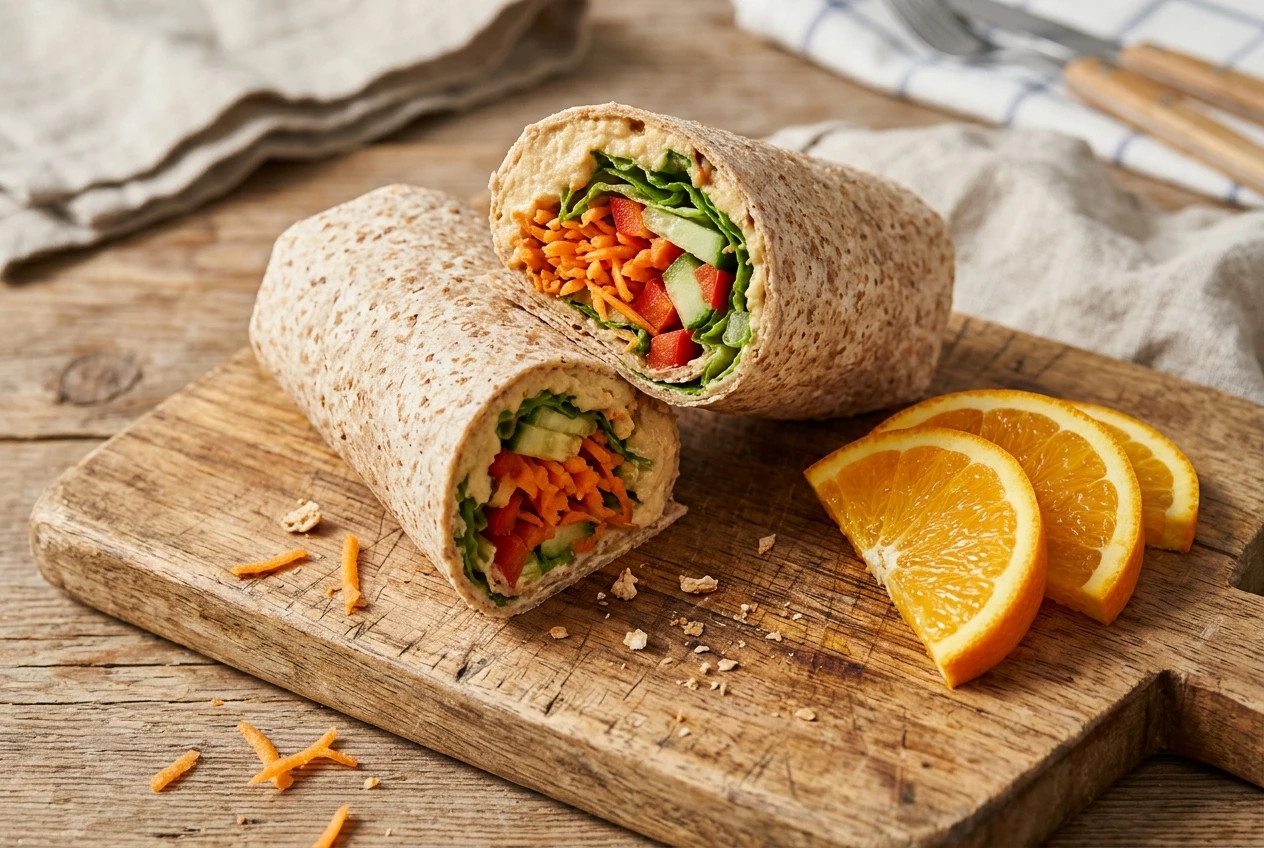
1. Hummus And Vegetable Wholegrain Wrap
Spread hummus over a wholegrain wrap.
Add cucumber, grated carrot, lettuce and sliced peppers.
Roll tightly and serve with fruit if desired.
Why it works: The wrap contributes carbohydrate and fibre, hummus provides some plant protein, and vegetables add variety.
Practical tip: Prepare the vegetables in advance and assemble the wrap shortly before eating to avoid sogginess.
2. Jacket Potato With Beans And Vegetables
Bake a potato and serve it with reduced-salt, reduced-sugar baked beans.
Add cooked broccoli, tomatoes or another vegetable you enjoy.
Why it works: Potatoes provide carbohydrate, while beans contribute fibre and plant protein.
Practical tip: A microwave can reduce preparation time. Follow appropriate cooking instructions.
3. Chicken Or Chickpea Wholegrain Sandwich
Fill wholegrain bread with cooked chicken or mashed chickpeas.
Add lettuce, tomato and a suitable spread.
Why it works: The bread contributes carbohydrate and fibre, while chicken or chickpeas provide protein.
Practical tip: Use chickpeas for a convenient plant-based alternative.
4. Lentil And Vegetable Soup
Prepare a simple soup using cooked lentils, carrots, tomatoes, onions and suitable stock.
Serve with wholegrain bread if desired.
Why it works: Lentils provide protein and fibre, while vegetables add nutrients and variety.
Practical tip: Prepare several portions and refrigerate or freeze them safely for another day.
5. Tuna And Sweetcorn Pasta Salad
Combine cooked wholewheat pasta with tinned tuna, sweetcorn, cucumber and tomatoes.
Add a little olive oil, lemon juice or another dressing you enjoy.
Why it works: Pasta contributes carbohydrate, tuna provides protein, and vegetables add variety.
Practical tip: Keep the prepared salad chilled. If you’re pregnant or planning pregnancy, follow NHS advice about fish choices and intake.
6. Tofu And Vegetable Rice Bowl
Serve cooked tofu with rice and a selection of vegetables.
Season with ginger, garlic or suitable herbs and spices.
Why it works: Rice contributes carbohydrate, tofu provides plant protein, and vegetables add variety.
Practical tip: Frozen mixed vegetables can save preparation time.
If using previously cooked rice, follow food safety guidance carefully. Rice requires prompt cooling, refrigeration and appropriate reheating.
7. Egg And Avocado Wholegrain Toast
Top wholegrain toast with fully cooked eggs and sliced avocado.
Add tomatoes or spinach if desired.
Why it works: Eggs provide protein, toast contributes carbohydrate and fibre, and avocado provides unsaturated fats.
Practical tip: This is a convenient option when you’re working from home and have access to a kitchen.
8. Chickpea And Couscous Salad
Combine prepared couscous with chickpeas, cucumber, tomatoes and chopped herbs.
Add a little olive oil and lemon juice.
Why it works: Couscous contributes carbohydrate, chickpeas provide fibre and plant protein, and vegetables add variety.
Practical tip: Wholewheat couscous can provide additional fibre where available.
9. Salmon Or Bean And Vegetable Bowl
Serve appropriately cooked salmon or a bean-based alternative with potatoes, rice or another starchy food.
Add cooked vegetables or a salad.
Why it works: The meal combines carbohydrate, protein-containing foods and vegetables.
Practical tip: Tinned salmon or suitable tinned beans can be convenient alternatives to preparing ingredients from scratch.
10. A Simple Lunch Plate
Not every lunch needs to be a recipe.
Arrange wholegrain crackers or bread with hummus, cheese or a suitable alternative, cucumber, tomatoes and fruit.
Why it works: It provides an opportunity to include several food groups without cooking.
Practical tip: Choose two or three ingredients you already have available rather than shopping for an entirely new meal.
Balanced Lunches When You’re Working From Home
Working from home can make lunch preparation easier in some ways, but it can also blur the boundaries between work and breaks.
You might find yourself eating while answering messages or postponing lunch until late afternoon.
A practical approach is to keep a few ingredients available that can be assembled quickly.
For example, you could prepare a jacket potato, make a simple sandwich or reheat a properly stored portion of soup.
You don’t need to cook a new meal from scratch every day.
Taking a comfortable break when possible may also make lunchtime feel less rushed.
However, there is no need to turn lunch into another productivity task.
The aim is to make eating manageable within your daily routine.
Packed Lunches For Work And Busy Days
Packed lunches can help when you’re away from home and want convenient food choices.
A useful packed lunch might include:
- A sandwich, wrap, rice dish or pasta salad.
- A protein-containing food such as eggs, beans, tofu or chicken.
- Vegetables or fruit.
- Water or another suitable drink.
You do not need a complicated collection of containers.
A reusable lunchbox and suitable chilled storage may be enough.
The British Dietetic Association encourages variety and practical combinations rather than requiring every packed lunch to be perfect.
If you regularly buy lunch, the same principles can help you choose from available options.
A supermarket sandwich, soup or prepared salad can fit into a balanced diet.
Check labels where useful, particularly for salt, fibre and ingredients relevant to allergies.
Affordable Lunch Ingredients Worth Keeping Available
Balanced eating does not require expensive foods.
Some practical cupboard, fridge and freezer staples include:
- Tinned beans and chickpeas.
- Dried or tinned lentils.
- Wholegrain bread or wraps.
- Rice, pasta or couscous.
- Eggs.
- Frozen vegetables.
- Tinned tomatoes.
- Plain yoghurt or suitable alternatives.
- Potatoes.
- Tinned fish or tofu.
Choose a selection that suits your household rather than trying to stock everything.
Frozen and tinned ingredients can reduce waste and make meal preparation more convenient.
Where practical, compare prices and choose lower-salt or lower-sugar options.
Affordable ingredients can still provide useful nutritional variety.
Simple Lunch Planning Without A Rigid Meal Plan
Meal planning doesn’t need to involve preparing seven identical containers every Sunday.
A flexible approach may work better.
Choose Three Familiar Lunches
Start with three meals you already enjoy.
For example:
- Hummus and vegetable wraps.
- Lentil soup with wholegrain bread.
- Jacket potatoes with beans.
You can repeat them or change the ingredients throughout the week.
Prepare Ingredients Rather Than Complete Meals
You might wash vegetables, cook lentils or prepare a suitable dressing in advance.
This can make assembling meals easier.
Keep perishable ingredients refrigerated and follow safe storage guidance.
Use Leftovers Carefully
Leftovers can save time and reduce food waste.
For example, cooked vegetables may be useful in a wrap or soup the following day.
However, leftovers must be cooled, stored and reheated safely.
Allow Room For Change
Your schedule, appetite and food preferences may vary.
A flexible plan should help you make choices rather than make you feel restricted.
If you prefer a different lunch from the one you planned, that’s perfectly reasonable.
Food Safety When Preparing Lunches Ahead
Food safety is particularly important when preparing packed lunches, cooked rice, meat, fish, eggs and dairy-containing meals.
The UK Food Standards Agency advises appropriate cooling, refrigeration and handling of leftovers.
A few useful principles include:
Keep Perishable Foods Chilled
Refrigerate foods that require chilled storage.
Use a cool bag with ice packs when suitable refrigeration is unavailable.
Cool Cooked Foods Promptly
Cool cooked food quickly and place it in the fridge within the recommended period.
Dividing food into smaller portions can help it cool more quickly.
Be Especially Careful With Rice
Cooked rice can contain bacteria or spores that survive cooking.
Cool rice promptly, refrigerate it appropriately and follow official guidance on storage and reheating.
Do not repeatedly reheat rice.
Follow Use-By Dates
Use-by dates are important for food safety.
Do not rely on smell or appearance to determine whether food past its use-by date is safe.
Check Individual Dietary Requirements
Food allergies, pregnancy, immune conditions and other circumstances may require additional precautions.
For detailed guidance, consult the Food Standards Agency rather than relying on general meal-preparation advice.
How Lunch Can Contribute To Gut Health
Lunch can be a convenient opportunity to include fibre-rich plant foods.
Wholegrains, vegetables, beans, lentils and chickpeas all contribute dietary fibre.
Fibre supports normal digestive function, and certain fibres are fermented by microorganisms in the large intestine.
However, not everyone tolerates the same foods equally well.
For example, large portions of pulses or raw vegetables may cause bloating or discomfort for some individuals.
If you’re increasing fibre, gradual changes may be more comfortable.
Cooked vegetables or smaller portions of beans may suit some people better than suddenly adding large salads or substantial amounts of bran.
There is no single lunch that guarantees a healthier gut microbiome.
For more guidance, read Fibre-Rich Foods That Support Gut Health And Everyday Nutrition.
Natural Food-First Approaches To Everyday Lunches
Supporting everyday nutrition doesn’t require expensive powders, herbal stimulants or specialist wellness products.
Familiar foods can provide the nutrients needed for a varied diet.
Use Herbs And Spices For Flavour
Ginger, parsley, coriander, basil and other culinary ingredients can make simple lunches more enjoyable.
They should be treated as seasonings, not as remedies for fatigue or digestive conditions.
Include A Variety Of Plant Foods
Vegetables, wholegrains, beans, lentils, nuts and seeds can contribute different nutrients.
Choose foods that suit your preferences and digestive tolerance.
Make Use Of Simple Preparation Methods
Roasting, steaming, boiling and assembling cold meals can all be practical approaches.
There is no requirement to prepare elaborate recipes to eat well.
Avoid Unsupported Energy Claims
Products marketed as natural energy boosters do not necessarily provide benefits beyond ordinary nutrition.
A balanced lunch can contribute dietary energy, but it cannot reliably prevent afternoon fatigue or improve concentration.
Keep The Overall Diet In Perspective
One lunch does not determine your health.
Variety and balance across your overall eating pattern are more meaningful than trying to make every meal perfect.
Common Lunch Habits Worth Rethinking
Believing A Healthy Lunch Must Be A Salad
Salads can be nutritious, but soups, sandwiches, wraps, rice dishes and jacket potatoes can also contribute to a balanced diet.
Avoiding Carbohydrates At Lunchtime
Carbohydrates provide dietary energy.
Wholegrains, potatoes, rice and other starchy foods can be useful parts of lunch.
Assuming More Protein Is Always Better
Protein is essential, but there is no need to pursue the highest possible amount at every meal.
Individual requirements and overall dietary balance matter.
Thinking Convenience Foods Are Always Unhealthy
Prepared foods can be useful when time is limited.
Compare ingredients and nutrition labels rather than assuming all packaged lunches are poor choices.
Expecting Lunch To Cure Afternoon Tiredness
Food can provide energy and nutrients, but persistent tiredness can have many causes.
A nutritious lunch is not a medical treatment.
Lunch, Everyday Energy And When To Seek Advice
A balanced lunch contributes to nutritional intake, but it cannot explain or resolve every experience of fatigue.
Tiredness may be influenced by sleep, stress, illness, medication and other factors.
If you frequently feel exhausted despite eating regularly, avoid assuming that you simply need more protein, carbohydrates or a larger lunch.
Seek advice from your GP if unexplained fatigue lasts several weeks, affects your daily activities or occurs with other concerning symptoms.
For additional information, consult the NHS guidance on tiredness and fatigue.
Common Questions About Balanced Lunches
1. What Is A Simple Balanced Lunch?
A balanced lunch can include a carbohydrate food, a protein-containing food and vegetables or fruit.
Examples include a hummus and vegetable wrap, beans on a jacket potato or lentil soup with wholegrain bread.
You do not need to include every food group at every meal.
2. Can Sandwiches Be Part Of A Healthy Lunch?
Yes.
Wholegrain bread with suitable fillings such as eggs, hummus, chicken or beans can contribute useful nutrients.
Adding vegetables or fruit provides further variety.
3. Are Plant-Based Lunches Nutritious?
They can be.
Meals containing beans, lentils, tofu, wholegrains and vegetables can contribute protein, fibre and other nutrients.
People following fully vegan diets should also ensure reliable vitamin B12 intake and consider other nutritional needs.
4. Do I Need To Prepare Lunches For The Entire Week?
No.
You might prefer preparing ingredients for two or three days, using safely stored leftovers or assembling meals shortly before eating.
Choose a routine that works for your schedule and follows food safety guidance.
5. Can A Balanced Lunch Prevent Afternoon Tiredness?
Not reliably.
Lunch contributes dietary energy and nutrients, but tiredness has many possible explanations.
If fatigue is persistent, unexplained or affecting everyday life, seek medical advice rather than relying on dietary changes alone.
Looking Ahead
Simple lunches are another practical part of everyday nutrition.
Our next proposed article, Hydration Habits That Support Everyday Wellbeing, will explore fluid needs, everyday drink choices and common hydration misconceptions.
It will focus on realistic habits rather than detox claims or rigid water-intake rules.
Continue Your Wellness Journey
Explore these related Dietremidies Wellness Library articles.
Fibre-Rich Foods That Support Gut Health And Everyday Nutrition
Discover familiar fibre-rich foods, digestive wellbeing guidance and practical ways to increase fibre gradually.
Read the article: https://dietremidies.com/fibre-foods-gut-health/
Understanding The Role Of Protein In Everyday Energy And Wellbeing
Explore everyday protein sources, general nutritional requirements and balanced meal ideas.
Read the article: https://dietremidies.com/protein-everyday-energy-wellbeing/
How Balanced Breakfasts Support Everyday Energy
Discover simple breakfast combinations for busy mornings.
Read the article: https://dietremidies.com/balanced-breakfast-everyday/
Smart Afternoon Snacks For Steadier Everyday Energy
Explore practical snack ideas using familiar ingredients.
Read the article: https://dietremidies.com/smart-afternoon-snacks-for-steadier-everyday-energy/
A Gentle Reminder
A balanced lunch doesn’t need to be expensive, elaborate or perfectly planned.
Some days, homemade soup may be convenient. On others, a sandwich, jacket potato or simple plate of familiar foods might suit your schedule better.
The aim is not to follow rigid food rules or expect every meal to transform how you feel.
Instead, focus on nourishment, variety and realistic choices that fit your everyday life.
Small, manageable routines can make balanced eating more accessible.
Further Reading
For reliable information about balanced meals, packed lunches and food safety, explore:
NHS — The Eatwell Guide
British Dietetic Association — Healthy Packed Lunches
NHS — Eating A Balanced Diet
UK Government — Student Guide To Food Safety And Hygiene
Student guide to food safety and hygiene – GOV.UK
UK Government — How To Chill, Freeze And Defrost Food Safely
How to chill, freeze and defrost food safely – GOV.UK
NHS — Tiredness And Fatigue
Health Disclaimer
This article provides general educational information and does not constitute medical diagnosis, treatment or individualised dietary advice.
Nutritional needs vary according to age, health status, activity, pregnancy, breastfeeding, medication and other circumstances.
People with diabetes, food allergies, digestive conditions, medically prescribed diets or other health concerns should seek personalised advice from a GP or registered dietitian before making significant dietary changes.
Follow appropriate food safety guidance when preparing, storing, transporting and reheating lunches.
Do not assume that persistent fatigue is caused by lunch choices or a particular nutritional deficiency.
Seek medical advice for persistent, worsening or unexplained symptoms. Sudden or severe symptoms may require urgent medical attention.
Your health and safety always come first.
Affiliate Disclosure
Some Dietremidies articles may contain affiliate links.
Where affiliate links are included, Dietremidies may receive a small commission from qualifying purchases at no additional cost to the reader.
Affiliate relationships do not replace the need for accurate information, reliable evidence and transparent recommendations.