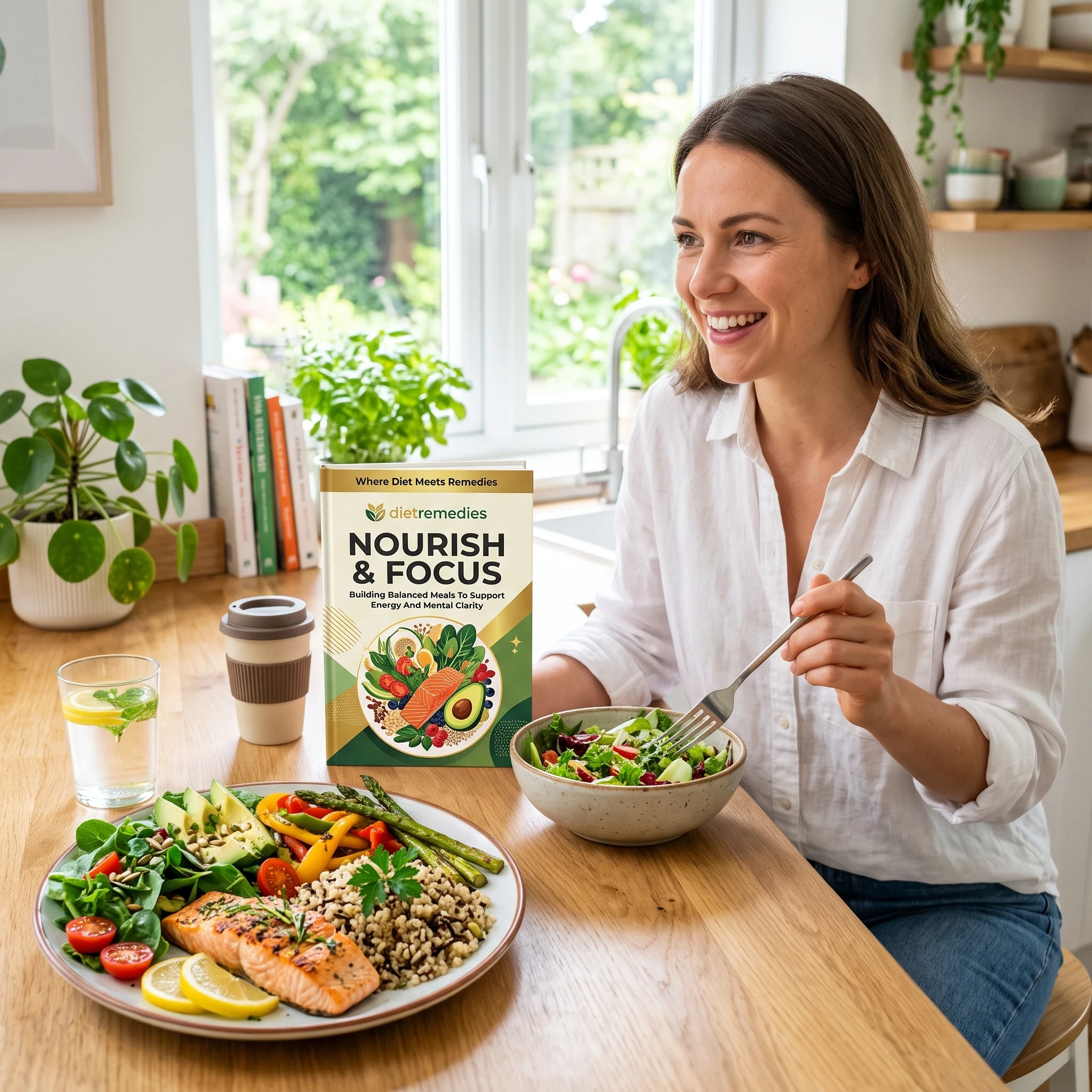
Knowing which nutrients matter and which foods provide them is useful.
But eventually nutrition needs to move beyond individual nutrients and ingredients and become something much more practical:
a meal.
Throughout this series, we’ve explored how nutrition connects with the brain, how everyday eating patterns can influence mood and mental clarity, how the gut and brain communicate, which nutrients are involved in normal brain function, and where those nutrients can be found in everyday foods.
In Everyday Foods That Support Brain Health And Balanced Nutrition, we moved from nutrients towards practical food choices.
This article takes the next step by looking at how different foods can work together within everyday meals.
The goal isn’t to create a perfect plate.
It’s to develop a flexible way of thinking about meals that can support nutritional variety, provide energy and make balanced eating feel easier to apply in everyday life.
What You’ll Discover
Throughout this article, you’ll discover:
- a simple way to think about building a balanced meal;
- why carbohydrates, protein, fibre-containing foods and unsaturated fats can work well together;
- how meal composition can influence digestion and post-meal blood-glucose responses;
- why meal timing and meal structure are related but different;
- how breakfast, lunch, dinner and optional snacks can follow the same flexible principles;
- why every meal does not need to look perfectly balanced;
- how to adapt the framework around appetite, culture, preferences and individual needs.
Most importantly, you’ll see how many of the principles covered throughout this series can come together in an ordinary meal.
How This Article Can Help
By the end of this article, you’ll have a practical framework for putting meals together without counting calories, tracking every nutrient or following a rigid meal plan.
Rather than asking:
“Is this the perfect meal?”
you can begin asking:
“Does this meal give me a useful combination of foods that will help nourish me and provide the energy I need?”
That is a much more flexible starting point.
Why Meal Structure Matters
A meal is more than the sum of its individual ingredients.
Different foods provide different combinations of:
- carbohydrate;
- protein;
- fat;
- fibre;
- vitamins;
- minerals;
- other food components.
Carbohydrate-containing foods provide an important source of energy.
Protein provides amino acids and contributes to numerous structural and metabolic functions.
Fibre-rich foods contribute to digestive health and can influence the way a meal is digested.
Unsaturated fats provide essential fatty acids and help with the absorption of fat-soluble vitamins.
Combining different food groups can therefore provide a broader nutritional profile than relying heavily on one type of food.
Meal composition can also influence the body’s response after eating.
For example, research shows that adding protein to carbohydrate-containing meals can alter post-meal glucose and insulin responses, although the effect varies according to factors including the type and amount of protein and a person’s metabolic health.
This is why it is more accurate to say that meal composition influences the post-meal response than to promise that one particular food combination will keep everyone’s blood sugar “stable.”
For most people, the practical message is straightforward:
Build meals from a combination of food groups rather than expecting one ingredient to provide everything you need.
A Simple Way To Think About Balance
One useful visual framework is the Healthy Eating Plate, developed by nutrition experts at the Harvard T.H. Chan School of Public Health.
It suggests approximately:
- half the plate from vegetables and fruits, with an emphasis on vegetables and variety;
- one quarter from whole grains;
- one quarter from protein sources such as fish, poultry, beans or nuts;
- unsaturated plant oils in moderation;
- water as the main drink.
These proportions are not based on exact calorie amounts and are not intended to prescribe a fixed number of servings.
They are a visual guide.
That’s an important distinction.
Not every meal will fit neatly onto a plate.
Soup doesn’t.
A curry doesn’t.
A sandwich doesn’t.
A bowl of porridge certainly doesn’t.
The principle can still be useful.
Instead of reproducing the diagram perfectly, consider whether the meal contains a useful combination of:
vegetables and/or fruit + a protein source + a carbohydrate source + an appropriate source of fat.
Further Reading
Harvard T.H. Chan School Of Public Health — Healthy Eating Plate
The UK Eatwell Guide
For Dietremidies readers in the UK, the NHS Eatwell Guide provides another useful reference.
It encourages an overall eating pattern containing:
- plenty of fruit and vegetables;
- higher-fibre starchy foods such as potatoes, bread, rice and pasta;
- some dairy or suitable alternatives;
- beans, pulses, fish, eggs, meat and other protein foods;
- small amounts of unsaturated oils and spreads;
- appropriate fluid intake.
Importantly, healthy-eating proportions don’t have to be achieved perfectly at every meal.
The broader pattern matters.
This gives us an important Dietremidies principle:
Balance can be considered across meals and days rather than judged from one plate in isolation.
Further Reading
Start With A Carbohydrate Source
Carbohydrates sometimes receive an unnecessarily negative reputation in wellness discussions.
But carbohydrate-containing foods are an important source of energy.
Examples can include:
- potatoes;
- oats;
- rice;
- bread;
- pasta;
- barley;
- quinoa;
- other grains.
Where appropriate, higher-fibre or wholegrain varieties can provide additional fibre and nutrients.
For example:
- wholegrain bread instead of a more refined version;
- brown rice or another whole grain;
- oats;
- potatoes with their skins where suitable.
This doesn’t mean refined carbohydrates can never be eaten.
Nor does it mean every carbohydrate needs to be wholegrain.
The aim is to create opportunities for higher-fibre choices within the wider eating pattern.
Further Reading
NHS — Starchy Foods And Carbohydrates
Add A Protein Source
Next, consider whether the meal contains a useful protein source.
Depending on preferences and dietary requirements, that could include:
- beans;
- lentils;
- chickpeas;
- eggs;
- fish;
- poultry;
- tofu;
- other soya foods;
- yoghurt;
- nuts;
- seeds;
- meat.
Protein isn’t only important for muscles.
Amino acids derived from dietary protein are used throughout the body for numerous functions.
As we explored earlier in this series, some amino acids also participate in pathways involved in neurotransmitter production.
But we don’t need to turn that science into another rule about eating protein “for focus.”
The practical reason for including protein is much broader:
it contributes to nutritional adequacy and helps create a more complete meal.
Make Room For Vegetables And Fruit
Vegetables and fruits contribute:
- fibre;
- vitamins;
- minerals;
- water;
- numerous naturally occurring plant compounds.
Variety matters more than finding one supposedly superior vegetable.
A meal might include:
- spinach in an omelette;
- tomatoes in a sandwich;
- mixed vegetables in a curry;
- peppers and broccoli in a stir-fry;
- berries with breakfast;
- fruit alongside lunch;
- roasted vegetables with an evening meal.
You don’t need every colour at every meal.
And vegetables don’t have to occupy exactly half of every plate.
The useful habit is simply to ask:
Is there an opportunity to include some fruit or vegetables here?
Sometimes the answer will be yes.
Sometimes it won’t.
The overall pattern is what matters.
Include Appropriate Sources Of Fat
Dietary fat is another essential component of nutrition.
Sources of predominantly unsaturated fats can include:
- olive oil;
- rapeseed oil;
- nuts;
- seeds;
- avocado;
- oily fish.
Fat contributes energy, essential fatty acids and helps the body absorb fat-soluble vitamins.
Again, there is no requirement to add a separate “healthy fat” to every meal if the foods already present provide it.
Salmon already contains fat.
Nuts and seeds contain fat.
A meal cooked with an unsaturated vegetable oil may already include it.
The purpose of the framework is to notice what’s present, not mechanically add another ingredient to satisfy a checklist.
What Could This Look Like At Breakfast?
Breakfast is a useful example because it shows how flexible the framework can be.
There is no single breakfast that everyone needs to eat.
Nor does everyone need to eat breakfast at exactly the same time.
For someone who chooses to eat breakfast, examples of mixed meals could include:
Porridge + yoghurt + berries + seeds
This can combine:
- oats as a wholegrain carbohydrate;
- yoghurt as a protein-containing food;
- berries as fruit;
- seeds providing fibre, unsaturated fats and other nutrients.
Eggs + wholegrain toast + vegetables
This can combine:
- eggs as a protein and choline-containing food;
- wholegrain toast as a carbohydrate and fibre source;
- tomatoes, spinach, mushrooms or other vegetables.
Yoghurt + oats + fruit + nuts
Again, several food groups can come together without requiring a complicated recipe.
These are examples, not prescriptions.
The useful question isn’t:
“Which breakfast guarantees concentration?”
It’s:
“Can I build a breakfast that provides a useful mixture of foods and works for my appetite and routine?”
Does Breakfast “Set The Tone” For The Day?
This deserves clarification because wellness advice often gives breakfast almost magical importance.
Some people enjoy breakfast and feel better eating relatively soon after waking.
Others prefer eating later.
Work schedules, appetite, culture, medication, health conditions and individual preferences all matter.
We therefore don’t need to claim that everyone must eat breakfast to support mental clarity.
What matters more for this series is the broader principle already established:
notice how your eating pattern affects you.
If routinely going for long periods without eating leaves you tired, irritable or unable to concentrate, that pattern may be worth reviewing.
But there is no universal breakfast schedule that guarantees better brain function.
Lunch And Dinner Follow The Same Principle
The same basic framework can be adapted to lunch and dinner.
For example:
Lentil and vegetable soup + wholegrain bread
Pulses provide protein and fibre, vegetables broaden the nutritional profile, and bread contributes carbohydrate.
Chicken or tofu stir-fry + vegetables + brown rice
This combines a protein source, vegetables and a starchy carbohydrate.
Salmon + potatoes + mixed vegetables
This provides oily fish, a starchy carbohydrate and vegetables.
Chickpea curry + vegetables + rice
This combines pulses, vegetables and a carbohydrate source within one mixed dish.
Wholegrain wrap + beans or chicken + salad
The same components can work inside a wrap rather than appearing separately on a plate.
The exact meal matters less than the underlying structure.
Snacks—If And When They’re Useful
Not everyone needs snacks.
Some people prefer three larger meals.
Others feel better with smaller meals and snacks.
Activity levels, appetite, working hours and individual needs all influence what feels appropriate.
If you do want a snack, combining food groups can be one useful approach.
Examples might include:
- fruit + unsalted nuts;
- yoghurt + berries;
- vegetables + hummus;
- wholegrain toast + nut butter;
- oatcakes + a suitable protein-containing topping.
But there is no need to turn snacks into another nutritional performance test.
Sometimes you may simply want a piece of fruit.
Sometimes you may want something entirely different.
The purpose of this framework is support, not restriction.
Bringing Meal Timing And Meal Structure Together
Earlier in this series, we explored how everyday eating patterns can relate to mood and energy.
Meal timing and meal structure are connected, but they are not the same thing.
Meal timing asks: When am I eating?
Meal structure asks: What combination of foods is in the meal?
Both can be considered when looking at your wider eating pattern.
For example, someone might eat nutritionally varied meals but regularly go much longer between meals than feels comfortable.
Another person might eat frequently but rely heavily on a narrow range of foods.
Neither observation requires judgment.
It simply provides information.
Learning Pathway
➜ How Everyday Eating Patterns Can Influence Mood — Revisit how meal regularity and everyday eating rhythms fit into the wider nutrition and wellbeing picture.
Balance Doesn’t Have To Happen At Every Meal
This may be one of the most useful lessons in the entire article.
Imagine breakfast is simply toast because you’re rushing.
Lunch might provide more vegetables and protein.
Dinner might bring several food groups together.
Tomorrow may look different again.
A balanced eating pattern does not require every plate to satisfy an exact formula.
The NHS Eatwell approach specifically considers food balance across a day or even a week rather than requiring the proportions to appear in every individual meal.
That creates much more room for:
- busy days;
- cultural foods;
- family meals;
- eating away from home;
- convenience foods;
- leftovers;
- appetite differences;
- ordinary life.
Flexibility isn’t failure.
It is part of making balanced nutrition sustainable.
A Simple Dietremidies Meal Check
Rather than counting or measuring, you could occasionally ask:
1. Where is the carbohydrate?
2. Where is the protein?
3. Is there an opportunity for fruit or vegetables?
4. Does the meal already contain an appropriate source of fat?
5. Is this enough food for my appetite and circumstances?
You don’t need five perfect answers.
The questions simply help you notice what’s present.
For example:
Pasta + tomato sauce
could become:
pasta + tomato sauce + lentils + vegetables + a little olive oil.
Not because the first meal was “bad.”
The second simply contains greater variety.
That’s the mindset we’re building.
When To Consider Professional Guidance
This article provides general healthy-eating education rather than an individual meal prescription.
Professional guidance can be particularly important for people:
- living with diabetes or another condition requiring individual dietary management;
- managing gastrointestinal conditions;
- living with food allergies or intolerances;
- taking medication affected by food intake;
- experiencing significant or unexplained appetite or weight changes;
- following a highly restrictive diet;
- experiencing persistent fatigue or other symptoms;
- with a current or previous eating disorder or significant concerns about their relationship with food.
A registered dietitian, GP or other appropriately qualified healthcare professional can help adapt general guidance to individual needs.
If you have diabetes, for example, blood-glucose management should follow your individual healthcare plan rather than a general “balanced plate” article.
Looking Ahead
Throughout this series, we’ve gradually moved from understanding to application.
We’ve explored:
nutrition and the brain
↓
eating patterns and mood
↓
mental clarity
↓
gut-brain communication
↓
individual nutrients
↓
everyday foods
↓
balanced meals
The next step is not another layer of nutritional theory.
It’s learning how these ideas can fit into ordinary life.
The final article in this cluster will therefore bring the pathway together through simple daily habits that support nutrition and brain wellness—without expecting anyone to follow a perfect routine.
Continue Your Wellness Journey
Thank you for spending time with Dietremidies today.
Every resource within the Dietremidies Wellness Library is designed to make the connections between nutrition, lifestyle and wellbeing easier to understand and more realistic to apply.
If today’s article has helped you think differently about building meals, continue with:
➜ Everyday Foods That Support Brain Health And Balanced Nutrition — Revisit the everyday foods that can contribute nutrients within a varied eating pattern.
➜ How The Gut-Brain Connection Fits Into Everyday Nutrition — Explore how food variety, fibre and digestive wellbeing connect with the wider nutrition-brain relationship.
The upcoming Simple Daily Habits That Support Nutrition And Brain Wellness will bring the cluster together by translating these principles into a flexible everyday routine.
A Gentle Reminder
Wellbeing isn’t built from a perfectly divided plate.
It isn’t undone by one rushed breakfast, one simple dinner or one day when meals don’t go to plan.
What matters more is the pattern that develops over time.
Some meals will naturally contain several food groups.
Others will be simpler.
Both can belong within a balanced life.
Notice what works.
Add variety where it feels realistic.
Allow flexibility where life requires it.
And remember that balanced eating should help make everyday wellbeing feel more manageable—not more complicated.
Thank you for allowing Dietremidies to be part of your wellness journey.
Whenever you’re ready, we’ll be here to welcome you to the next chapter of the Dietremidies Wellness Library.
Further Reading
For readers who would like to explore the healthy-eating guidance behind this article:
NHS — Eating A Balanced Diet
UK guidance explaining how different food groups contribute to a healthy, balanced eating pattern and when individual dietary advice may be appropriate.
NHS — Starchy Foods And Carbohydrates
Guidance explaining the role of starchy carbohydrate foods within a healthy diet and the benefits of choosing higher-fibre and wholegrain options where appropriate.
Harvard T.H. Chan School Of Public Health — Healthy Eating Plate
A visual framework for building balanced meals around vegetables and fruits, whole grains, protein foods and unsaturated plant oils.
Protein Added To Carbohydrate Meals And Post-Meal Glucose Responses — Systematic Review And Meta-Analysis
A 2024 systematic review and meta-analysis examining how adding protein to carbohydrate-containing meals can alter post-meal glucose and insulin responses, while showing that effects vary with protein type, dose and metabolic health.
Disclaimer
The information provided in this article is intended for general educational purposes only and should not replace personalised medical advice, diagnosis or treatment.
We strongly encourage you to consult an appropriately qualified healthcare professional before making significant decisions about your health, diet or wellbeing, particularly if you have an existing medical condition, take prescribed medication, experience persistent symptoms or have ongoing health concerns.
Affiliate Disclosure
Some Dietremidies articles contain carefully selected affiliate links. If you choose to purchase through one of these links, Dietremidies may receive a small commission at no additional cost to you.
Affiliate partnerships do not influence our commitment to providing balanced, educational wellness content.