Do you sometimes reach the afternoon and realise you’ve barely had anything to drink?
Perhaps your morning begins with a cup of tea, followed by work, family responsibilities or a busy schedule that makes it easy to forget about fluids.

You might also have seen advice suggesting that everyone should drink several litres of water daily, start the morning with a special detox drink or follow a strict hydration routine.
But everyday hydration doesn’t need to be complicated.
Water is essential for normal body function, yet staying hydrated involves more than counting glasses or carrying an expensive water bottle.
Tea, coffee, milk and other suitable drinks can contribute to fluid intake. Foods such as fruit, vegetables and soups also contain water.
Most importantly, fluid needs vary.
Your activity level, environment, health and individual circumstances can all influence how much you need to drink.
This guide explores practical hydration habits, everyday drink choices, the relationship between fluids and digestive wellbeing, and ways to stay hydrated without unnecessary rules or exaggerated wellness claims.
What You’ll Discover
In this article, you’ll learn:
- Why hydration matters for normal body function.
- How much fluid adults are generally advised to drink.
- Why individual hydration needs vary.
- Which everyday drinks contribute to fluid intake.
- How hydration relates to digestion and dietary fibre.
- Simple habits that make drinking regularly easier.
- What urine colour can and cannot tell you.
- Common hydration myths worth reconsidering.
- When dehydration symptoms require medical attention.
How This Article Can Help
Hydration advice can sometimes feel unnecessarily demanding.
You may encounter recommendations to drink a particular number of litres every day, purchase electrolyte supplements or follow a morning cleansing routine.
These approaches can make an ordinary aspect of wellbeing feel like another task to manage.
The aim of this article is different.
We’ll focus on practical habits supported by recognised health guidance, while acknowledging that individual circumstances matter.
You won’t need specialist products or a rigid drinking schedule.
Instead, you’ll discover ways to make suitable drinks more accessible throughout your day.
What Is Hydration?
Hydration refers to maintaining an appropriate balance of water in the body.
Water is involved in many normal physiological processes, including:
- Transporting nutrients and other substances.
- Supporting blood circulation.
- Helping regulate body temperature.
- Contributing to normal digestion.
- Supporting kidney function and waste removal.
- Lubricating and cushioning tissues and joints.
The body continually loses water through urine, breathing, perspiration and bowel movements.
These losses need to be replaced through drinks and foods.
When fluid losses exceed intake, dehydration can develop.
However, maintaining hydration does not mean drinking as much water as possible.
Both insufficient and excessive fluid intake can create health problems.
The goal is an appropriate balance for your individual needs.
How Much Water Should You Drink Each Day?
The NHS Eatwell Guide recommends that most people aim for approximately six to eight cups or glasses of fluid daily.
This is general guidance rather than a strict target.
It includes suitable drinks other than plain water.
The NHS also notes that fluid requirements may increase when you are:
- Spending time in hot conditions.
- Physically active for extended periods.
- Pregnant or breastfeeding.
- Unwell or recovering from illness.
Cup sizes vary, and people have different requirements.
For that reason, the six-to-eight-glass recommendation should not be interpreted as a universal prescription.
Some individuals may need more fluid.
Others, including people with certain kidney, heart or liver conditions, may need to follow medically prescribed fluid restrictions.
If you’ve been advised to limit your fluid intake, follow your healthcare professional’s instructions rather than general hydration advice.
Do You Need Exactly Two Litres Of Water?
Not necessarily.
You may see recommendations to drink two litres or more of plain water every day.
However, total water intake includes water from foods as well as beverages.
Different organisations also use different methods to describe recommended intake.
A fixed volume of plain water is therefore not suitable as a universal rule.
For most healthy adults, regular access to drinks, awareness of thirst and attention to personal circumstances are useful starting points.
Which Drinks Count Towards Hydration?
Plain water is a convenient, inexpensive choice.
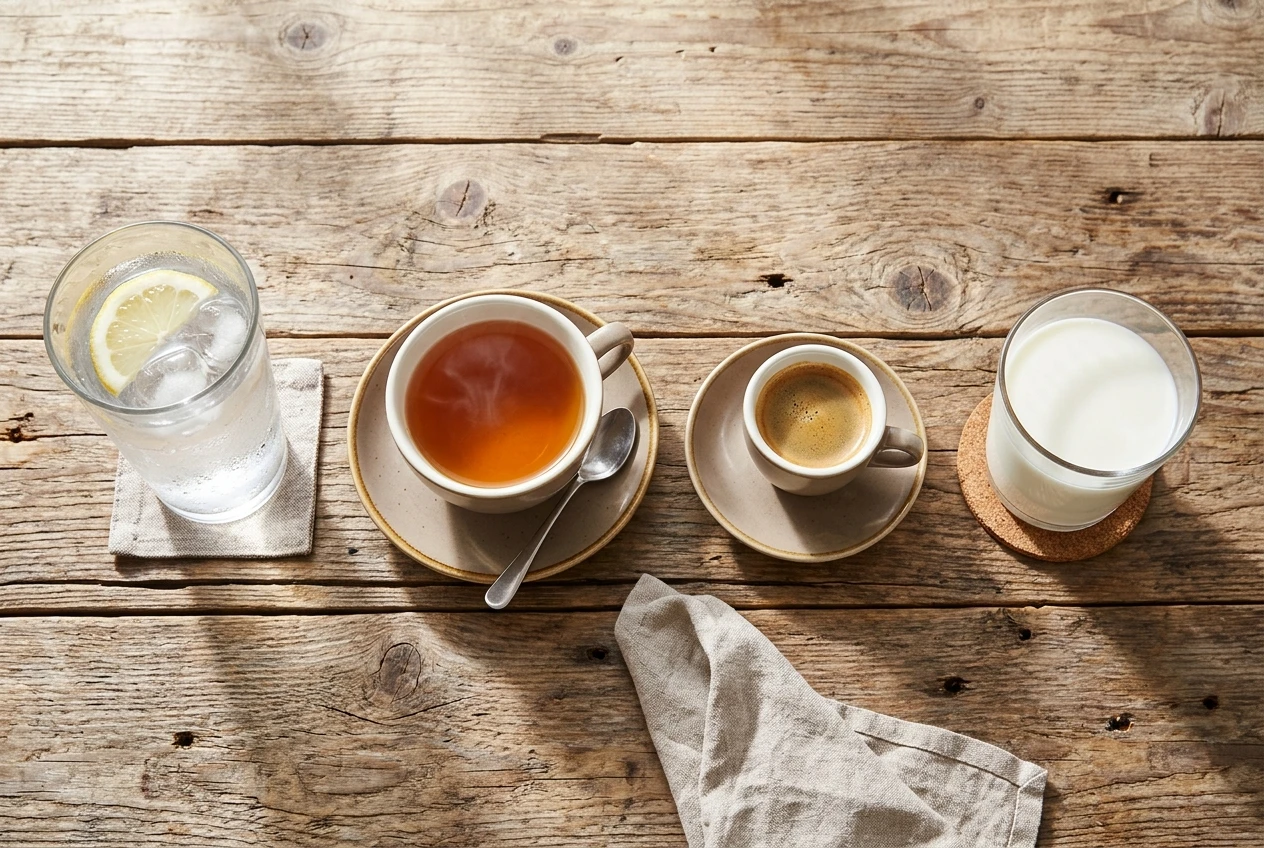
However, it isn’t the only drink that contributes fluid.
Water
Tap water is a practical option where the supply is safe to drink.
Still or sparkling water can both contribute to hydration.
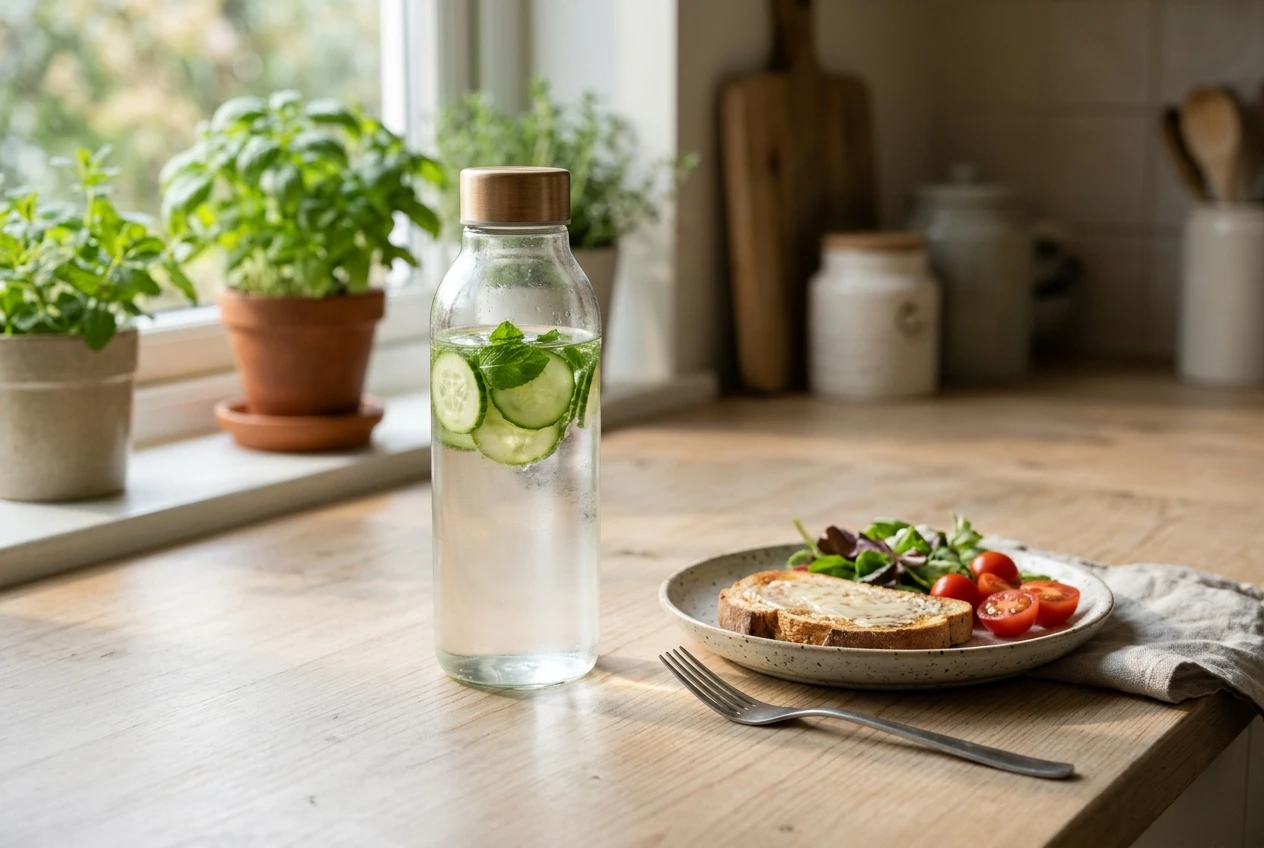
If you find plain water unappealing, try adding slices of lemon, cucumber or mint for flavour.
These ingredients make the drink more enjoyable but do not provide a special detoxifying effect.
Tea
Tea contributes to fluid intake.
Unsweetened tea can be a convenient choice throughout the day.
If you are sensitive to caffeine, consider how the amount and timing of tea affect you.
Coffee
Coffee also contributes fluid.
Moderate caffeine consumption does not automatically cancel out the water contained in a cup of coffee.
However, caffeine tolerance varies.
Large amounts may cause unwanted effects, including sleep disturbance, palpitations or anxiety in sensitive individuals.
Pregnant women should follow NHS guidance limiting caffeine to no more than 200 mg daily.
Milk And Suitable Plant-Based Drinks
Milk contributes water alongside other nutrients.
Unsweetened fortified plant-based alternatives can also be useful, although their nutritional composition varies.
Check labels when choosing alternatives, particularly for calcium, protein and added sugars.
Sugar-Free Drinks
Suitable sugar-free drinks can contribute fluid.
However, they are not necessary for hydration if you already enjoy water and other everyday beverages.
Fruit Juice And Smoothies
Fruit juice and smoothies contain water, but they also contain free sugars.
UK guidance recommends limiting fruit juice and smoothies to a combined total of 150 ml daily.
Whole fruit is often a useful alternative because it provides fibre.
Sugary Soft Drinks
Sugary drinks contribute fluid but can also provide substantial amounts of free sugars.
Regular consumption may affect dental health and overall dietary balance.
Choosing water or lower-sugar alternatives more often is a practical approach.
Seven Simple Hydration Habits For Busy Days
Hydration habits work best when they fit naturally into your routine.
Here are seven manageable ideas.
1. Keep A Drink Within Reach
Having a glass or bottle of water nearby can make drinking more convenient.
You don’t need a particular brand or an expensive insulated bottle.
Choose something practical, reusable and easy to clean.
2. Include A Drink With Meals
Breakfast, lunch and dinner provide natural opportunities to have a drink.
You might enjoy water with lunch, tea with breakfast or another suitable beverage with dinner.
This can help make drinking regularly feel less like a separate task.
3. Consider Your Morning Routine
After waking, have a drink if you’re thirsty or it suits your routine.
Water, tea or another appropriate beverage can all contribute.
There is no evidence-based requirement for everyone to drink lemon water immediately after waking.
4. Make Water More Enjoyable
Try adding cucumber, mint, lemon or berries to drinking water.
Use clean ingredients and store prepared drinks safely.
The purpose is flavour and enjoyment, not cleansing the body of toxins.
5. Adjust For Activity And Temperature
Hot weather and physical activity can increase fluid losses.
Make suitable drinks available when exercising, travelling or spending time outdoors.
Prolonged strenuous activity, particularly in hot conditions, may require a more individualised hydration strategy.
6. Notice Your Personal Drinking Patterns
Perhaps you drink regularly in the morning but forget about fluids during the afternoon.
Or maybe you find it difficult to drink when travelling.
Identifying these patterns can help you make small adjustments.
You don’t need to monitor every sip.
7. Avoid Forcing Large Amounts Of Water
More water is not always better.
Drinking excessive amounts, particularly over a short period, can dangerously dilute blood sodium levels.
This is known as hyponatraemia.
Avoid forcing yourself to drink large quantities beyond your needs.
People undertaking endurance exercise or managing medical conditions should seek appropriate guidance.
Hydration And Everyday Energy
Water is essential for normal body function.
Dehydration can contribute to symptoms such as tiredness, headaches and dizziness.
However, it would be misleading to suggest that drinking more water will automatically improve energy, concentration or productivity.
Tiredness can have many causes.
These include inadequate sleep, stress, medication, illness and other health conditions.
If you’re dehydrated, replacing lost fluids appropriately may help address symptoms associated with dehydration.
But if you’re already adequately hydrated, drinking additional water is not a proven solution for unexplained fatigue.
For more context, explore our article:
Understanding Your Daily Energy Patterns Without Chasing Quick Fixes
The most useful approach is to consider hydration as one part of everyday wellbeing rather than a stand-alone energy treatment.
How Hydration Supports Digestive Wellbeing
Fluids are important for normal digestive processes.
Adequate fluid intake is particularly relevant when increasing dietary fibre.
Fibre interacts with water in different ways.
Some fibres absorb water and contribute to stool consistency.
Others increase stool bulk or are fermented by microorganisms in the large intestine.
The US National Institute of Diabetes and Digestive and Kidney Diseases advises drinking adequate fluids when increasing fibre intake.
This can help fibre work appropriately and may support bowel regularity.
However, drinking extra water beyond your body’s needs does not guarantee relief from constipation.
Persistent constipation may require assessment of diet, medication, activity, bowel habits or underlying health conditions.
For more information about fibre-rich foods, read:
Fibre-Rich Foods That Support Gut Health And Everyday Nutrition
What About Bloating?
Bloating has several possible causes.
It may relate to food choices, fermentable carbohydrates, constipation or digestive conditions.
Drinking adequate fluids can be part of a balanced approach to digestive health, but water is not a universal treatment for bloating.
If symptoms are persistent, painful or worsening, seek medical advice.
Can Foods Help You Stay Hydrated?
Yes.
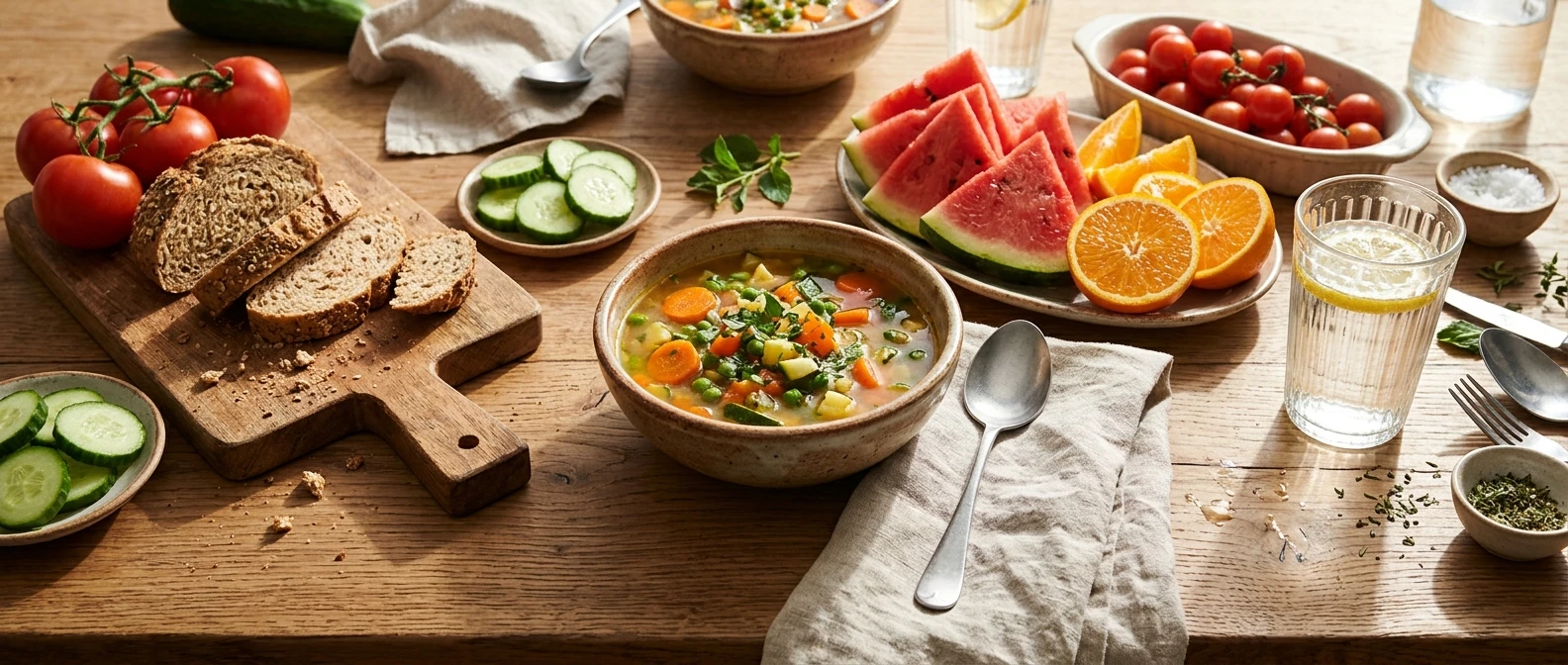
Many everyday foods contain water.
Examples include:
- Cucumber.
- Tomatoes.
- Lettuce.
- Watermelon.
- Oranges.
- Strawberries.
- Courgettes.
- Soups.
- Plain yoghurt.
These foods can contribute to total water intake while also providing other nutrients.
For example, fruit and vegetables may provide vitamins, minerals and fibre.
However, there is no need to rely on high-water-content foods alone.
Drinks remain an important part of meeting everyday fluid requirements.
A Practical Lunch Example
A lunch containing vegetable soup, wholegrain bread and a piece of fruit can contribute both fluid and nutrients.
You might also have a glass of water or another suitable drink.
This illustrates how hydration can fit naturally into a balanced meal rather than requiring a separate wellness routine.
For additional lunch ideas, explore:
Simple Lunch Ideas For Busy Days And Balanced Nutrition
Understanding Thirst And Urine Colour
Thirst is one of the body’s normal signals that fluid may be needed.
Urine colour can also provide a rough indication of hydration.
The NHS suggests that most people aim to drink enough during the day for urine to be a clear, pale yellow colour.
However, urine colour is not a perfect measurement.
Certain foods, vitamins, medicines and health conditions can change its appearance.
Dark urine may suggest dehydration, but it can have other explanations.
Likewise, very pale or clear urine does not necessarily mean that more water is better.
Avoid treating urine colour as a medical diagnostic test.
If you notice persistent changes, blood in your urine or other concerning symptoms, seek professional advice.
Hydration During Exercise And Hot Weather
Fluid needs may increase when you’re physically active or exposed to high temperatures.
Sweating helps regulate body temperature but also causes water and electrolyte losses.
For ordinary daily activities, water and a balanced diet are often sufficient.
However, prolonged or strenuous exercise, particularly in hot weather, may require additional planning.
Fluid and electrolyte needs depend on factors such as:
- Exercise duration.
- Exercise intensity.
- Temperature and humidity.
- Individual sweating patterns.
- Health conditions.
- Medication use.
There is no single drinking formula suitable for every activity or person.
If you undertake endurance exercise, work in extreme heat or have a condition affecting fluid balance, seek individualised guidance.
Do You Need Electrolyte Drinks?
Electrolytes are minerals that carry electrical charges when dissolved in body fluids.
They include sodium, potassium and chloride.
They contribute to normal fluid balance and other physiological functions.
Most people do not need specialist electrolyte drinks for ordinary daily activities.
A varied diet and appropriate fluid intake usually provide the necessary foundation.
However, situations involving substantial fluid and electrolyte losses may require a different approach.
For example, vomiting or diarrhoea can cause dehydration and loss of salts.
In these circumstances, an appropriate oral rehydration solution may be recommended by a pharmacist or healthcare professional.
Sports drinks and oral rehydration solutions are not interchangeable products.
People with kidney disease, heart conditions or other medical concerns should not assume that electrolyte supplements are suitable.
Natural Hydration Habits Without Detox Claims
Dietremidies encourages evidence-informed, food-first wellness habits.
When it comes to hydration, simple choices are often enough.
Enjoy Herbal Infusions For Variety
Caffeine-free herbal infusions can provide fluid and flavour.
However, herbs are biologically active substances, and some preparations may interact with medicines or be unsuitable during pregnancy.
Choose ordinary food-grade products and seek advice when relevant.
Herbal teas should not be described as treatments for dehydration or digestive disease.
Add Fruit Or Herbs To Water
Slices of citrus fruit, cucumber or mint can make water more appealing.
These additions are optional.
They do not make water medically superior to plain water.
Include Water-Rich Foods
Fruit, vegetables, soups and suitable dairy foods can contribute to fluid intake.
Choose foods that fit your nutritional needs and preferences.
Avoid Detox Water Claims
The body has established systems for processing and eliminating waste, including the kidneys and liver.
There is no good reason to suggest that a special infused-water recipe can cleanse toxins from the body.
Be Cautious With Hydration Supplements
Products marketed for hydration, energy or detoxification may contain added sugars, caffeine, electrolytes or herbal ingredients.
They are not automatically necessary or appropriate.
Check product ingredients and seek professional advice where relevant.
Common Hydration Myths Worth Reconsidering
Myth 1: Everyone Must Drink Exactly Eight Glasses Of Water
Eight glasses is not a universal medical requirement.
The NHS provides six to eight cups or glasses of fluid as general guidance, with individual needs varying.
Myth 2: Tea And Coffee Do Not Count
Tea and coffee contribute fluid.
Their caffeine content should still be considered, particularly for people who are sensitive to caffeine.
Myth 3: More Water Always Means Better Health
Excessive water intake can be harmful.
Appropriate hydration is about balance, not maximising intake.
Myth 4: Lemon Water Detoxifies The Body
Lemon can add flavour to water, but it does not provide a special detoxifying effect.
Myth 5: Electrolyte Drinks Are Essential Every Day
Most people do not require specialist electrolyte drinks for ordinary daily activities.
Myth 6: Drinking More Water Will Cure Fatigue
Dehydration can contribute to tiredness, but unexplained or persistent fatigue has many possible causes.
Additional water is not a substitute for appropriate medical assessment.
When To Seek Medical Advice About Hydration
Dehydration can become serious.
The NHS identifies possible symptoms including:
- Thirst.
- Dry mouth, lips or tongue.
- Dark yellow, strong-smelling urine.
- Passing urine less often than usual.
- Dizziness or light-headedness.
- Headache.
- Unusual tiredness.
These symptoms can have different causes, so consider the wider circumstances.
Seek urgent medical advice if you experience persistent dizziness on standing, unusually low urine output, rapid breathing or a fast heart rate, particularly when dehydration is suspected.
Severe confusion, difficulty breathing, markedly reduced responsiveness or other signs of serious illness require emergency medical attention.
Vomiting and diarrhoea can increase fluid and electrolyte losses.
A pharmacist or healthcare professional can advise whether an oral rehydration solution is appropriate.
If you have kidney disease, heart failure or another condition requiring fluid restriction, do not independently increase your fluid intake.
Follow your individual care plan.
Common Questions About Hydration
1. How Much Water Should I Drink Each Day?
The NHS recommends approximately six to eight cups or glasses of fluid daily as a general guide for most people.
This includes suitable drinks other than water.
Individual needs vary according to activity, environment, health and other circumstances.
2. Does Tea Count Towards Daily Fluid Intake?
Yes.
Tea contributes fluid.
However, caffeine intake should be considered, particularly if you’re sensitive to caffeine or pregnant.
3. Can Drinking More Water Help With Constipation?
Adequate fluid intake is important, especially when increasing dietary fibre.
However, drinking more than your body needs does not guarantee relief from constipation.
Persistent symptoms should be assessed by a healthcare professional.
4. Are Electrolyte Drinks Better Than Water?
Not necessarily.
Water is a suitable everyday choice for most people.
Specialist electrolyte products may be appropriate in particular circumstances, but they are not routinely necessary.
5. How Can I Remember To Drink More Regularly?
Keep a suitable drink accessible, include drinks with meals and notice times when you tend to forget about fluids.
Choose habits that fit your routine rather than following a rigid schedule.
Bringing The Food, Energy & Everyday Nutrition Series Together
Hydration is one part of a wider approach to everyday nutrition.
Throughout this Dietremidies series, we’ve explored:
- Practical afternoon snacks.
- Balanced breakfasts.
- Everyday protein needs.
- Fibre-rich foods and digestive wellbeing.
- Simple lunches for busy schedules.
- Hydration habits that fit ordinary routines.
These subjects are connected, but no individual food, drink or meal can guarantee improved energy or digestive health.
The overall aim is to make balanced nutrition more understandable and manageable.
Small changes, familiar ingredients and realistic expectations can provide a useful foundation for everyday wellbeing.
Continue Your Wellness Journey
Explore the other articles in this Dietremidies series.
Smart Afternoon Snacks For Steadier Everyday Energy
Discover convenient snack combinations using familiar foods.
https://dietremidies.com/smart-afternoon-snacks-for-steadier-everyday-energy/
How Balanced Breakfasts Support Everyday Energy
Explore practical breakfast ideas for busy mornings.
https://dietremidies.com/balanced-breakfast-everyday/
Understanding The Role Of Protein In Everyday Energy And Wellbeing
Learn about protein-containing foods and their role in balanced nutrition.
https://dietremidies.com/protein-everyday-energy-wellbeing/
Fibre-Rich Foods That Support Gut Health And Everyday Nutrition
Discover dietary fibre sources and ways to increase fibre gradually.
https://dietremidies.com/fibre-foods-gut-health/
Simple Lunch Ideas For Busy Days And Balanced Nutrition
Explore ten everyday lunch combinations and practical meal-planning guidance.
https://dietremidies.com/simple-lunch-ideas-for-busy-days-and-balanced-nutrition/
A Gentle Reminder
Hydration doesn’t need to become another complicated wellness challenge.
You don’t have to purchase specialist products, count every sip or follow an inflexible drinking schedule.
A glass of water with lunch, a cup of tea in the afternoon or a suitable drink during your daily activities can all contribute.
Pay attention to your circumstances, allow for changing needs and follow individual medical advice when appropriate.
Supporting everyday wellbeing is about making informed choices that fit your life, not chasing perfect routines.
Further Reading
The following organisations provide reliable information about hydration, nutrition and digestive health.
NHS — Water, Drinks And Hydration
Water, drinks and hydration – NHS
NHS — Dehydration
NHS — The Eatwell Guide
US National Institute Of Diabetes And Digestive And Kidney Diseases — Eating, Diet & Nutrition For Constipation
Eating, Diet, & Nutrition for Constipation – NIDDK
NHS Inform Scotland — The Eatwell Guide
Eatwell Guide: How to eat a healthy balanced diet | NHS inform
Health Disclaimer
This article provides general educational information and does not constitute medical diagnosis, treatment or individualised dietary advice.
Fluid requirements vary according to age, activity, environment, pregnancy, breastfeeding, medicines and health conditions.
People with kidney disease, heart failure, liver disease, electrolyte disorders or medically prescribed fluid restrictions should follow advice from their healthcare professionals.
Do not use excessive water intake, electrolyte supplements, herbal preparations or detox products to manage symptoms without appropriate medical guidance.
Persistent dizziness, unusual tiredness, changes in urination or other concerning symptoms require medical assessment.
Severe confusion, breathing difficulties, reduced responsiveness or other signs of serious illness may require emergency care.
Your health and safety always come first.
Affiliate Disclosure
Some Dietremidies articles may contain affiliate links.
Where affiliate links are included, Dietremidies may receive a small commission from qualifying purchases at no additional cost to the reader.
Affiliate relationships do not influence the importance of accurate health information, appropriate evidence and transparent recommendations.