Beans, Lentils and Wholegrains: Affordable Meal Ideas Inspired by Ethiopia and Iran
A nourishing everyday meal does not have to rely on expensive ingredients, complicated recipes or a completely new shopping list
Across the world, beans, lentils, grains, vegetables and herbs are combined in different ways to create satisfying, flavourful meals.
Ethiopian and Iranian food traditions offer particularly interesting examples.
From Ethiopian lentil stews served with injera to Iranian rice dishes combining lentils, aromatic spices and herbs, these cuisines provide inspiration for using familiar ingredients in different ways.
They also offer an opportunity to explore dietary fibre, plant protein, wholegrains and everyday digestive wellbeing.
In this article, we’ll explore selected foods from Ethiopia and Iran, explain what their ingredients contribute nutritionally, and share four affordable meal ideas that can be adapted for a UK kitchen.
The intention is to appreciate these culinary traditions while making everyday meal planning more manageable—not to suggest that any one country’s cuisine is automatically healthier than another.
1. Why Beans, Lentils and Wholegrains Matter
Beans, lentils and wholegrains are versatile ingredients that can be used in soups, stews, rice dishes and vegetable-based meals.
They contribute different combinations of dietary fibre, plant protein, carbohydrates, vitamins and minerals.
According to the NHS guidance on increasing dietary fibre, adults should aim for approximately 30g of fibre daily as part of a healthy, balanced diet.
Eating enough fibre is associated with a lower risk of several long-term conditions, including cardiovascular disease, type 2 diabetes and bowel cancer.
Fibre can also support normal bowel function and help prevent constipation.
However, no single ingredient needs to provide all of someone’s daily fibre.
A combination of vegetables, fruits, pulses, nuts, seeds and wholegrains is generally more useful than relying on one particular food.
The British Dietetic Association’s Fibre Food Fact Sheet explains that different types of fibre behave differently in the digestive system.
This makes dietary variety particularly important.
Everyday idea: Try adding a small portion of cooked lentils to a familiar vegetable stew, or include chickpeas in a soup you already enjoy.
2. Ethiopia: Lentil Stews, Injera and Vegetable-Based Meals
Ethiopian cuisine includes diverse regional and household food traditions, with dishes featuring grains, pulses, vegetables, meat and distinctive spice combinations.
A familiar feature of Ethiopian dining is the serving of several dishes alongside injera, a soft, slightly sour flatbread.
The Smithsonian Institution’s catalogue of Ethiopia: Recipes and Traditions from the Horn of Africa, by Yohanis Gebreyesus with Jeff Koehler, provides a useful culinary reference for understanding Ethiopian ingredients and preparations.
Source: Smithsonian Institution — Ethiopia: Recipes and Traditions from the Horn of Africa
Misir Wat: A Warming Red Lentil Stew
Misir wat, sometimes written misir wot, is an Ethiopian lentil preparation commonly made with red lentils, onions and seasonings.
Berbere, a traditional Ethiopian spice blend, often contributes warmth and depth of flavour.
Preparation methods and spice combinations vary between households and regions.
Red lentils soften during cooking, producing a thick texture suitable for serving with flatbread.
They also contribute plant protein, dietary fibre and iron.
For everyday meal planning, red lentils are convenient because they generally cook more quickly than many dried beans.
Practical adaptation: Prepare a gently spiced red lentil stew with onions, tomatoes and berbere. Serve with cooked greens and a suitable bread or grain.
This is an Ethiopian-inspired adaptation rather than a definitive traditional recipe.
Injera and the Role of Teff
Injera is a fermented flatbread associated with Ethiopian and Eritrean food traditions.
Teff, a small cereal grain, is an important ingredient in many preparations, although flour combinations can vary.
Wholegrain teff contributes fibre and minerals, including iron.
The fermentation process gives traditional injera its characteristic flavour and texture.
However, it is important not to confuse fermentation with guaranteed probiotic benefits.
Cooking injera exposes the batter to heat, so it should not automatically be described as a source of live probiotic microorganisms.
For readers unable to obtain teff flour, familiar grains or flatbreads may provide practical accompaniments to lentil dishes, although they will not reproduce traditional injera.
Gomen: Cooked Leafy Greens
Gomen refers to Ethiopian preparations of leafy greens, often including collard greens or similar vegetables.
Garlic, onions, ginger and other seasonings may be used.
In a UK kitchen, spring greens, kale or cabbage may offer accessible alternatives.
Serving cooked greens with lentils and grains provides a practical way to include several different plant foods in one meal.
3. Iran: Lentil Rice, Beans, Herbs and Barley
Iranian cuisine includes a wide range of regional and family traditions.
Rice, herbs, pulses, vegetables and aromatic spices feature in numerous preparations.
Three particularly relevant examples are adas polo, ash reshteh and barley-based soups.
Adas Polo: Lentils and Rice
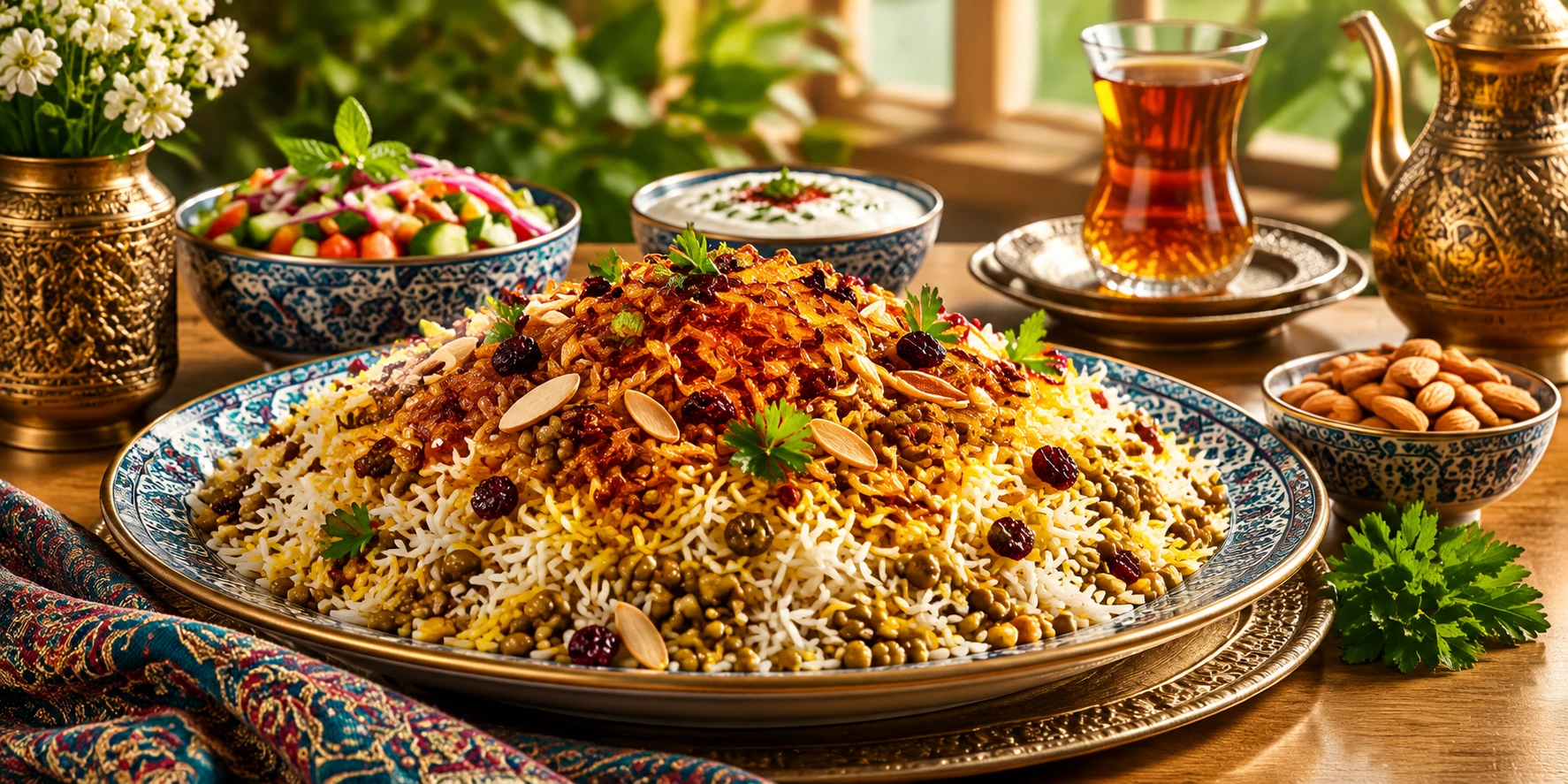
Adas polo is an established Iranian dish combining lentils and rice.
The Encyclopaedia Iranica entry on lentils documents adas polo as a traditional rice-and-lentil preparation.
It describes rice and lentils being cooked separately before being combined for the final steaming process. Variations may include meat or toasted almonds.
The dish illustrates how lentils can add fibre and plant protein to a rice-based meal.
Traditional preparations commonly use white rice. Brown rice or a mixture of white and brown rice can be used as an optional wholegrain adaptation.
According to the NHS guidance on starchy foods and carbohydrates, rice and other grains provide carbohydrates, while wholegrain varieties can contribute additional fibre.
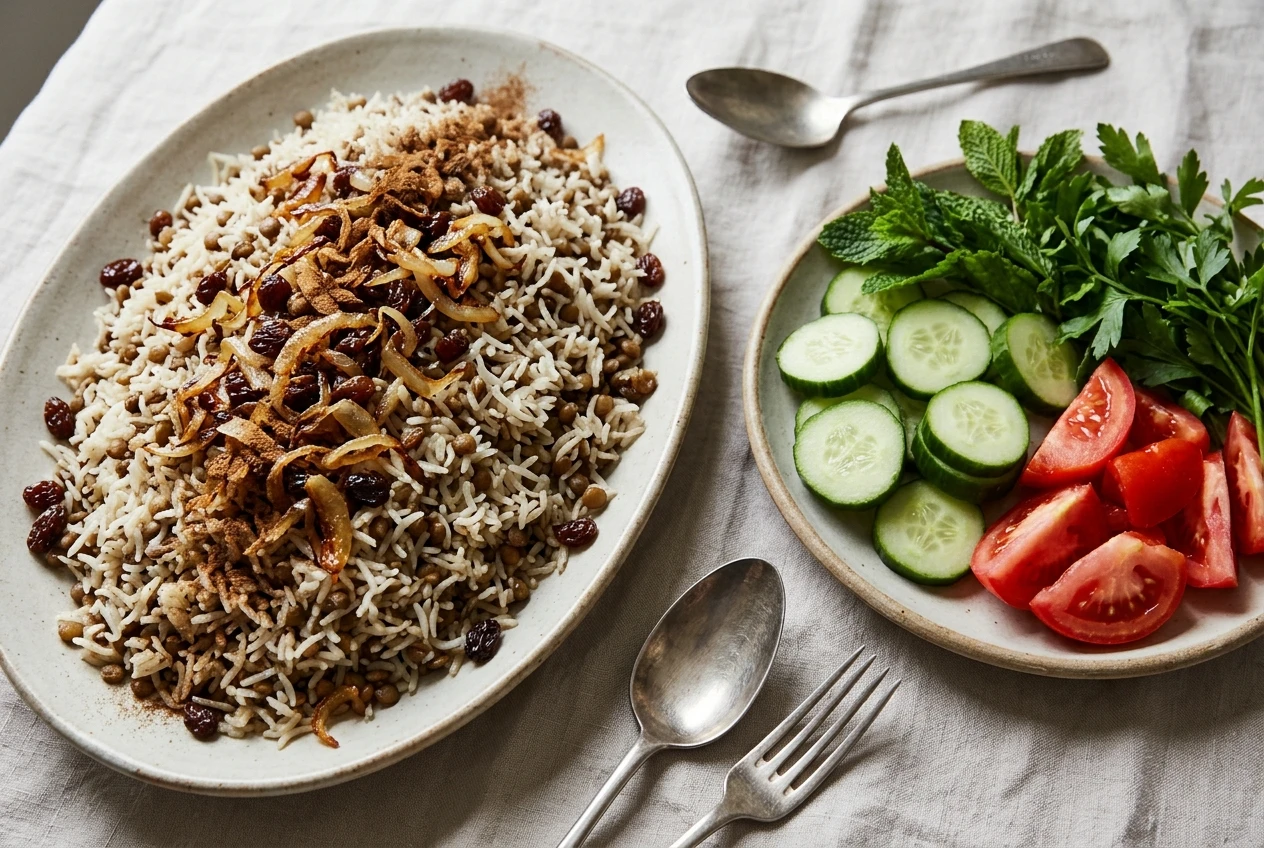
Practical adaptation: Combine cooked lentils, basmati rice, softened onions, cinnamon and raisins. Serve with cucumber, tomatoes and fresh herbs.
This is a simplified Iranian-inspired version rather than a definitive adas polo recipe.
Ash Reshteh: A Herb, Bean and Noodle Soup
Ash reshteh is an Iranian soup featuring combinations of legumes, herbs and noodles.
Ingredients may include chickpeas, beans, lentils, spinach, parsley and other herbs.
Traditional versions may also include kashk, a fermented dairy ingredient, and toppings such as fried onions and mint.
The Encyclopaedia Iranica reference on traditional Iranian soups documents the wider tradition of ash preparations, including the use of legumes, grains, herbs and characteristic garnishes.
Its culinary context helps explain how soups such as ash reshteh form part of Iranian food traditions.
Beans and lentils contribute fibre and protein, while leafy vegetables and herbs provide additional nutrients and flavour.
A simplified home adaptation might combine canned cooked beans, lentils, spinach, parsley and noodles in a vegetable broth.
Traditional ash reshteh has its own preparation methods and culinary identity, so this adaptation should be described accurately.
Barley and Vegetable Soups
Barley is another grain used in Iranian cooking, including certain soups.
The Encyclopaedia Iranica entry on lentils identifies ash-e jow among Iranian soup preparations involving lentils and other ingredients, including barley.
This provides historical culinary context for the use of barley in Iranian soups.
Barley contains dietary fibre, including beta-glucan, a form of soluble fibre.
Pearl barley is commonly available in UK supermarkets and works well in soups containing vegetables, beans and herbs.
Although pearl barley has undergone processing, it can still contribute dietary fibre.
Important: Barley contains gluten and is unsuitable for people with coeliac disease.
4. Understanding the Nutritional Benefits
Beans, lentils, wholegrains and vegetables contribute different nutrients.
Their exact nutritional composition depends on the variety, portion size and preparation method.
Ingredient | Main nutritional contributions | Everyday use |
Red lentils | Fibre, plant protein and iron | Stews and soups |
Chickpeas | Fibre and plant protein | Soups and salads |
Cooked beans | Fibre, protein and minerals | Vegetable dishes |
Wholegrain teff | Carbohydrates, fibre and minerals | Grain-based preparations |
Brown rice | Carbohydrates and fibre | Rice dishes |
Barley | Fibre, including beta-glucan | Soups |
Leafy greens | Folate and other vitamins and minerals | Cooked vegetable dishes |
Dietary Fibre and the Gut Microbiome
Dietary fibre includes different substances that are not fully digested in the small intestine.
Some types are fermented by microorganisms in the large intestine.
This fermentation can produce short-chain fatty acids, which participate in normal intestinal processes.
Different fibre types vary in their solubility, viscosity and fermentability.
However, the effects of fibre are not identical for everyone.
Some people tolerate lentils and beans comfortably, while others experience increased gas, bloating or abdominal discomfort.
These differences are one reason to avoid describing a particular food as a guaranteed solution for gut health.
Plant Protein and Balanced Meals
Beans and lentils provide plant protein.
Protein is needed for normal growth, tissue maintenance and repair.
A varied diet containing pulses, grains, nuts, seeds and other protein-containing foods can help meet nutritional needs.
People eating predominantly plant-based diets should consider their overall intake of essential nutrients rather than relying on one ingredient.
Iron and Women’s Everyday Nutrition
Lentils, beans and certain wholegrains contain non-haem iron.
This form of iron is generally absorbed less efficiently than haem iron from animal foods.
Including vitamin C-containing vegetables or fruits, such as peppers, tomatoes or citrus fruit, alongside plant-based meals can support non-haem iron absorption.
Iron requirements vary, including across different life stages.
Women experiencing persistent tiredness, heavy menstrual bleeding or concerns about iron deficiency should seek medical advice rather than attempting to diagnose or treat a deficiency through food alone.
5. Four Affordable Everyday Meal Ideas
The following recipes are flexible home adaptations inspired by ingredients and culinary combinations discussed in this article.
They are not intended to replace traditional Ethiopian or Iranian recipes.
Meal 1: Ethiopian-Inspired Red Lentil and Vegetable Stew
Serves: Approximately 3–4
Ingredients
- 180g dried red lentils, rinsed
- 1 onion, chopped
- 2 garlic cloves, crushed
- 400g canned chopped tomatoes
- 1–2 teaspoons berbere spice blend
- 1 tablespoon vegetable oil
- Approximately 500ml water or low-salt vegetable stock
- A handful of spinach or chopped greens
Method
- Gently cook the onion in oil until softened.
- Add the garlic and berbere, stirring briefly.
- Add the lentils, tomatoes and water or stock.
- Simmer until the lentils are fully cooked and soft, adding more liquid if needed.
- Stir in the greens and cook until tender.
- Serve with a suitable grain or flatbread.
Budget adjustment: Frozen spinach can replace fresh greens.
Meal 2: Ethiopian-Inspired Greens and Chickpea Bowl
Serves: Approximately 2
Ingredients
- 1 tin cooked chickpeas, drained and rinsed
- 150g spring greens or kale
- 1 small onion
- 1 garlic clove
- 1 tablespoon vegetable oil
- 150–200g cooked brown rice or another suitable grain
- Lemon juice and seasoning
Method
- Soften the onion and garlic in oil.
- Add the greens and a small splash of water.
- Cover and cook until tender.
- Stir in the chickpeas and heat thoroughly.
- Serve with freshly cooked grain and lemon juice.
This is a modern meal bowl inspired by the ingredients discussed, not a named traditional Ethiopian dish.
Meal 3: Iranian-Inspired Lentil Rice With Raisins
Serves: Approximately 3
Ingredients
- 150g dried green or brown lentils
- 180g dry basmati rice
- 1 onion, sliced
- 2 tablespoons raisins
- ½ teaspoon cinnamon
- 1 tablespoon vegetable oil
- Fresh herbs, cucumber and tomatoes
Method
- Cook the lentils until tender, following the packet instructions.
- Cook the rice separately until fully done.
- Soften the onion in oil.
- Add cinnamon and raisins, stirring gently.
- Combine the freshly cooked rice and lentils with the onion mixture.
- Serve immediately with herbs and vegetables.
Wholegrain adjustment: Replace some or all of the white rice with brown rice, allowing for its longer cooking time.
Food safety: If preparing rice in advance, follow the Food Standards Agency’s cooling, storage and reheating instructions provided in Section 7.
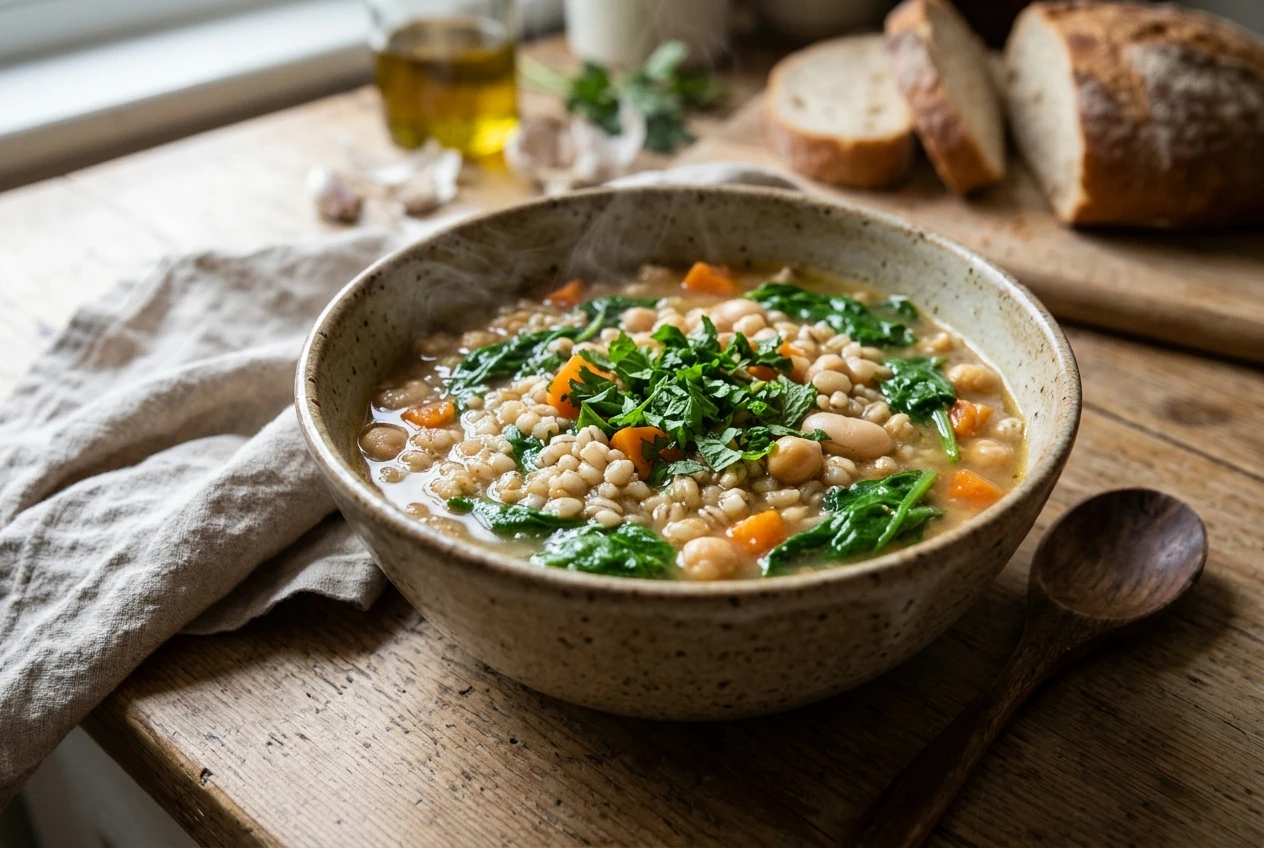
Meal 4: Iranian-Inspired Bean, Herb and Barley Soup
Serves: Approximately 4
Ingredients
- 100g pearl barley
- 1 tin cooked chickpeas, drained
- 1 tin cooked beans, drained
- 1 onion
- 1 carrot
- A handful of spinach
- Fresh parsley and mint
- Approximately 1 litre low-salt vegetable stock
- 1 tablespoon vegetable oil
Method
- Gently soften the onion and carrot in oil.
- Add the barley and vegetable stock.
- Simmer according to the barley packet instructions until fully tender.
- Add the cooked chickpeas and beans, using extra stock if needed.
- Add spinach and herbs.
- Continue cooking until everything is thoroughly heated.
This is a simplified Iranian-inspired soup, not a traditional ash reshteh recipe.
Allergen consideration: Barley contains gluten. Check stock, spice blends and other packaged ingredients for relevant allergens.
6. Making These Meals Affordable and Practical
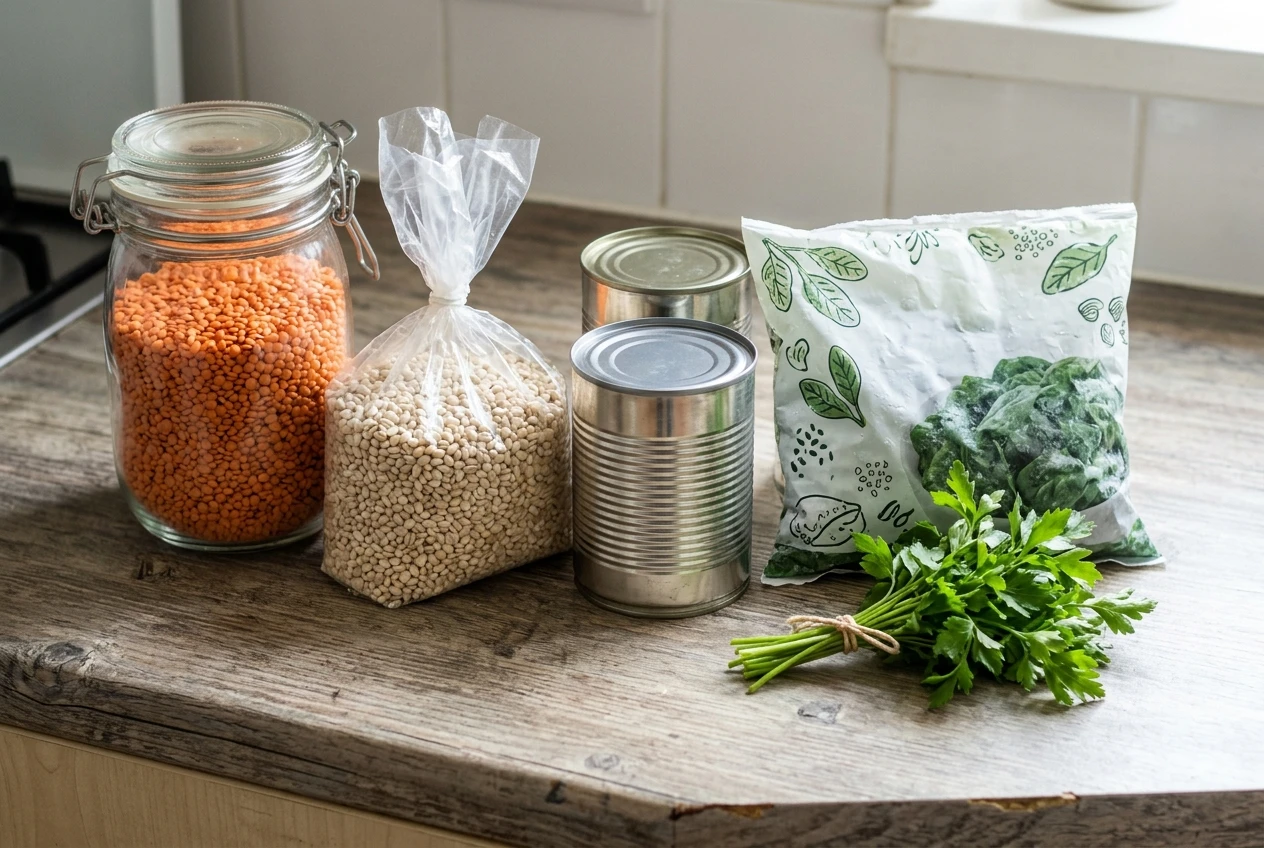
One advantage of beans, lentils and grains is their versatility.
A single bag of dried lentils can contribute to several different meals.
Canned pulses also provide a convenient option when time is limited.
Practical ways to manage costs include:
- Comparing prices per 100g or kilogram.
- Using frozen vegetables when appropriate.
- Keeping canned chickpeas or beans available for quick meals.
- Preparing dried lentils according to packet instructions.
- Using familiar grains when specialist ingredients are unavailable.
- Choosing herbs and spices that can be used across several meals.
Dried beans may cost less per serving, but they require additional preparation and cooking time.
Ready-cooked canned beans can therefore be a sensible alternative.
A Simple Three-Day Meal-Planning Example
Day | Meal | Preparation approach |
Monday | Red lentil and vegetable stew | Prepare fresh and refrigerate leftovers promptly |
Tuesday | Lentil rice with herbs | Cook rice fresh where practical |
Wednesday | Bean and barley soup | Use canned cooked beans and frozen vegetables |
This is an example of meal organisation, not a prescribed dietary plan.
Other foods and meals should be included according to individual needs.
7. Digestive Comfort and Essential Food Safety
Increasing fibre intake can be useful, but it is important to consider individual tolerance.
The NHS guide to foods that help digestion recommends obtaining fibre from varied sources and drinking sufficient fluids.
Increasing fibre gradually can help reduce the likelihood of bloating and gas.
Someone who rarely eats pulses may find it easier to begin with a small portion of cooked lentils rather than a large serving of beans.
Persistent digestive symptoms or symptoms associated with a diagnosed digestive condition may require personalised dietary guidance.
Food Safety: Preparing Dried Beans
Dried beans must be prepared correctly.
Some raw or inadequately cooked beans, particularly red kidney beans, contain naturally occurring lectins that can cause illness.
Follow appropriate soaking and boiling instructions for the specific bean variety.
Do not assume that cooking raw dried kidney beans in a slow cooker alone will make them safe.
Commercially canned beans are already cooked during processing and offer a convenient alternative.
For general safe food preparation, see the Food Standards Agency’s Cooking Your Food guidance.
Food Safety: Cooling, Storing and Reheating Rice
Rice deserves particular attention when planning meals ahead.
According to the Food Standards Agency, uncooked rice can contain spores of Bacillus cereus, a bacterium associated with food poisoning.
These spores can survive cooking.
If cooked rice remains at room temperature for too long, bacteria may multiply and produce toxins. Reheating does not necessarily make rice that has been stored unsafely safe to eat.
The Food Standards Agency recommends:
- Cooling rice quickly: Ideally within one hour of cooking.
- Refrigerating promptly: Store cooked rice in the fridge rather than leaving it in the cooking pan or rice cooker to cool.
- Using refrigerated rice within 24 hours: Do not keep cooked rice in the fridge for longer than one day before eating or reheating.
- Reheating only once: Never reheat rice more than once.
- Heating thoroughly: Reheated rice should be steaming hot throughout.
Dividing cooked rice into smaller portions can help it cool more quickly.
These precautions are especially relevant when preparing lentil rice dishes or planning meals for several days.
Official source: Food Standards Agency — Home Food Fact Checker: Rice Safety
Food Safety: Other Cooked Leftovers
For cooked foods other than rice, the Food Standards Agency provides general guidance on cooling, refrigeration and reheating.
Leftovers should be cooled and refrigerated promptly.
When reheating, heat food until steaming hot throughout and avoid reheating the same leftovers repeatedly.
Follow the specific guidance for higher-risk foods, including rice, rather than assuming all cooked foods have identical storage limits.
8. Everyday Nutrition and Women’s Wellbeing
Meal planning can become demanding when it needs to fit around work, family responsibilities, changing routines and different nutritional requirements.
The Ethiopian and Iranian food traditions explored here offer inspiration for preparing varied meals from relatively simple ingredients.
Lentils, beans, vegetables and grains can be combined in different ways without creating an entirely new weekly menu.
These foods contribute useful nutrients, but they are not treatments for hormonal changes, fatigue, menopause symptoms or digestive conditions.
Individual requirements vary according to age, health, activity and life stage.
For some women, canned chickpeas and frozen greens may be more practical than cooking dried beans from scratch.
Others may prefer smaller portions of lentils alongside rice and vegetables.
The goal is flexible nourishment that suits everyday circumstances rather than restrictive food rules.
9. Common Questions
1. Are lentils and beans good sources of dietary fibre?
Yes. Lentils and beans provide dietary fibre and can contribute to the recommended daily intake.
They also contain plant protein and other nutrients.
However, fibre content varies between foods and portion sizes.
Eating a variety of fibre-containing foods is generally more useful than relying on one ingredient.
2. Is teff healthier than ordinary wheat or rice?
Teff is a nutritious grain that contributes carbohydrates, fibre and minerals, particularly when consumed as a wholegrain.
However, it is not automatically healthier than every other grain.
Different grains provide different nutritional benefits.
Pure teff is naturally gluten-free, although people with coeliac disease should choose appropriately labelled products to avoid gluten cross-contact.
3. Can eating lentils support gut health?
Lentils contain dietary fibre, some of which can be fermented by gut microorganisms.
Including them within a varied diet can contribute to normal digestive function.
However, individual responses vary.
Some people experience bloating or gas, particularly when increasing their intake quickly.
Lentils should not be presented as a treatment for digestive disorders.
4. Do I need traditional ingredients to try Ethiopian- or Iranian-inspired meals?
Not necessarily.
Traditional ingredients and preparation methods are important to each cuisine’s identity.
However, home cooks can explore familiar combinations while making practical substitutions.
For example, a lentil stew may be served with a locally available grain, or a rice dish may use an accessible lentil variety.
Adapted meals should be described as inspired versions rather than authentic traditional recipes.
5. Are canned beans as useful as dried beans for everyday meals?
Both can contribute fibre and plant protein.
Canned beans are already cooked and can save preparation time.
Dried beans offer flexibility but require appropriate preparation and cooking.
The most suitable choice depends on budget, time, storage and individual preference.
10. Final Thoughts: Finding Inspiration in Everyday Ingredients
Ethiopian and Iranian food traditions demonstrate some of the many ways that lentils, beans, grains, vegetables and herbs can be combined.
A warming lentil stew, fragrant rice dish or hearty vegetable soup can provide variety without complicated cooking.
From a nutritional perspective, these ingredients contribute fibre, plant protein and other nutrients as part of a balanced diet.
From a meal-planning perspective, they can also be affordable and adaptable.
You do not need to change everything about the way you eat to explore new food ideas.
Sometimes, preparing one familiar ingredient differently is enough to make everyday meals feel more interesting.
A gentle next step: Choose one lentil, bean or wholegrain meal to try this week. Adapt the ingredients to suit your household, budget and preferences.
Continue Exploring Everyday Nutrition
This article forms part of the Dietremidies International Gut Health Series.
Explore the earlier articles:
Make Everyday Meal Planning Feel More Manageable
The Dietremidies Everyday Meal Planning Starter Kit offers a gentle way to organise familiar meals, prepare a shopping list and reduce everyday food decisions.
Explore more practical nutrition and meal-planning resources at Dietremidies.com.
References and Further Reading
The following sources provide the nutritional, food-safety and cultural background for this article. All links lead directly to the source publisher.
1. NHS — How to Get More Fibre Into Your Diet.
Guidance on recommended adult fibre intake, food sources and dietary variety.
https://www.nhs.uk/live-well/eat-well/digestive-health/how-to-get-more-fibre-into-your-diet/
2. NHS — Good Foods to Help Your Digestion.
Guidance on fibre, hydration and everyday digestive wellbeing.
https://www.nhs.uk/live-well/eat-well/digestive-health/good-foods-to-help-your-digestion/
3. British Dietetic Association — Fibre: Food Fact Sheet.
Information on fibre types, digestive health, gut microorganisms and gradually increasing fibre intake. The publisher identifies this resource as currently under review.
https://www.bda.uk.com/resource/fibre.html
4. NHS — Starchy Foods and Carbohydrates.
Information on grains, carbohydrates and wholegrain choices.
https://www.nhs.uk/live-well/eat-well/food-types/starchy-foods-and-carbohydrates/
5. Food Standards Agency — Home Food Fact Checker.
Official guidance on rice cooling, refrigeration, reheating and food safety.
https://www.gov.uk/government/publications/home-food-fact-checker/home-food-fact-checker
6. Food Standards Agency — Cooking Your Food.
General guidance on preparing, cooking and reheating food safely.
https://www.food.gov.uk/safety-hygiene/cooking-your-food
7. Smithsonian Institution — Ethiopia: Recipes and Traditions from the Horn of Africa.
Bibliographic reference to the work by Yohanis Gebreyesus and Jeff Koehler, providing context for Ethiopian culinary traditions.
8. Encyclopaedia Iranica — ʿAdas i. Lentils.
Academic reference documenting the role of lentils in Iranian cuisine, including adas polo and traditional soup preparations.
https://www.iranicaonline.org/articles/adas/adas-i-lentils/
9. Encyclopaedia Iranica — Āš.
Academic reference documenting traditional Iranian soups, ingredients and culinary practices.
https://www.iranicaonline.org/articles/as-2/
Important Information
This article provides general educational information about food, nutrition and everyday wellbeing. It is not medical advice, a personalised dietary plan or a substitute for professional healthcare.
Individual nutritional requirements and digestive responses vary.
People with food allergies, coeliac disease, diagnosed digestive conditions or specific nutritional requirements should seek appropriate professional guidance.
The recipes are home adaptations inspired by Ethiopian and Iranian food traditions and are not presented as definitive traditional recipes.