Exploring Fermented Foods Through Everyday Meals
Food traditions from around the world can offer fresh inspiration for everyday cooking. In Japan and South Korea, fermentation has long played an important role in preparing ingredients, developing distinctive flavours and creating meals enjoyed across generations.
From Japan’s savoury miso and sticky natto to South Korea’s colourful kimchi and rich doenjang, these foods introduce different tastes, textures and preparation methods.
Interest in fermented foods has also grown because of their possible relationship with gut health. However, not every fermented food contains living microorganisms, and not every food containing live cultures qualifies as a probiotic.
Understanding these differences helps us appreciate fermented foods without expecting them to deliver guaranteed health improvements.
At Dietremidies, our approach is to explore international food traditions through practical nutrition, realistic meal planning and responsible scientific information.
What You’ll Discover
In this article, you will discover:
- What fermentation means and how fermented foods differ from probiotics.
- How miso and natto feature in Japanese food traditions.
- How kimchi and doenjang contribute to South Korean cuisine.
- What official dietary guidance from both countries teaches us about balanced eating.
- What scientific research currently supports about fermented foods.
- Four practical meal ideas with preparation instructions and substitutions.
- Important considerations for salt, allergens, food safety and individual dietary needs.
- Ways to explore fermented ingredients through flexible family meal planning.
How This Article Can Help
You do not need to completely change your eating habits to explore new food traditions.
You might begin by adding a small amount of miso to vegetable soup, trying natto with rice or serving kimchi alongside a familiar meal.
The aim is to develop confidence with different ingredients while keeping food choices enjoyable, affordable and suited to your circumstances.
2. What Fermentation Means: Fermented Foods, Live Cultures And Probiotics
Fermentation is a process in which microorganisms, such as bacteria, yeasts or moulds, transform components of food through their activity.
Depending on the ingredients and method, fermentation can influence flavour, texture, aroma and food composition.
It contributes to the distinctive savoury flavour of miso, the sticky texture of natto and the tangy taste of many kimchi varieties.
However, fermented foods, live cultures and probiotics are not interchangeable terms.
What Are Fermented Foods?
Fermented foods are made through intentional microbial activity and associated changes to food components.
Some fermented foods contain living microorganisms when eaten. Others undergo heating, pasteurisation or processing that removes or inactivates these microorganisms.
For example, a fermented vegetable product may contain live microorganisms when sold unpasteurised, while a heat-treated version may not.
Both can still be described as fermented foods because fermentation occurred during their production.
What Are Live Cultures?
Live cultures are microorganisms that remain alive in a food.
Their presence depends on the ingredients, manufacturing process, processing after fermentation and storage conditions.
A product containing live cultures does not automatically have a demonstrated health benefit.
What Are Probiotics?
Probiotics are live microorganisms that have been shown to provide a health benefit when consumed in adequate amounts.
This requires appropriate scientific evidence concerning the microorganisms and their effects.
A food cannot be described as probiotic simply because it has been fermented.
What Does Scientific Guidance Say?
The International Scientific Association for Probiotics and Prebiotics (ISAPP) published a scientific consensus statement in 2021 explaining the definition of fermented foods and distinguishing them from probiotics.
The statement also highlights the need for more well-designed research into the health effects of different fermented foods.
Scientific reference: ISAPP Scientific Consensus Statement On Fermented Foods
Why This Matters For Everyday Eating
Fermented foods can be appreciated for their culinary qualities and potential nutritional contributions without being treated as medical solutions.
A fermented food may be enjoyable and useful in a meal even when no specific probiotic benefit has been demonstrated.
3. Japan: Miso, Natto And Everyday Food Traditions
Japanese food traditions include many dishes combining rice, vegetables, soybeans, fish and seasonal ingredients.
Fermentation contributes to the development of distinctive flavours in several Japanese foods.
Miso and natto provide two different examples of fermented soybean products.
Miso: A Versatile Fermented Soybean Paste
Miso is traditionally made using soybeans, salt and koji, commonly involving the mould Aspergillus oryzae.
Depending on the variety, rice or barley may also be used.
Miso is recognised for its rich savoury flavour, often described as umami.
It can be used in soups, sauces, dressings and vegetable preparations.
Different varieties have different flavours, colours, ingredients and salt contents.
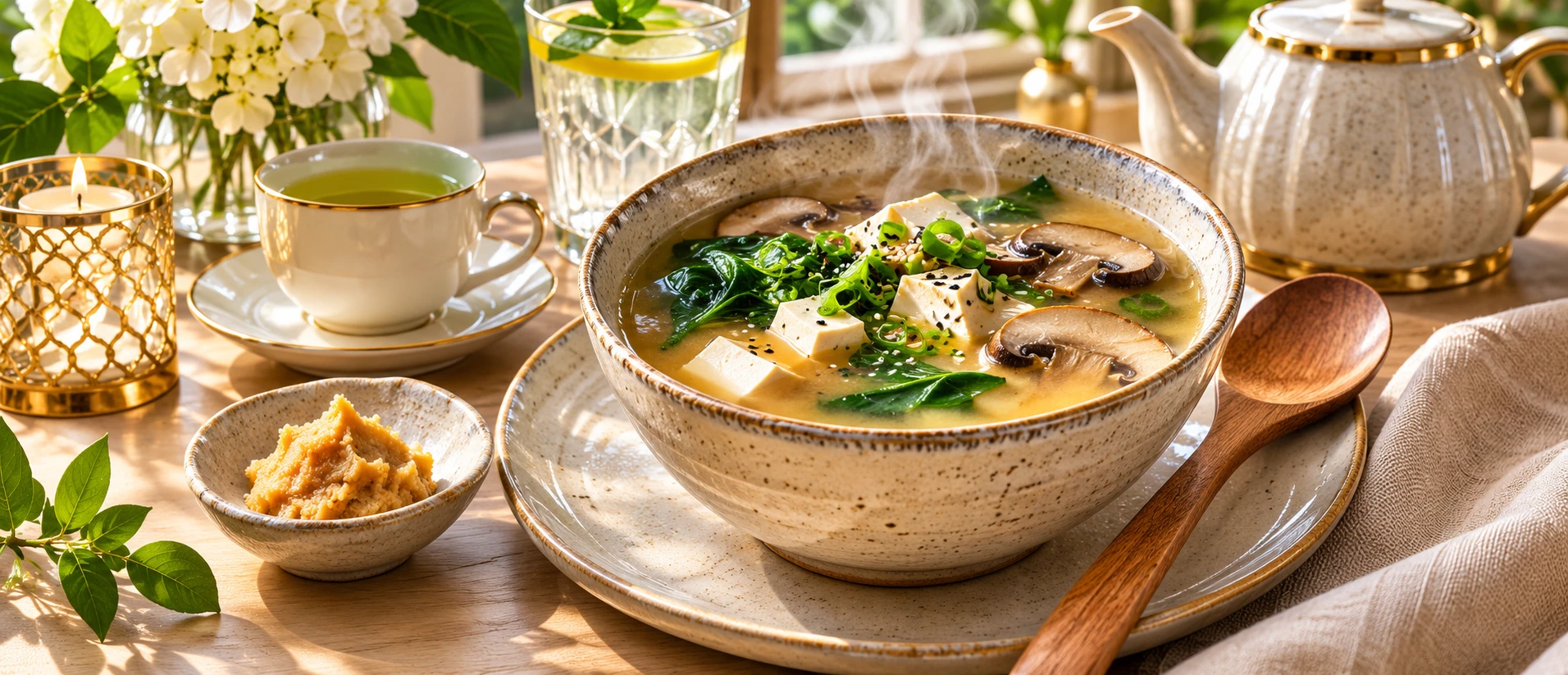
Everyday meal idea: Stir a small quantity of miso into warm vegetable broth with tofu, mushrooms and greens.
Because miso can contain considerable salt, checking the product label and using an appropriate amount is important.
Natto: Fermented Soybeans With A Distinctive Texture
Natto is made by fermenting soybeans using Bacillus subtilis var. natto.
It is known for its sticky, stringy consistency and distinctive aroma.
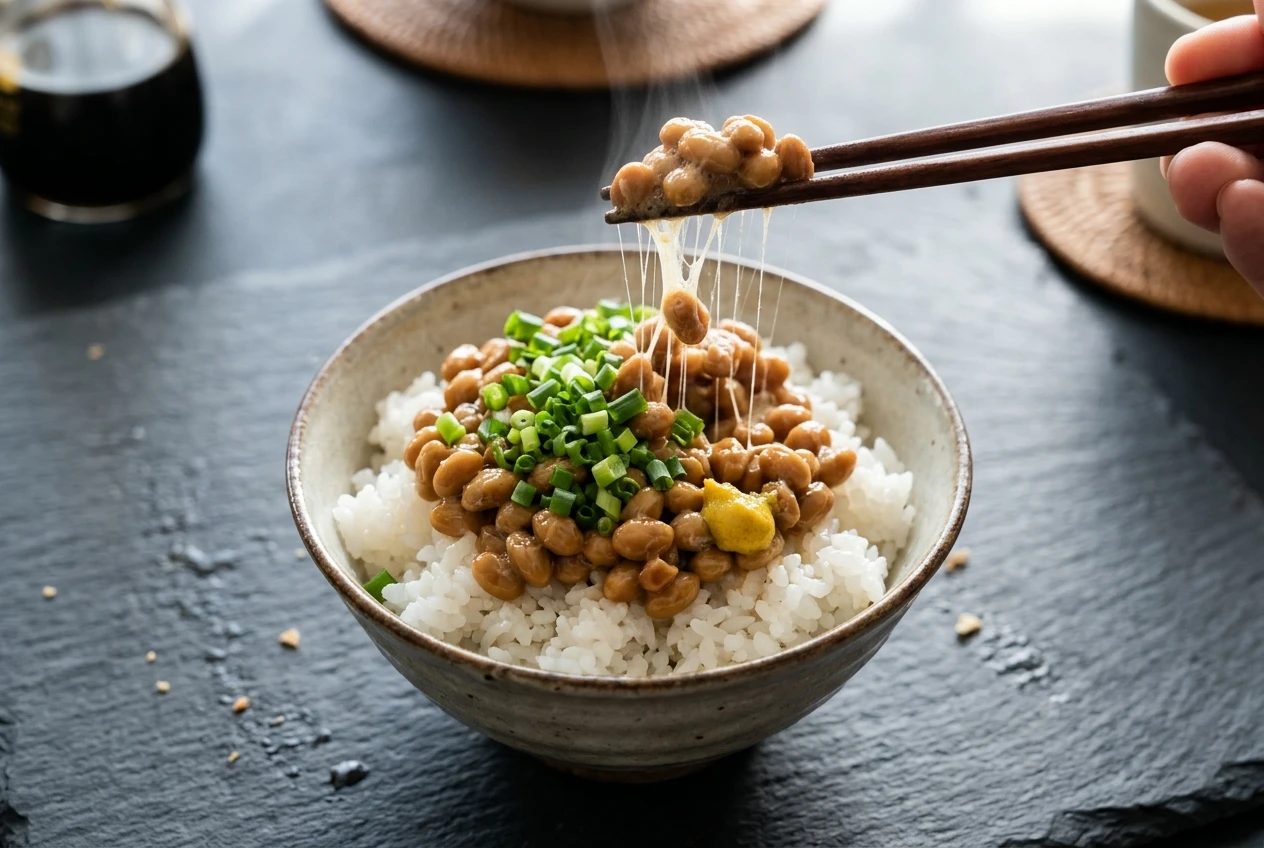
Natto is commonly served with rice and may be accompanied by spring onions, mustard or other seasonings.
As a soybean food, natto can contribute protein and other nutrients. Its exact nutritional composition depends on the product and serving size.
For someone trying natto for the first time, a small portion alongside familiar ingredients may be more approachable.
Important: Natto contains substantial vitamin K and is particularly relevant for people taking warfarin. Professional advice is needed before introducing it or changing intake.
What Japan’s National Dietary Guidance Teaches Us
Japan’s Ministry of Agriculture, Forestry and Fisheries promotes Shokuiku, or food and nutrition education.
Its educational resources include the Japanese Food Guide Spinning Top.
The guide illustrates a balanced eating pattern through different food groups, including grain dishes, vegetable dishes, main dishes, dairy products and fruit.
It also highlights the wider importance of hydration and physical activity.
The central lesson is that balanced eating involves a variety of foods rather than relying on one particular ingredient.
Miso and natto may be included in meals, but neither is essential for maintaining a balanced diet.
Japan’s Ministry of Health, Labour and Welfare also publishes Dietary Reference Intakes, including the 2025 edition.
These provide nutrient reference standards and are distinct from general food-based dietary guidance.
Official Japanese government references:
Ministry Of Agriculture, Forestry And Fisheries — Food And Nutrition Education
Ministry Of Health, Labour And Welfare — Dietary Reference Intakes For Japanese, 2025
4. South Korea: Kimchi, Doenjang And Everyday Food Culture
South Korean cuisine includes a wide variety of vegetables, grains, soybean products and shared dishes.
Fermented ingredients are an important part of many Korean food traditions, contributing distinctive flavours and textures.
Two examples are kimchi and doenjang.
Kimchi: A Diverse Fermented Vegetable Tradition
Kimchi refers to many different Korean vegetable preparations.
Common ingredients include napa cabbage and radish, although there are numerous regional, seasonal and household variations.
Many varieties undergo lactic acid fermentation.
Seasonings may include garlic, ginger, chilli and other ingredients.
Some traditional kimchi preparations contain fish sauce or salted seafood, while vegetarian alternatives are also available.
Kimchi can be served alongside rice, vegetables, tofu, meat or fish.
Its flavour varies depending on the ingredients, fermentation and storage.
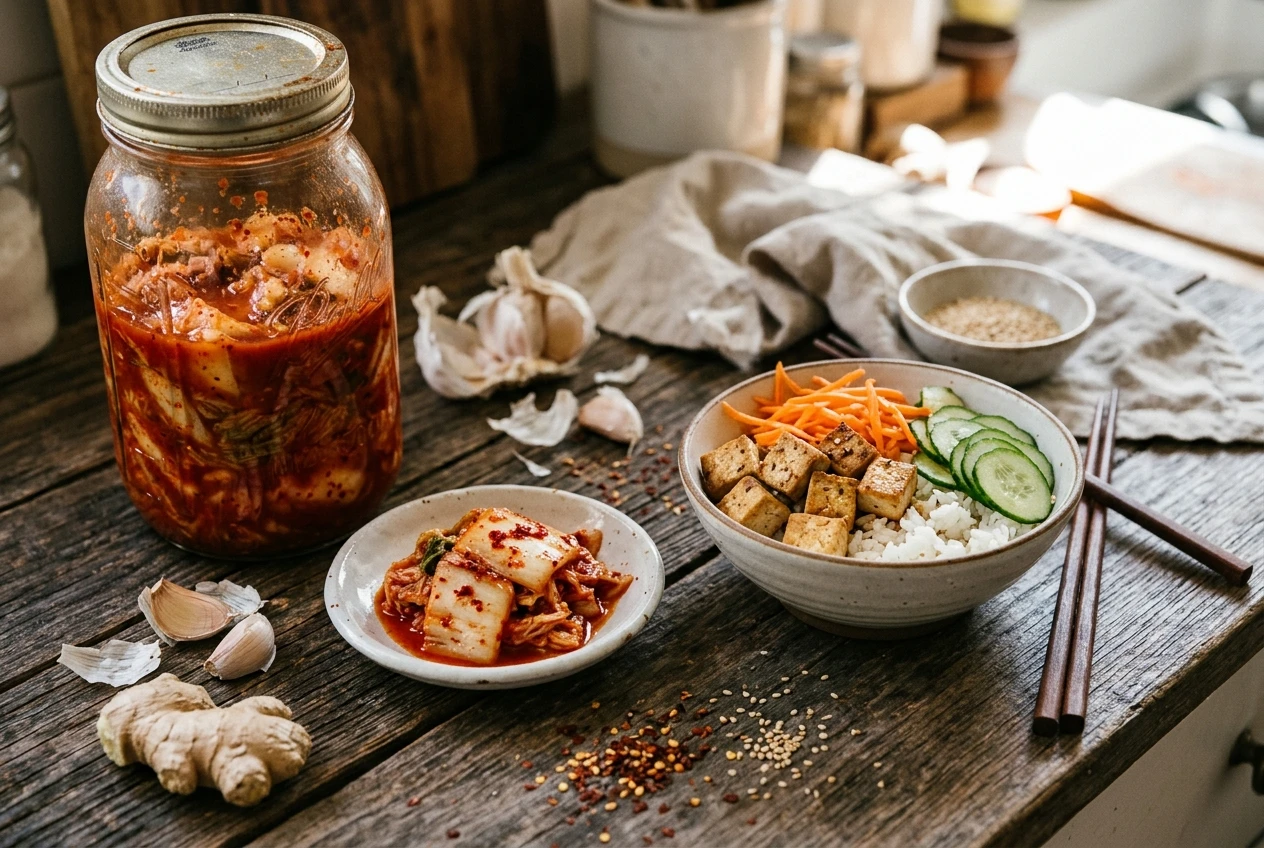
Everyday meal idea: Serve a small portion of kimchi alongside a rice bowl containing tofu and vegetables.
Because kimchi can be salty, it is helpful to consider serving size and the overall salt content of the meal.
Doenjang: Traditional Korean Fermented Soybean Paste
Doenjang is a Korean fermented soybean paste with a strong savoury flavour.
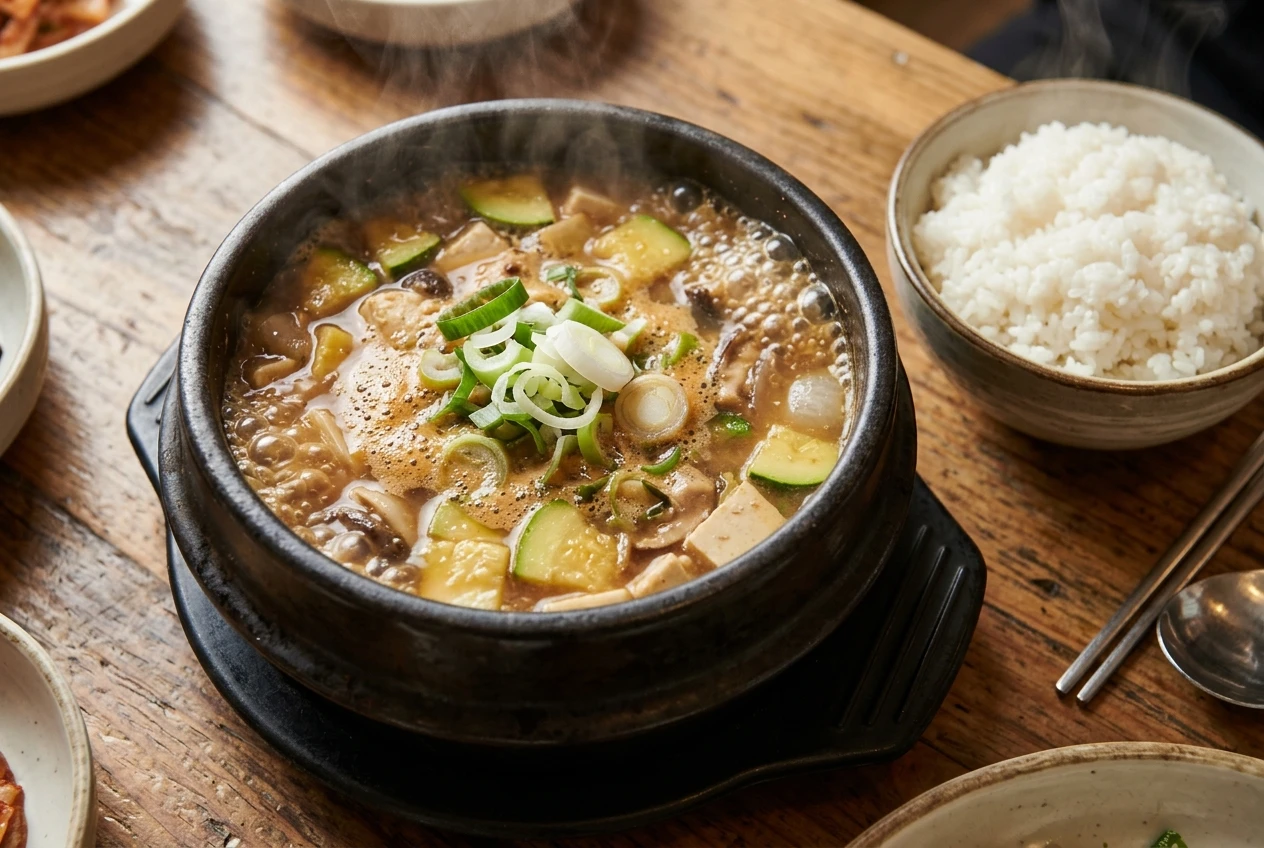
It is used in dishes such as doenjang-jjigae, a stew commonly prepared with vegetables and other ingredients.
Different varieties and manufacturing methods can produce differences in flavour and composition.
A small amount can add depth to vegetable soup or stew.
However, doenjang can contribute significant salt, so unsalted stock and careful seasoning are sensible choices.
What South Korea’s National Dietary Guidelines Teach Us
South Korea’s General Dietary Guidelines for Koreans were developed through collaboration involving the Ministry of Health and Welfare and other government organisations.
The Food and Agriculture Organization’s country profile describes guidance encouraging:
- A variety of foods from different food groups.
- Meals incorporating grains, vegetables, fruit and appropriate protein sources.
- Moderation of salt, sugar and fat.
- Safe food preparation.
- Balanced eating and family meals.
These recommendations relate to the overall dietary pattern.
They should not be interpreted as proof that eating kimchi or doenjang produces a specific gut-health benefit.
For Dietremidies readers, a useful example is combining rice, vegetables and a suitable protein source with a modest serving of kimchi.
Official reference: FAO — Food-Based Dietary Guidelines For The Republic Of Korea
5. Fermented Foods, Nutrition And What Scientific Evidence Supports
Fermented foods vary considerably in their nutritional composition.
Their nutritional contribution depends on the original ingredients, fermentation process, added seasonings and preparation method.
Fermented soybeans, fermented vegetables and fermented pastes should not be treated as nutritionally identical.
How Fermentation Can Change Foods
Microorganisms involved in fermentation may alter certain food components.
Depending on the food and process, fermentation can affect flavour, texture and the availability or formation of particular compounds.
However, these effects are not universal.
It would be inaccurate to suggest that fermentation always increases nutritional value or automatically makes a food healthier.
Fermented Soybean Foods
Miso, natto and doenjang are all associated with fermented soybeans, but they are used differently.
Natto may be eaten as a substantial food ingredient, while miso and doenjang are often used in smaller amounts for flavour.
Their contributions to protein, energy, sodium and other nutrients therefore differ.
Fermented Vegetables
Kimchi may contribute some of the nutrients associated with its vegetable ingredients.
However, the amounts depend on the vegetables used, recipe and portion size.
Kimchi should not replace the wider variety of vegetables recommended as part of a balanced diet.
What About Gut Health?
Researchers are investigating whether certain fermented foods may influence gut microorganisms, digestive processes and other health outcomes.
Some studies have reported potentially interesting findings.
However, the results vary by food, study design, quantity consumed and participant characteristics.
The 2021 ISAPP scientific consensus explains that further research is needed to establish the effects of different fermented foods and their microorganisms.
There is not sufficient evidence to promise that eating miso, natto, kimchi or doenjang will eliminate bloating, treat digestive disorders or reliably improve gut health.
Understanding Salt Content
Some fermented ingredients, particularly miso, kimchi and doenjang, can contain substantial amounts of salt.
The UK NHS recommends that adults consume no more than 6 g of salt per day, including salt already present in foods.
Simple approaches include checking labels, using unsalted stock, choosing suitable portions and avoiding unnecessary additional salty sauces.
Reference: NHS — Salt In Your Diet
A Balanced Approach To Fermented Foods
There is no need to regard fermented foods as either essential health foods or foods that should always be avoided.
Their suitability depends on the individual, the product, the portion and the wider dietary pattern.
They can be explored as optional ingredients that contribute flavour and variety to enjoyable meals.
6. Four Everyday Meal Ideas Inspired By Japan And South Korea
These four recipes are simplified meal ideas inspired by Japanese and Korean cooking traditions.
They are not presented as traditional or nationally standardised recipes.
The quantities, yields and preparation times are working estimates and have not been test-cooked. No calculated nutritional values are provided.
Meal 1 — Japanese-Inspired Miso, Tofu And Vegetable Soup
Servings: Approximately 2
Preparation and cooking time: Approximately 15–20 minutes
This simple soup combines tofu, mushrooms and leafy greens with a small amount of miso for savoury flavour.
Ingredients
- 100–150 g firm tofu, cubed
- 100 g mushrooms, sliced
- Two handfuls of spinach, washed
- 500 ml water or unsalted vegetable stock
- 1–2 teaspoons miso paste
- Two spring onions, sliced
- Optional cooked noodles
Method
- Bring the water or stock to a gentle simmer.
- Add the mushrooms and cook until tender.
- Add the tofu and spinach, heating thoroughly.
- Remove the pan from the boil. Mix the miso with a little warm broth until smooth, then stir it into the soup.
- Add cooked noodles if desired and finish with spring onions. Allow the soup to cool to a comfortable eating temperature.
Simple Substitutions
Pak choi can replace spinach. Freshly cooked rice can make the meal more substantial.
Where soy must be avoided, prepare a suitable non-soy vegetable soup instead. This would be an alternative rather than miso soup.
Good To Know
Miso and tofu contain soy. Some miso products and noodles contain wheat or barley.
Miso contributes salt, so check the label and avoid unnecessary additional seasoning.
Spinach contains vitamin K, which is relevant to people taking warfarin.
Meal 2 — Japanese-Inspired Natto Rice And Vegetable Bowl
Servings: Approximately 2
Preparation time: Approximately 15 minutes, excluding rice cooking
This bowl combines natto with freshly cooked rice and crunchy vegetables.
Ingredients
- Two portions of freshly cooked rice
- Two small packs of commercially prepared natto
- Cucumber, sliced
- Carrot, shredded
- Two spring onions, sliced
- Optional sesame seeds
Method
- Cook the rice according to the packet instructions.
- Prepare the natto according to its packaging.
- Wash and prepare the vegetables.
- Divide the rice between two bowls.
- Add the natto, vegetables and optional sesame seeds.
Simple Substitutions
Cooked chickpeas or edamame can be used instead of natto if its flavour or texture is unsuitable.
These are alternatives rather than fermented equivalents. Edamame still contains soy.
Good To Know
Natto contains soy. Accompanying sauce sachets may contain wheat or fish.
Sesame seeds introduce another potential allergen.
Natto is particularly important for people taking warfarin because of its vitamin K content. Anyone taking warfarin should consult their anticoagulation team before introducing natto.
Reference: Cambridge University Hospitals — Dietary Advice For Patients Taking Warfarin
Meal 3 — Korean-Inspired Kimchi And Tofu Rice Bowl
Servings: Approximately 2
Preparation and cooking time: Approximately 20 minutes, excluding rice cooking
This colourful rice bowl combines vegetables and tofu with kimchi served separately.
Ingredients
- Two portions of freshly cooked rice
- 200 g firm tofu, sliced
- 100 g kimchi
- Carrot, shredded
- Cucumber, sliced
- Spinach, cooked
- One teaspoon rapeseed or sunflower oil
Method
- Cook the rice according to the packaging instructions.
- Heat the oil in a frying pan and cook the tofu until golden and hot throughout.
- Cook the spinach and prepare the remaining vegetables.
- Arrange the rice, tofu and vegetables in two bowls.
- Serve the kimchi separately so each person can adjust the amount.
Simple Substitutions
Choose a vegetarian or vegan kimchi if required, checking that it contains no fish sauce, shrimp paste or other seafood ingredients.
Fresh vegetables can replace kimchi for a milder alternative.
Good To Know
Tofu contains soy. Kimchi may contain fish, crustaceans or other allergens.
Kimchi can contribute considerable salt.
Some kimchi is sold unpasteurised, so follow the manufacturer’s refrigeration and storage instructions.
Meal 4 — Korean-Inspired Doenjang Vegetable Stew
Servings: Approximately 2
Preparation and cooking time: Approximately 25 minutes
This vegetable stew uses fermented soybean paste to develop a rich, savoury flavour.
Ingredients
- 500 ml water or unsalted vegetable stock
- 1–2 teaspoons doenjang
- 150 g firm tofu, cubed
- One small courgette, diced
- 100 g mushrooms, sliced
- One small onion, diced
- Two spring onions, sliced
Method
- Add the onion, courgette and mushrooms to the water or stock.
- Simmer until the vegetables are tender.
- Mix the doenjang with a little hot broth until smooth, then stir it into the pan.
- Add the tofu and heat thoroughly.
- Finish with spring onions and serve with freshly cooked rice if desired.
Simple Substitutions
Seasonal vegetables can replace courgette or mushrooms.
Where soy must be avoided, offer a suitable non-soy vegetable soup instead.
Good To Know
Doenjang and tofu contain soy. Some doenjang varieties contain wheat or barley.
Because doenjang may be high in salt, use unsalted stock and avoid adding unnecessary soy sauce or salt.
Preparing And Storing These Meals Safely
Good food hygiene matters whether or not a meal contains fermented ingredients.
Wash hands before preparation, use clean equipment and check the use-by dates and storage instructions on packaged foods.
Cooked rice requires particular care. Harmful bacterial spores can survive cooking, and incorrect cooling or storage can allow bacteria to multiply.
Cool cooked rice as quickly as possible, ideally within one hour. Refrigerate promptly, use within 24 hours and reheat no more than once until steaming hot throughout.
For soups and stews, cool leftovers promptly, refrigerate appropriately and reheat thoroughly.
Follow manufacturer instructions for fermented foods, particularly products requiring refrigeration.
Official reference: Food Standards Agency — Cooking And Reheating Safely
Additional considerations: People with food allergies, compromised immunity, pregnancy-related restrictions, swallowing difficulties or prescribed therapeutic diets may need individual advice about ingredients and preparation methods.
7. Women’s Wellbeing And Flexible Family Meal Planning
Food choices are influenced by daily routines, family responsibilities, personal preferences and changing nutritional needs.
For women balancing work, household commitments and personal wellbeing, practical meal planning may be more useful than following complicated dietary trends.
Fermented foods can be explored without creating additional pressure around eating.
Supporting Everyday Nutritional Variety
A balanced dietary pattern can include vegetables, fruit, wholegrains, protein-containing foods and suitable sources of essential nutrients.
Fermented foods may contribute flavour and variety, but they are not necessary for everyone.
For example, a rice bowl with tofu and vegetables can be a satisfying meal whether or not kimchi is included.
Midlife And Changing Nutritional Needs
Nutritional considerations may change during adulthood and life stages such as perimenopause and menopause.
Protein, fibre, calcium, vitamin D and overall dietary adequacy can be important depending on individual needs.
However, fermented foods should not be promoted as treatments for hormonal changes or menopause symptoms.
There is insufficient evidence to promise that eating miso, natto or kimchi will balance hormones or relieve specific symptoms.
Readers with individual concerns should seek guidance from a qualified healthcare professional.
Making Meals Suitable For Different Family Members
A flexible approach is to prepare familiar base ingredients and offer fermented foods separately.
For example, a rice bowl can include tofu, vegetables and a choice of kimchi or fresh vegetables.
This allows family members to adjust flavour, texture and portion size.
It also makes it easier to accommodate dietary preferences and relevant restrictions.
Keeping Meal Planning Affordable
Exploring international food traditions does not require expensive specialist ingredients for every meal.
Start with one unfamiliar ingredient and combine it with foods already available at home.
Rice, carrots, mushrooms, greens and seasonal vegetables can provide a practical foundation for several meals.
Where fermented foods are unavailable or unsuitable, non-fermented alternatives can still contribute to dietary variety.
8. Common Myths And Five Common Questions
Common Myths About Fermented Foods
Myth: All fermented foods contain probiotics.
Not necessarily. Some fermented foods contain live microorganisms, while others have been processed in ways that remove or inactivate them.
Myth: Eating more fermented foods always improves gut health.
There is no universal amount that guarantees a particular gut-health outcome.
Myth: Fermented foods are always low in salt.
Some fermented foods, particularly miso, kimchi and doenjang, can contain substantial salt.
Myth: Fermented foods must be eaten every day.
There is no general requirement to consume fermented foods daily to maintain a balanced diet.
Five Common Questions
1. Are fermented foods and probiotics the same thing?
No. Fermented foods are defined by how they are produced, while probiotics are specific live microorganisms shown to provide a health benefit when consumed in adequate amounts.
Some fermented foods contain live microorganisms, but this does not automatically make them probiotic.
The ISAPP scientific consensus provides further explanation of this distinction.
2. What do Japan’s and South Korea’s national dietary guidelines teach us?
Japan’s national food guidance encourages balance and variety through different food groups.
South Korea’s dietary guidelines similarly encourage varied food choices, appropriate meal preparation and moderation of salt, sugar and fat.
These recommendations help readers understand how traditional foods may fit into wider dietary patterns.
They do not establish that fermented foods are essential or that particular fermented ingredients treat digestive conditions.
3. Can eating kimchi, miso or natto improve gut health?
Researchers are investigating possible relationships between fermented foods, intestinal microorganisms and health.
However, products differ in their ingredients, microorganisms and preparation methods.
Research findings are not sufficiently consistent to promise that eating these foods will relieve bloating, improve digestion or prevent digestive disorders.
4. Can I include fermented foods in family meals without eating them every day?
Yes. Fermented foods can be optional ingredients.
You might occasionally use miso in soup or serve kimchi alongside rice and vegetables.
Family members can choose different portions or non-fermented alternatives.
A balanced diet does not depend on eating fermented foods every day.
5. What should I check before buying or preparing fermented foods?
Check ingredients, allergen labels, salt content, use-by dates and storage instructions.
Some products contain soy, wheat, barley, fish, shellfish or sesame.
People taking warfarin should seek professional advice before introducing natto or making significant changes to their vitamin K intake.
For rice-based meals, follow appropriate cooling, refrigeration and reheating guidance.
9. Looking Ahead: Continuing Our International Food Journey
Japan and South Korea provide fascinating examples of how fermentation contributes to food culture and everyday cooking.
Miso, natto, kimchi and doenjang offer different flavours and preparation possibilities.
The important lesson is not that one food or country provides a secret to better health.
Instead, exploring international food traditions can encourage curiosity, variety and more flexible approaches to meal planning.
In the next Dietremidies international article, we will explore:
Beans, Lentils And Wholegrains: Affordable Meal Ideas Inspired By Ethiopia And Iran
We will look at practical ingredients, cultural food traditions and adaptable meal ideas while continuing to distinguish established nutrition guidance from unsupported health claims.
Continue Exploring With Dietremidies
For more international food inspiration, explore:
Everyday Meals Inspired By Brazil And China
This companion article explores everyday meal ideas inspired by two additional food cultures.
You can also explore Dietremidies for practical articles on meal planning, balanced eating, everyday energy and wellbeing.
A Gentle Reminder
You do not need to change everything about your diet to explore new foods.
Trying one unfamiliar ingredient, adapting a familiar recipe or learning about another food tradition can be a useful starting point.
Choose foods that suit your preferences, circumstances and dietary needs.
No single ingredient determines the quality of your overall diet.
Further Reading
Scientific research
- International Scientific Association for Probiotics and Prebiotics (ISAPP). The ISAPP Consensus Statement On Fermented Foods. Published online 4 January 2021.
https://pmc.ncbi.nlm.nih.gov/articles/PMC7925329/
Japan
- Ministry of Agriculture, Forestry and Fisheries. Promotion Of Shokuiku (Food And Nutrition Education). Publication date not established on the linked overview page.
https://www.maff.go.jp/e/policies/tech_res/shokuiku.html - Ministry of Health, Labour and Welfare. Dietary Reference Intakes For Japanese, 2025 Edition. Report published 11 October 2024; corrected files updated 25 March 2025.
https://www.mhlw.go.jp/stf/newpage_44138.html
South Korea
- Food and Agriculture Organization of the United Nations. Food-Based Dietary Guidelines: Republic Of Korea. Country profile describing the General Dietary Guidelines for Koreans established in 2016. Page publication date not established.
https://www.fao.org/nutrition/education/food-dietary-guidelines/regions/countries/republic%20of%20korea/en/
United Kingdom
- National Health Service. Salt In Your Diet.
https://www.nhs.uk/live-well/eat-well/food-types/salt-in-your-diet/ - Cambridge University Hospitals NHS Foundation Trust. Dietary Advice For Patients Taking Warfarin. Approved 16 April 2025.
https://www.cuh.nhs.uk/patient-information/dietary-advice-for-patients-taking-warfarin/ - Food Standards Agency. Safer Food, Better Business — Cooking And Reheating Safely. Guidance including cooked-rice handling.
https://www.food.gov.uk/sites/default/files/media/document/5-cminders-cookingsafely-01-cooking-and-reheating-safely.pdf
Health Disclaimer
This article is intended for general educational and informational purposes only.
It does not provide medical diagnosis, treatment or personalised dietary advice and should not replace consultation with a doctor, registered dietitian, pharmacist or other appropriately qualified healthcare professional.
Individual nutritional needs and food tolerances vary.
Readers with food allergies, digestive disorders, pregnancy-related concerns, compromised immunity, swallowing difficulties, medication interactions or prescribed dietary restrictions should seek appropriate professional advice.
The four meal ideas are illustrative, have not been test-cooked or nutritionally analysed, and should not be considered clinically approved meal plans.
Affiliate Disclosure
Dietremidies may participate in affiliate partnerships. Where affiliate links are included, Dietremidies may receive a commission from qualifying purchases at no additional cost to readers.
Any affiliate relationships should be clearly disclosed alongside relevant commercial recommendations.
The purpose of this article is to provide useful, responsible nutrition information and practical meal inspiration.
Dietremidies — Where Diet Meets Remedies